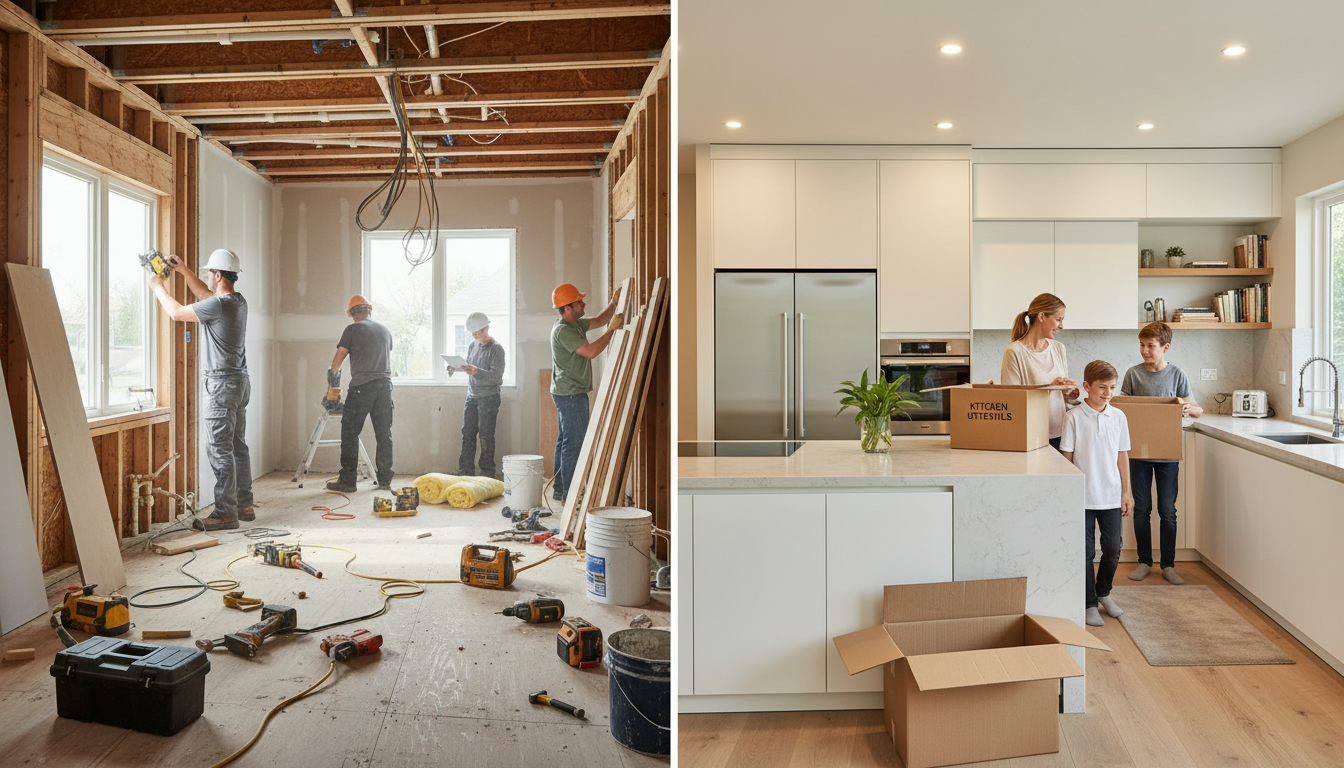
Should I renovate before moving in or after?
Don't Move In Until You Read This: Renovate Before Moving In or After?
Quick answer up front
Renovate before moving in if you need structural changes, major plumbing or electrical work, or want cleaner, faster results. Renovate after if costs, timing, or minimal cosmetic tweaks let you live first and improve later.
Why timing matters
Timing decides cost, stress, and resale value. Major projects (kitchen gut, bathroom relocation, removing walls) are cheaper and faster when the house is empty. Living through a demolition doubles the hassle and often adds unexpected costs. On the flip side, small upgrades (paint, new hardware, flooring in a single room) can wait until after you settle.
Cost, disruption, and ROI — the real tradeoffs
- Cost: Contractors work faster on empty homes. No need to protect furniture or work around occupants. That saves labor hours.
- Disruption: Heavy renovations require noise, dust containment, and sometimes temporary accommodations. That’s a tangible cost.
- ROI: Kitchens and bathrooms generally yield the best resale return. Structural fixes and code upgrades increase home value and reduce future headaches.
Keywords: renovate before moving in, renovate after moving in, kitchen remodel ROI, bathroom renovation value, home upgrades timing
Permits, inspections, and resale compliance
Major renovations often need permits and inspections. Doing work before move-in gives time to get permits and correct issues without impacting your daily life. For resale, proper permits boost buyer confidence and appraisal value. Unpermitted work hurts offers and can become a negotiating point.
Living in during renovation: what to expect
If you choose to renovate after moving in, plan for:
- Phased work by room
- Temporary kitchens or bathrooms (set up a utility sink or microwave)
- Clear schedules and daily cleanup requirements
- Air-quality controls and packing for dust-sensitive items
This approach works when projects are cosmetic or small in scale.
Simple decision framework (use this now)
- Is the work structural, plumbing or electrical? If yes → renovate before moving in.
- Will contractors need full access and multiple days of noisy work? If yes → before moving.
- Is it purely cosmetic and can be done room-by-room? If yes → after moving in.
- What’s your timeline and budget buffer? If tight timeline + budget → after only if work is small.
Actionable next steps
- Get a professional assessment and permit check. A single site visit clarifies scope and cost.
- Ask for a phased quote and a clear timeline. Demand daily cleanup and dust control in the contract.
- Prioritize structural, safety, and code work before cosmetic upgrades.
Need a decisive, local expert?
Tony Sousa is a local Realtor and renovations advisor who helps homeowners decide timing, find reliable contractors, and protect resale value. Contact Tony for a fast walkthrough, permit advice, and trusted contractor recommendations.
Contact: [email protected] | 416-477-2620 | https://www.sousasells.ca
Featured Real Estate Listings
Browse current properties available right now. Click any listing to view photos, floor plans, or schedule a private tour.