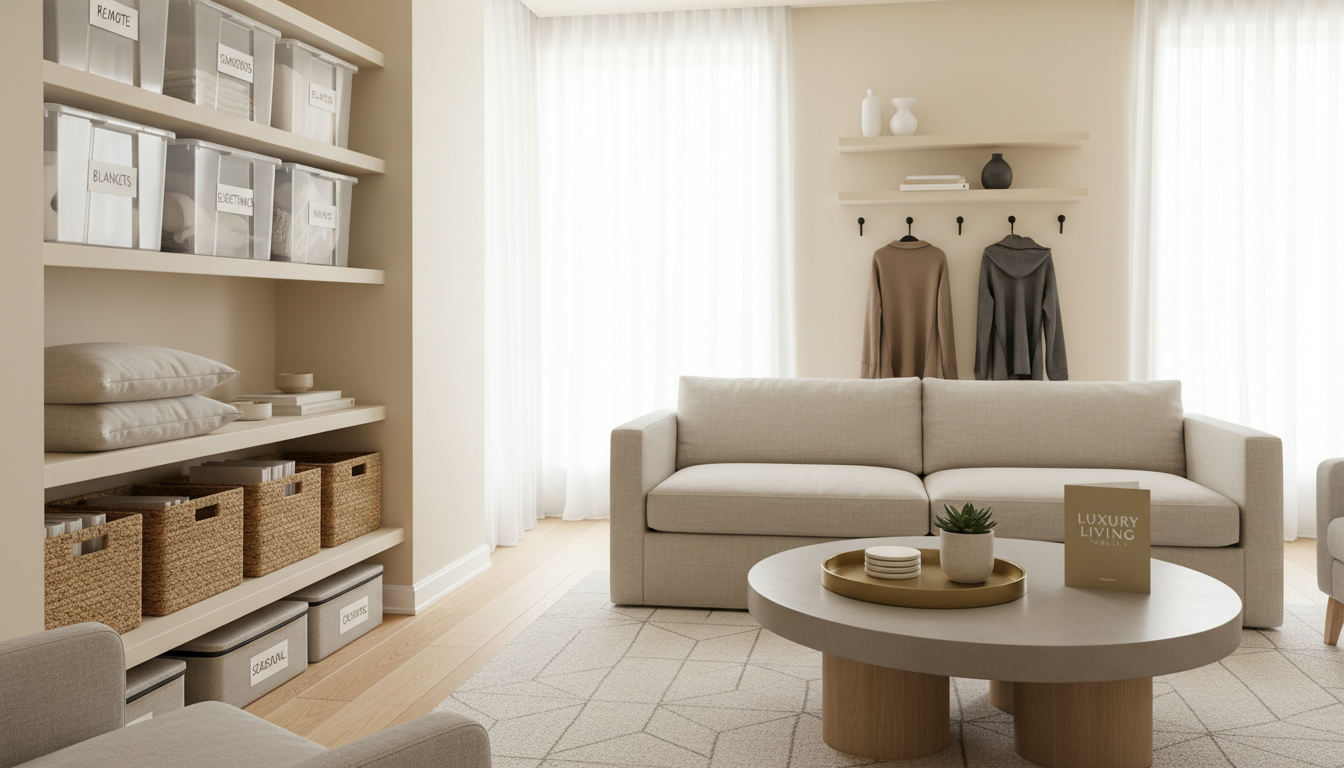
How do I store everyday items neatly?
Ready to sell and still live there? Here’s exactly how to store everyday items neatly—fast.
The reality: buyers buy what they see
If your home looks cluttered, buyers assume maintenance problems. When selling while living in the home, neat storage is a sales tool. I’m Tony Sousa, a Toronto realtor who sells homes fast. I’ve staged hundreds of listings while owners live in them. These are the practical, repeatable steps that work in every market.
1. Create daily zones
Assign zones: entry, kitchen, living room, bedroom. Keep only the items you use in each zone. Move everything else to a temporary storage box. This reduces visual clutter and makes cleaning quick.
2. Use clear, labeled containers
Transparent bins show contents and speed packing for showings. Label with simple tags: “Seasonal,” “Kids,” “Decor.” Stack uniform bins to make spaces look intentional. Keywords: clear storage bins, labeled storage, stackable storage.
3. Invest in attractive baskets and trays
Buy 3–5 woven baskets and a few decorative trays. Use them for remotes, keys, mail, and chargers. Baskets hide everyday items while keeping them accessible. Use trays on counters to corral small items and keep surfaces clear.
4. Shift excess to out-of-sight storage
Rent a small storage unit or use under-bed boxes for items you don’t need daily. The fewer items visible, the larger rooms look. Use vacuum bags for linens and winter clothes to save space.
5. Use vertical space and hooks
Shelves and wall hooks free floor space. Install floating shelves for books and framed photos. Hooks by the door for bags and jackets keep entryways tidy. Keywords: vertical storage, wall hooks, floating shelves.
6. Keep counters clear for showings
Clear counters sell homes. Store small appliances in cabinets. Put toiletries in a single basket in the bathroom. For showings, keep only one plant or one decorative item per surface.
7. Quick-showing kit
Maintain a “showing kit” with: small bins, a cloth, waste bag, and box for last-minute packing. When a showing is scheduled, do a 10-minute sweep: collect loose items, stash in bins, vacuum, and close doors.
8. Rotate and purge weekly
Each week, remove one small category of items you don’t use. Donate, sell, or store. This reduces clutter long-term and improves curb appeal for buyers.
9. Stage with storage furniture
Use ottomans, benches, and coffee tables with hidden storage. They serve daily life and hide clutter during open houses. Keywords: storage furniture, functional staging.
Selling while living need not be chaotic. Follow these steps, and your home will look larger, cleaner, and more buyable.
For a tailored plan for your home and market, call Tony Sousa — experienced Toronto realtor with proven staging and selling results. Email: [email protected] | Phone: 416-477-2620 | https://www.sousasells.ca
Want a free quick checklist for showings? Ask Tony and get step-by-step guidance tailored to your home.
Homes For Sale in Toronto
Browse current properties available right now. Click any listing to view photos, floor plans, or schedule a private tour.


