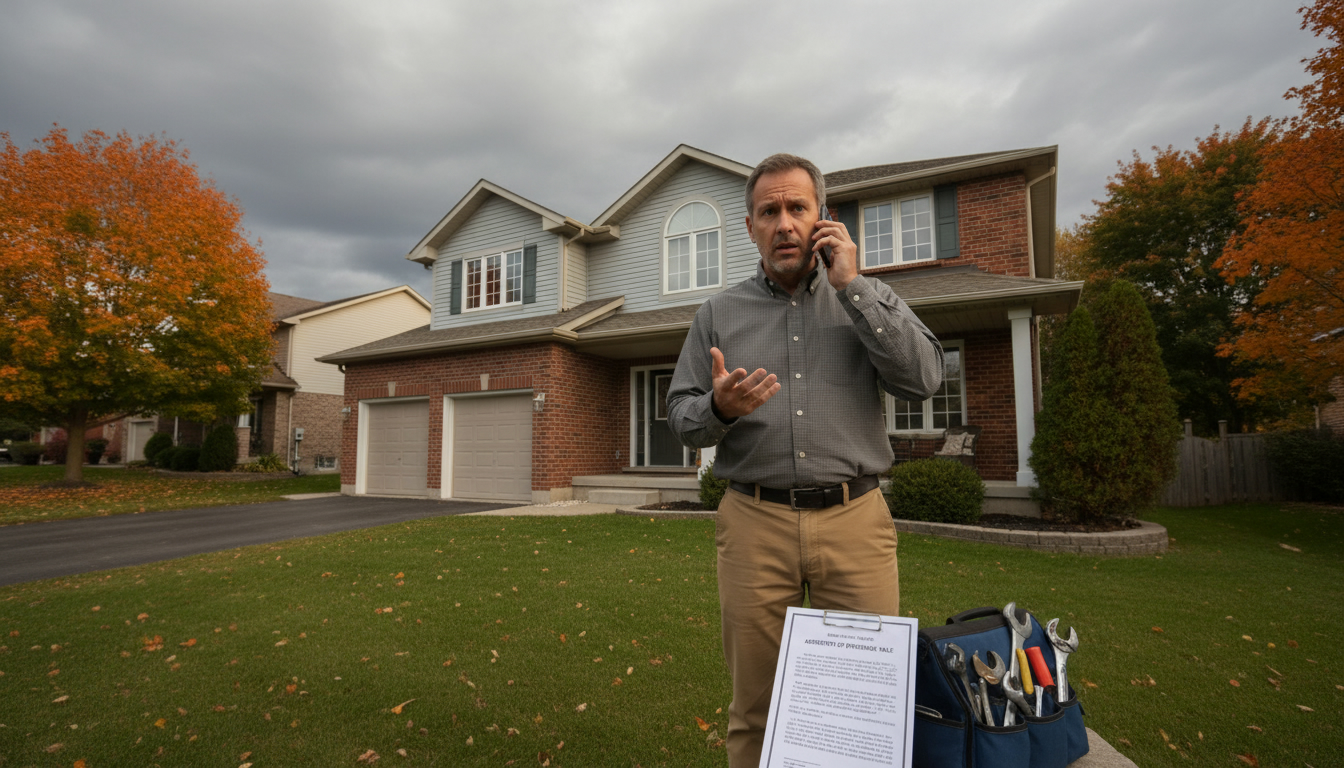
What happens if something breaks before closing?
Clickbait version: “Buyer Wants Out? Here’s Exactly What To Do When Something Breaks Before Closing — Don’t Lose Your Sale”
Why this matters now (and why you should read fast)
Selling a home in Georgetown, Ontario is not just signing papers and waiting for a check. The closing process has legal steps, timed obligations and real costs. If something breaks before closing—water heater fails, furnace dies, a roof leak appears—you face choices that affect your timeline, bank balance and reputation. This guide cuts through the noise and gives sellers a clear plan. No fluff. Action steps. Local rules.
The simple truth about the closing process in Georgetown, Ontario
The closing process in Ontario starts with an Agreement of Purchase and Sale (APS). That APS sets conditions, closing date, and who pays for what. Until title transfers, you still own the property and must keep it in substantially the same condition as when the buyer agreed to buy it. That duty is plain in most APS forms. If something breaks, you can’t ignore it.
Key terms to know:
- Agreement of Purchase and Sale (APS) — the contract that controls the deal.
- Conditions — inspections, financing, or other items that may allow a buyer to walk away.
- Closing date — the day ownership and funds transfer.
- Vendor’s duty to maintain — seller must keep the property in same condition until closing.
- Holdback — money set aside at closing to cover fixes after transfer.

What happens if something breaks before closing? The legal framework
Short answer: you must disclose and preserve value. Ontario law and standard real estate practice expect the seller to maintain the property’s condition. If a major system fails or the house suffers material damage, the buyer has options:
- Insist on repair before closing.
- Request a credit or price reduction at closing.
- Ask the lawyer to hold back funds until repair is done.
- Withdraw from the deal if a condition was violated and the buyer’s right to cancel exists.
If you try to cover up damage and the buyer discovers it, you risk a claim for breach of contract or misrepresentation. That is expensive and avoidable.
Step-by-step playbook for sellers in Georgetown when something breaks
1) Don’t panic. Control the timeline.
2) Document everything immediately: photos, videos, dated notes and receipts if something caused the damage.
3) Call your insurance company. Many damage events are covered. If they’ll cover it, you buy leverage.
4) Notify the buyer’s agent and the buyer in writing through your agent. Be factual. No excuses.
5) Get a professional assessment and estimate. For a furnace, get an HVAC tech; for a roof, a roofer; for structural issues, an engineer. Have the estimate emailed and dated.
6) Offer clear, polished options to the buyer: repair before closing, credit at closing, or a lawyer’s holdback. Put options in writing with numbers and timelines.
7) If the buyer is unreasonable, call your lawyer. Your lawyer will advise based on APS clauses and local practice.
8) If the buyer cancels without legal basis, you may have remedies — but don’t trade the house for ego. Follow counsel.
Practical scenarios and exactly what to do
Scenario A — Furnace fails with two weeks to closing:
- Immediate: call an HVAC technician for a same-day assessment.
- If repairable quickly: arrange repair and provide invoice to buyer.
- If not repairable quickly: offer a credit equal to replacement or a partial holdback with funds placed in lawyer trust until replacement is complete.
Scenario B — Burst pipe floods basement:
- Immediate: stop the source, call a restoration company, document damage, notify insurer.
- If insurer covers: coordinate repair timeline and share plan.
- If uninsured: offer buyer options — repair before closing or holdback with defined scope and timeline.
Scenario C — Roof leak discovered at final walkthrough:
- Immediate: get a roofer estimate, offer repair before closing or a price reduction/holdback.
- If buyer insists on walking away and there’s no condition allowing cancellation, they risk legal consequences. Often they accept negotiated credit.
How much will repairs or credits cost? Fast rules of thumb for Georgetown sellers
- Small repairs (single system fix, minor drywall, small leak): $200–$1,500.
- Medium repairs (furnace repair, minor structural wood rot, localized roofing): $1,500–$8,000.
- Major repairs (full roof replacement, major structural or electrical rewiring): $8,000–$30,000+.
These are estimates. Get local quotes. Georgetown contractors and trades often price lower than GTA average. Use that to your advantage. Have a preferred list of local vendors ready before listing. That saves days and money.

Holdbacks: the cleanest tool when timing is tight
A holdback is common in Ontario closings. The buyer’s lawyer holds a set amount of funds in trust until agreed repairs are done. This protects the buyer and lets the sale close on time. If you offer a reasonable holdback and timeline, buyers usually accept it because it removes delay risk.
How to structure a holdback:
- Agree on a fixed dollar amount based on written contractor estimates.
- Set a clear repair deadline (e.g., 30 days after closing).
- Include proof-of-repair deliverables (photos, invoices).
- Use your lawyer to draft the holdback clause.
Insurance, title issues and other closing hiccups
- Home insurance: keep the policy active until closing. If a claim is paid, notify all parties and show repairs.
- Title and liens: if an unexpected lien appears, your lawyer can clear it or negotiate a credit.
- HST: usually not applicable on resale homes. If the property was substantially renovated and the seller is a builder, HST can apply. Clarify with your accountant and lawyer.
Local edge: Georgetown, Ontario specifics sellers must know
- Local contractors: Georgetown has reliable trades but high demand in spring/summer. Book emergency trades through your agent’s trusted list to speed repairs.
- Conservation authorities and lakefront rules: If your property is near the Credit River or conservation areas, certain repairs or alterations may require permits. Factor that into timelines.
- Seasonal issues: Winters can kill furnaces; spring thaw can reveal basement moisture. Expect these seasonal risks and plan for inspections/tests accordingly.
- Small-town reputational risk: Georgetown buyers talk. Being transparent and quick builds trust and reduces legal friction.
How your realtor and lawyer should act (and how to pick the right team)
- Realtor role: negotiate, document, recommend vendors, communicate options in writing, and keep pressure on timelines.
- Lawyer role: draft holdback clauses, check APS obligations, handle title/closing adjustments, and advise on legal remedies if buyer tries to cancel without basis.
Choose a realtor who understands the Ontario APS and has local lawyer contacts. If you’re in Georgetown, contact a realtor who closes deals quickly and knows local contractors.
If you want direct help: Tony Sousa is a Georgetown real estate authority. Reach him at tony@sousasells.ca or 416-477-2620. Visit https://www.sousasells.ca for client resources and local contractor referrals.

Prevent the problem: steps to avoid pre-closing breakdowns
- Pre-listing inspection: fix major items before you list. Buyers make fewer demands when you’re proactive.
- Maintain systems during listing: service furnace, winterize pipes.
- Keep access clear for inspections and trades.
- Have contractor contacts and up-to-date insurance documents ready to share.
Closing-day checklist if something went wrong recently
- Confirm repairs or agreed credits are documented.
- Ensure holdback language is in lawyer’s statement of adjustments.
- Provide buyer and buyer’s lawyer with invoices, warranties, and proof of repair.
- Keep utilities on until closing transfer is complete.
- Get a final walkthrough scheduled and attended by a representative if you can’t be there.
Wrap-up: control the story, control the sale
A broken system before closing is a pain. It’s solvable. Your job is to document, communicate and offer clear options. Use insurers, contractors and legal tools like holdbacks. In Georgetown, speed and transparency win. Buyers respect facts and clear dollars. Don’t let panic, silence or secrecy erode your deal.
FAQ — Georgetown sellers’ top questions about breaks before closing
1) Can a buyer cancel if something breaks before closing?
Yes — but only if the APS or a condition gives them that right or if the damage is so severe it frustrates the contract. Often buyers negotiate repairs, credits or holdbacks instead. Legal counsel decides if cancellation is justified.
2) Am I legally required to fix a problem that appears before closing?
You must maintain the property in substantially the same condition. You don’t always have to fix everything, but you must disclose and negotiate. Serious failures usually require a fix, credit, or holdback.
3) Will my home insurance cover pre-closing damage?
Often yes. Keep your insurance active until title transfers. File claims early and share claim details with buyer and lawyer.
4) What is a holdback and how much should it be?
A holdback is funds held in trust by lawyers until repairs are done. The amount should match reliable contractor estimates plus a small buffer (usually 10-20%).
5) What if the buyer demands more than the contractor estimate?
Negotiate. Use multiple local quotes. If you can’t agree, a holdback tied to a neutral contractor or arbitrator can resolve it.
6) How long can closing be delayed for repairs?
Depends on the APS and both parties. Short, reasonable delays (days to a few weeks) are common. A buyer can insist on closing date unless APS allows delay or they agree in writing.
7) Who pays for damage discovered at final walkthrough?
If damage occurred after the buyer agreed to buy but before closing, the seller is responsible to negotiate repair or credit. If the buyer caused damage during a walkthrough, they may be responsible.
8) Should I disclose small problems found after accepting an offer?
Yes. Transparency prevents later claims. Document what you disclose.
9) Do I need a local lawyer for Georgetown closings?
Yes. A local lawyer understands Halton and Peel procedures, municipal requirements, and common title issues in Georgetown.
10) Who pays for municipal compliance or certificates if a repair triggers them?
Usually the party who agreed in the APS. Clarify before closing; your lawyer will advise and adjust funds.
If you’re selling in Georgetown and want a fast, practical plan when problems hit before closing, contact Tony Sousa at tony@sousasells.ca or 416-477-2620. He’ll connect you to local lawyers and trades, and get your closing back on track.