
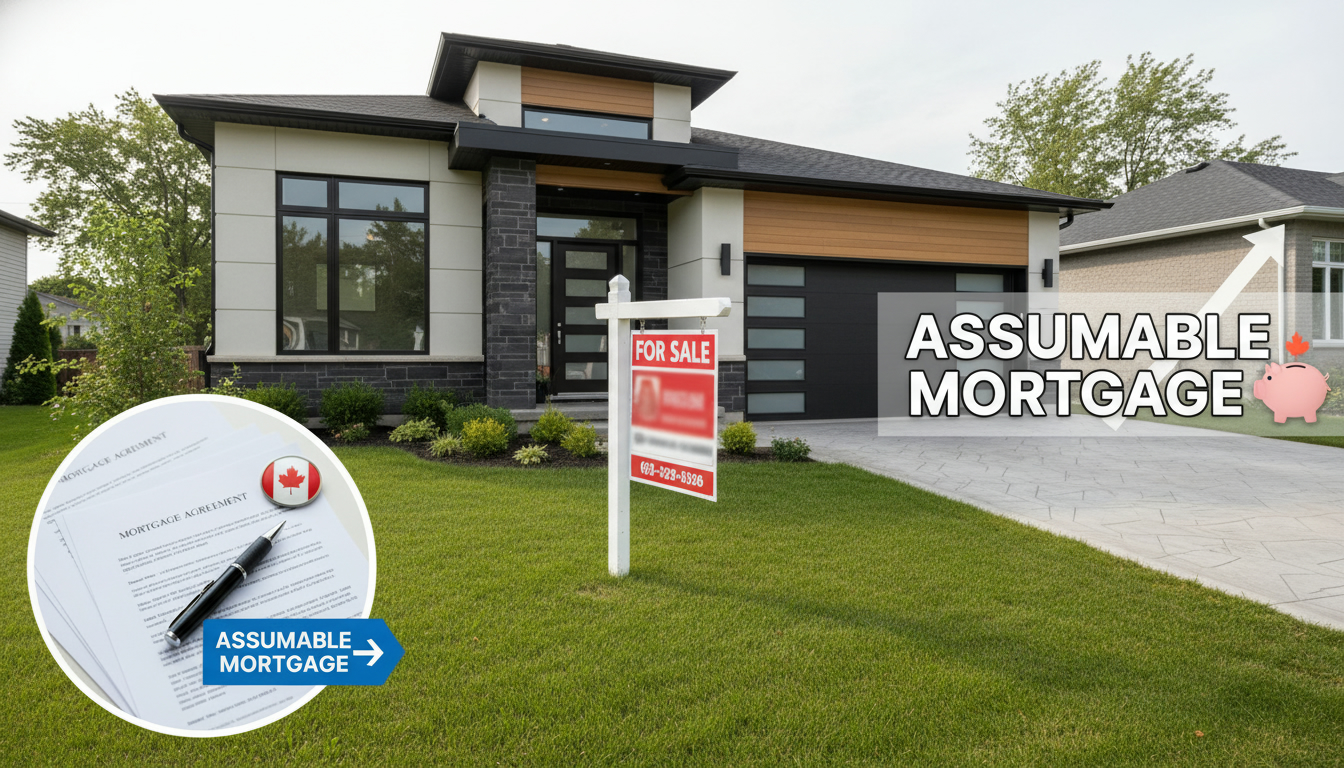
Can a buyer assume my mortgage?
Can a buyer assume my mortgage? The blunt truth every Georgetown seller needs — and how to turn it into a faster, cleaner sale.
Quick answer: Yes — sometimes. But mostly no unless the mortgage allows it or the lender agrees.
If you’re selling a home in Georgetown, Ontario and wondering whether a buyer can simply take over your mortgage, you’re asking the right question. This matters more now than ever: interest rates, lender rules, and lien priorities affect your sale timeline and net proceeds. I’m Tony Sousa — Georgetown realtor and mortgage/liens expert — and this post cuts through the confusion and gives you the exact steps, options, and local considerations to sell smart.
What “mortgage assumption” actually means
A mortgage assumption happens when the buyer takes on the seller’s existing mortgage loan and its interest rate, payments, and remaining term. The buyer steps into the contract and the seller is usually released from further liability — but not always.
Key variations:
- Fully assumable mortgage: The lender allows the new buyer to take over the mortgage without creating a new loan.
- Subject-to sale: Buyer takes title while mortgage stays in seller’s name (seller retains liability) — risky for most sellers.
- Lender-approved novation: Lender replaces the seller with the buyer and issues a new agreement that releases the seller from liability.
Why most Ontario mortgages are not freely assumable
Most conventional mortgages in Ontario include a “due-on-sale” clause. That means when ownership transfers, the lender can demand full repayment. In plain terms: your buyer can’t automatically assume your mortgage unless the loan documents or lender allow it.
Why lenders restrict assumption:
- Interest rate risk: Lenders priced loans for you, not the buyer.
- Underwriting standards: Lenders prefer to underwrite the new borrower.
- Regulatory and portfolio reasons.
When a buyer CAN assume your mortgage in Georgetown
- Government-backed or specific assumable products: Some loans (rare in Canada compared to the US) are designed to be assumable.
- Lender agreement: Some banks will allow assumption after qualifying the buyer.
- Private mortgages: Private lenders or vendor-take-back mortgages can be structured to be assumable.
- Novation signing: Lender underwrites buyer and signs a novation to swap borrower liability.
In Georgetown’s market, the most common path is lender agreement + novation. That requires the buyer to qualify under the lender’s current credit and income standards.
The real risks for sellers in an assumption scenario
- Remaining liability: If the lender doesn’t release the seller, the seller remains on the hook if the buyer defaults.
- Title and lien complications: Outstanding liens or second mortgages can block assumption or complicate payoff math.
- Price negotiation friction: Buyers may demand concessions if they can’t assume the loan.
If you sell subject-to the mortgage (buyer keeps the loan in your name), you must know: you still carry credit risk, and a default damages your credit and could trigger foreclosure proceedings.
Practical steps for sellers in Georgetown, Ontario
- Pull your mortgage documents now. Look for “assumption” or “due-on-sale” language.
- Get a copy of your title search and lien certificate from the Land Registry. Confirm any second mortgages, judgments, or tax liens.
- Talk to your lender or mortgage broker. Ask: “Would you permit assumption or novation, and under what conditions?”
- If a buyer asks to assume, require lender’s written approval and a full release of liability for you.
- If you consider a subject-to sale, get legal advice and understand the exit plan (refinance or payoff timeline).
- Price accordingly. If mortgage assumption is impossible, the buyer cannot access your rate. You may price competitively around market rates instead.

Local considerations — Georgetown, Halton Hills, and Ontario rules
- Land Transfer Tax and closing adjustments: Even with an assumption, the buyer pays Land Transfer Tax and other closing costs.
- Municipal arrears: Property tax arrears or local utility liens can block transfer until cleared.
- Cumulative market impact: Georgetown’s market is influenced by GTA trends. Buyers will consider whether your existing rate is worth the lien and title complexity compared to getting current financing.
Sellers in Georgetown commonly see buyers ask about assumption only when the seller’s existing rate is significantly lower than market rates. But the lender’s willingness and buyer qualification are the gatekeepers.
How to use mortgage assumption as a negotiating advantage
If your mortgage has a low rate and is assumable (or can be novated), this can be a sales edge. Here’s how to leverage it:
- Market it: “Assumable mortgage — inquire” attracts buyers seeking rate savings.
- Price strategically: A buyer may pay more to get a lower rate, but quantify the premium — don’t overvalue the rate beyond present value savings.
- Structure the deal: Require lender-approved novation and an unconditional release for you.
If it’s not assumable, don’t hide that. Explain why: due-on-sale clause, lender policy, or outstanding liens.
Checklist: Documents your Realtor should request immediately
- Mortgage contract and amortization schedule
- Copy of mortgage statement showing outstanding principal
- Recent title search and certificate of lien
- Property tax history and municipal arrears report
- Any second mortgages, HELOC agreements, or private mortgage papers
A good agent in Georgetown will pull these before listing. It prevents last-minute stalls and protects your closing date.
Common buyer strategies and how to respond
Buyer tactic: “We’ll take the mortgage subject-to and you’ll be fine.” Response: Don’t agree without legal and lender approval. You stay liable.
Buyer tactic: “We’ll assume your mortgage — we don’t need the lender.” Response: Not valid. Lender approval or novation is required to release you.
Buyer tactic: “We’ll refinance later.” Response: That may work — but you still need the closing to clear. Protect yourself with warranties and a firm timeframe.

Cost and timeline realities in Georgetown
- Lender underwriting for assumption can add 2–6 weeks to closing.
- Novation and legal fees: Expect legal costs for documentation and possibly lender fees.
- Title/lien clearance: Any municipal arrears or judgment must be cleared before transfer.
Plan for these in your timeline. If you need to close fast, assumption may not be the solution unless pre-approved by the lender ahead of listing.
When to consider alternatives instead of assumption
- If the lender refuses assumption.
- If the buyer can get better financing than your rate after negotiation.
- If liens or second mortgages make assumption impractical.
Alternatives:
- Vendor take-back mortgage (seller-financing) with lawyer-drafted protections.
- Carryback second mortgage to bridge the buyer’s down payment needs.
- Seller credit at closing to help buyer qualify for a new mortgage.
Each alternative carries legal and financial consequences; use a lawyer and a trusted Realtor.
Why sellers in Georgetown should work with an expert
This isn’t paperwork. This is liability management, negotiation strategy, and mortgage law. A misstep can leave you responsible for a loan you thought you avoided.
Tony Sousa specializes in mortgages, liens, and sales in Georgetown. He’ll:
- Read your mortgage for assumability.
- Order title and lien searches immediately.
- Engage your lender early to learn options and timelines.
- Structure offers to protect your credit and closing certainty.
Contact Tony at tony@sousasells.ca or 416-477-2620 for a no-nonsense review of your mortgage and clear, local advice.
FAQ — Georgetown sellers: mortgages, liens, and selling your home
Q: Can a buyer assume my mortgage if I have a second mortgage or HELOC?
A: Not without clearing or subordinating those liens. A second mortgage or HELOC complicates assumption because the lender and lien priority must be addressed. Often payoffs or subordination agreements are required.
Q: If the buyer assumes the mortgage, am I automatically released from liability?
A: Only if the lender provides a written release or completes a novation. Never assume you’re released without written confirmation from the lender.
Q: What happens to property tax arrears at closing?
A: Municipal arrears must be cleared before or at closing. They’re liens against the property and can block transfer.
Q: How long does lender approval for assumption take in Ontario?
A: Typically 2–6 weeks, depending on lender workload and buyer documentation. Start early to avoid delays.
Q: Can I advertise my mortgage as “assumable”?
A: Only if your mortgage contract allows it or your lender has agreed in writing. Misrepresenting that can cause legal problems.
Q: Is a vendor-take-back mortgage the same as assumption?
A: No. Vendor-take-back (VTB) means the seller finances part of the sale directly. The buyer signs a new mortgage to the seller, and the seller retains the security interest. It’s different from assuming a lender-held mortgage.
Q: What’s the biggest mistake sellers make regarding mortgage assumption?
A: Assuming the buyer can trigger an automatic assumption or rely only on handshake agreements. The right paperwork and lender approval are mandatory.
Q: How should I price if my mortgage rate is low but not assumable?
A: Price for the market, not for your rate. If your rate is significantly lower, consider offering financing incentives or seller credit rather than mispricing.
Q: Who pays legal fees for a novation or assumption?
A: Usually the buyer pays their legal costs and the lender charges administrative fees. Negotiate these in the offer.
Q: Should I sign a subject-to agreement to speed the sale?
A: Be cautious. Subject-to leaves you legally liable. Get legal advice and demand strong buyer escrow and protections.
If you’re selling in Georgetown, don’t gamble with your credit or closing. Get an immediate mortgage/liens review and clear guidance from a local professional who understands Halton Hills and Georgetown rules.
Contact a specialist for a frank, practical assessment: tony@sousasells.ca | 416-477-2620 | https://www.sousasells.ca
Author note: This post is written to provide practical guidance. It is not legal advice. Always consult a lawyer and your lender before changing mortgage obligations.