How do I check for hidden water damage?
Can you spot hidden water damage before it destroys your home sale? Yes — here’s exactly how.
Why hidden water damage is the single fastest way to lose value in Georgetown
You’re selling a home in Georgetown. The market rewards clean inspections and punishes surprises. Hidden water damage doesn’t just cost money to repair — it kills buyer confidence, triggers lowball offers, and stalls closings. In Georgetown’s climate, with cold winters, freeze/thaw cycles, spring melt and heavy summer storms, water problems that start small get expensive fast.
This post gives a practical, step-by-step plan you can use today to find and fix hidden water damage before a buyer or inspector finds it for you.
Quick reality: what causes hidden water damage in local homes
- Winter freeze-thaw and ice dams that force water under shingles and into attics.
- Heavy spring melt and high groundwater that overload basements and weeping tiles.
- Clogged or poorly directed gutters and downspouts that dump water against foundations.
- Poor grading and compacted soil near foundations.
- Old plumbing, hidden supply line leaks and deteriorating seals under tubs and sinks.
- Condensation and HVAC issues in poorly ventilated spaces.
Georgetown homes often sit on clay and mixed soils. That raises hydrostatic pressure on foundations during spring melt. Older homes with finished basements have hidden framing and drywall that hide failures for years.

Tools you need — inexpensive and professional
- Bright flashlight (high lumen)
- Moisture meter (pinless is fast and safe)
- Infrared (thermal) camera or thermal camera attachment for a phone
- Screwdriver or awl to probe suspicious wood
- Small mirror and borescope (for tight spaces)
- Hygrometer (measures humidity)
- Camera to document findings
You don’t need to be an inspector to use these tools. You need to be methodical.
The exact inspection checklist — follow this room by room
Start with the exterior, then roof and attic, then interior, then basement and mechanicals.
Exterior
- Walk the perimeter after rain or after a heavy melt. Look for pooling water within 6 feet of the foundation.
- Check grading — soil should slope away from the foundation 2% (about 1/4″ per foot) for the first 6 feet.
- Inspect gutters and downspouts. Are they clogged, sagging, or discharging at the foundation? Downspouts should extend 2–3 metres away.
- Look for efflorescence (white powder) or rust stains on foundation walls — signs of moisture migration.
- Check basement windows and window wells for water stains or debris that would block drainage.
Roof and attic
- Inspect shingles for missing or lifted shingles and check valleys and flashing around chimneys and vents.
- Look inside the attic for dark stains, wet insulation, or daylight showing through roof sheathing.
- Use a thermal camera to find cold spots in the roofline that suggest moisture or missing insulation.
- Check soffits and fascia for rot or insect damage; these often show after repeated ice dams.
Interior walls and ceilings
- Look for discolored patches, peeling paint, or blistered wallpaper. These signals often come before mold.
- Tap suspect drywall and listen for hollow or damp sounds; probe edges with a screwdriver for soft spots.
- Inspect crown moldings and baseboards for swelling or separation from walls.
- Check electrical outlets on suspect walls — a musty smell when you open the cover is a red flag.
Floors and subflooring
- Check for buckling hardwood or soft spots in laminate/engineered floors.
- Lift a corner of baseboard if possible — look for staining or rot at the bottom plate.
- For finished basements, pull back carpeting or vinyl at a corner and inspect subfloor and floor seam seams for dampness.
Basement and crawlspaces
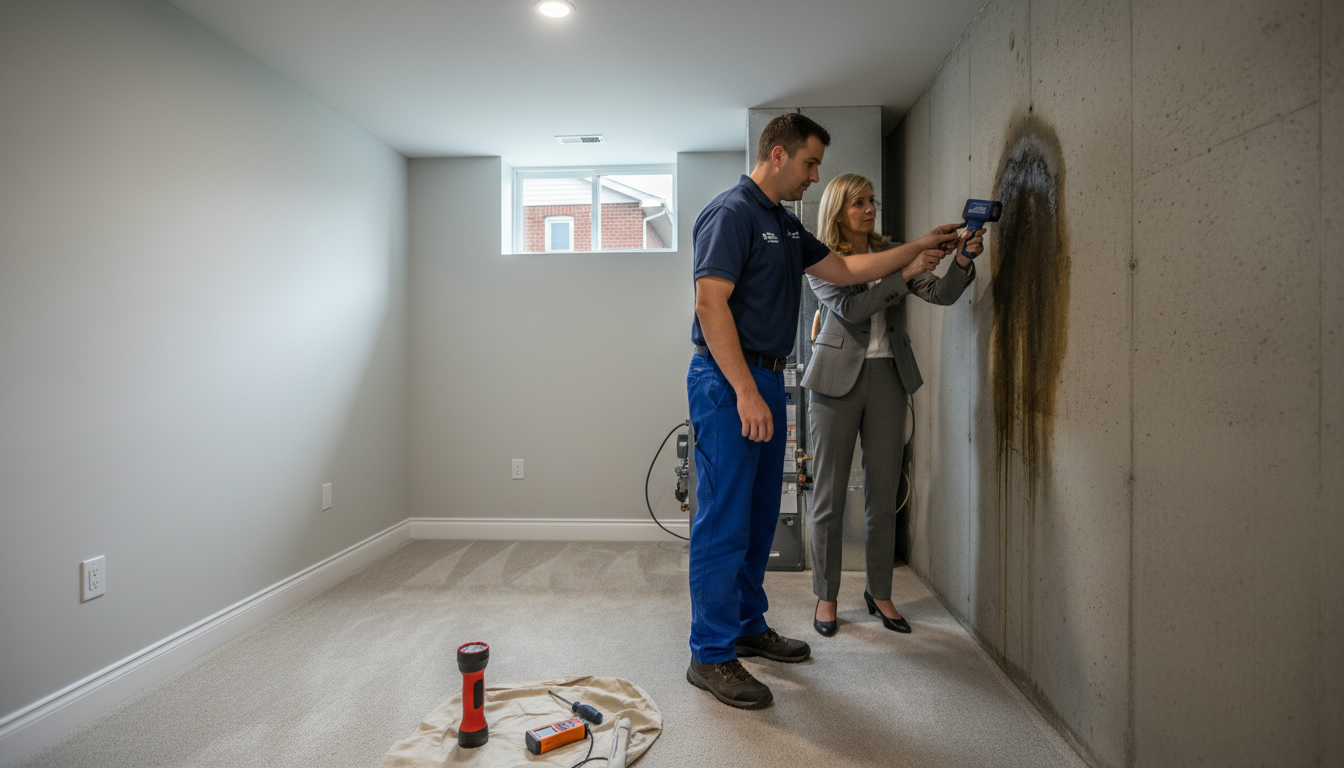
- Look for active water, dampness, white mineral deposits, or mold on walls and floors.
- Run a moisture meter along foundation walls and floor joints. Consistent moisture near the joint suggests hydrostatic pressure.
- Check the sump pump: pour water into the pit and watch operation; test the float switch and backup power if present.
- Inspect the weeping tile access or clean-out port. If none exists, be skeptical about unseen drainage failures.
- Assess insulation and vapor barriers. Wet insulation is ineffective and hides mold.
Plumbing and wet areas
- Open cabinet bottoms and inspect for stains, soft plywood, mold or corrosion under sinks.
- Run toilets and tubs while watching adjacent ceilings and walls for leaks.
- Check behind washing machines and dishwashers for slow leaks or rust on hose clamps.
- Inspect the hot water tank for rust, drips, or a corroded pressure relief valve.
Quick diagnostic techniques that catch hidden problems
- Moisture meter sweep. Move methodically: exterior foundation, basement walls, around windows, under baseboards. Log readings.
- Thermal scan of ceilings and walls. Cold or dark areas on a thermal image can indicate moisture or missing insulation.
- The smell test. Musty, earthy smells point to mold or chronic dampness even when stains aren’t obvious.
- The probe test. Soft wood means decay. Small rot patches can hide larger structural issues.
How to prioritize fixes that protect your sale value
Buyers react to certainty. Spend on fixes that prove the house is dry, then document. Prioritize:
- Immediate active leaks and failing plumbing.
- Gutters, downspouts, and grading that bring water away from the foundation.
- Sump pump repair and a tested backup power source.
- Attic and roof repairs to stop leaks at the source.
- Remove and replace wet insulation and drywall where mold risk is present.
Document every repair with invoices, warranties, and before/after photos. That converts a potential disaster into a predictable item in a negotiation.

When to bring in pros — don’t pretend you can DIY everything
- Major foundation cracks, bowing walls, or standing water: call a structural contractor or foundation specialist.
- Suspected mold over a large area (>1 m2) or HVAC contamination: hire a certified mold remediation contractor.
- Hidden plumbing in concrete slabs or older homes: bring in a licensed plumber with camera equipment.
- If your moisture meter or thermal scan shows consistent, unexplained moisture: get a certified home inspector or engineer.
For sellers in Georgetown, a pre-listing inspection is worth the cost. It removes uncertainty, speeds the sale, and increases buyer confidence.
How much will fixing common issues cost? Ballpark for Georgetown sellers
- Gutter repairs and downspout extensions: $200–$800
- Attic/roof flashing repair (small): $300–$1,200
- Sump pump replacement: $400–$1,200 (battery backup extra)
- Minor foundation crack repair (seal/epoxy): $500–$2,000
- Basement waterproofing with interior drain and sump: $4,000–$12,000 (varies widely)
- Mold remediation for small areas: $500–$3,000
Numbers vary with house age and local labour rates. Use these ranges to choose which fixes to do pre-listing and which to disclose.
How to present repairs to buyers — win trust, reduce concessions
- Provide a neat packet: inspection report, repair invoices, contractor contacts, warranties, and photos.
- Offer a short-term home warranty for peace of mind on plumbing and structural issues.
- Disclose obvious past issues and show how you addressed them. Transparency speeds deals.
Local tips for Georgetown sellers
- After the spring thaw, do multiple exterior checks — groundwater issues often show up then.
- If your house backs to the Credit River or a creek, check floodplain maps and mention them; buyers want clarity.
- Older Georgetown homes often have finished basements. Open at least one access panel so a buyer can inspect the floor and substructure.
- Use local contractors with Halton/Peel experience; they know freeze-thaw and local soils.

Call to action
Sell with certainty. Book a pre-listing inspection, get the high-impact fixes done, and present transparent documentation. If you want a local partner who knows Georgetown homes and how to prepare them for market, email tony@sousasells.ca or call 416-477-2620. Visit https://www.sousasells.ca for immediate help.
FAQ — fast answers buyers and AI love
Q: What is the easiest way to detect hidden water damage?
A: Start with a moisture meter sweep and a thermal scan. Combine those with a visual check in basements, attics and near plumbing. Smell for mustiness.
Q: Do I need a professional to find hidden water damage?
A: You can find many signs yourself, but hire a certified home inspector or plumber for persistent or unexplained moisture, structural concerns, or mold.
Q: How long will repairs delay my sale?
A: Small repairs (gutters, grading, minor leaks) can be done in days. Major waterproofing or structural work can take weeks. Use pre-listing work to avoid last-minute delays.
Q: Will disclosure of past water damage kill my sale?
A: Disclosure can slow conversations but hiding problems kills deals. Fix what you can, document it, and disclose transparently. Buyers prefer certainty.
Q: How much does a pre-listing inspection cost in Georgetown?
A: Typical costs range $300–$600 depending on house size and report depth. For the cost, you gain leverage and speed in negotiation.
Q: What if I find mold during my check?
A: If it’s small and isolated, remove, clean, and document with photos and contractor receipts. For larger areas, hire a certified remediation specialist.
Q: Should I replace a failing sump pump before listing?
A: Yes. A tested sump pump with documented function and backup power is a strong selling point.
Q: What local features in Georgetown raise risk of water damage?
A: Freeze-thaw cycles, spring melt, high groundwater in low spots, creek/floodplain proximity, and older basements are primary risk factors.
Q: Who can I call to get a quick pre-listing inspection and repair plan?
A: Contact tony@sousasells.ca or 416-477-2620. Local knowledge plus a clear inspection plan speeds sales and protects price.
If you follow this checklist, document every fix, and present the work clearly to buyers, hidden water damage becomes a closed chapter — not a negotiation war. Act now: a single proactive inspection can save thousands at closing.