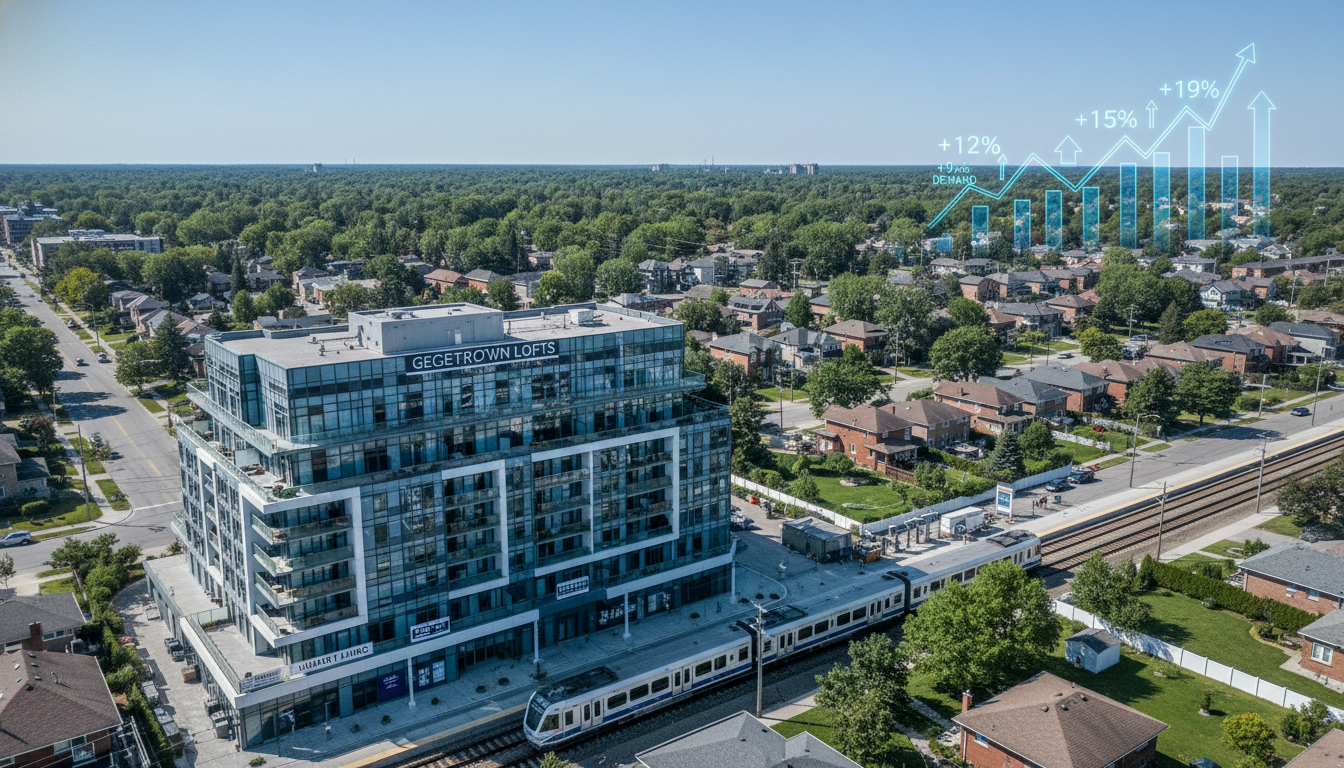
Should I invest in condos or houses for rental?
Rewritten Question (clickbait): Should I buy a condo or a house for rental in Georgetown — and which one will actually make me money and keep resale value?
Quick Verdict — No fluff
Buy the asset that matches your goal:
- Short-term cash flow and low entry cost: buy a condo.
- Long-term appreciation and stronger resale value: buy a house.
Both can win in Georgetown, Ontario. The gap is how you manage risk, cash flow, and exit strategy.
Why this matters in Georgetown, ON
Georgetown sits inside the Greater Toronto Area commuter belt. That means demand from buyers and renters is steady. Limited new-build greenfield space around Halton Hills keeps single-family homes expensive. Condos give entry to the market sooner. Houses offer land — and land drives long-term resale value.
Keywords: Georgetown ON real estate, Georgetown Ontario, condos vs houses, rental investment, resale value, investment property Georgetown

Real, actionable numbers (use these to decide)
Think with metrics, not emotion. Here are example scenarios based on current regional trends and common listings in Georgetown.
Scenario A — Typical Condo
- Purchase price (approx): $450,000–$650,000
- Monthly rent (market): $1,900–$2,400
- Condo fees: $350–$600/month
- Property tax & insurance approx: $200–$300/month
Net operating income (NOI) example (midpoint):
- Rent $2,150 × 12 = $25,800
- Expenses (condo fee $475 + tax/ins $250) × 12 = $8,700
- NOI = $25,800 − $8,700 = $17,100
- Cap rate = 17,100 / 550,000 ≈ 3.1%
Scenario B — Typical Detached House
- Purchase price (approx): $800,000–$1,250,000
- Monthly rent (market): $2,800–$3,800
- Maintenance & repairs: $250–$500/month
- Property tax & insurance: $450–$700/month
NOI example (midpoint):
- Rent $3,300 × 12 = $39,600
- Expenses (maintenance $375 + tax/ins $575) × 12 = $11,700
- NOI = $39,600 − $11,700 = $27,900
- Cap rate = 27,900 / 1,025,000 ≈ 2.7%
Takeaway: Condos often show slightly higher cap rates because the purchase price is lower and rents compress less proportionately. Houses can show lower cap rates but stronger long-term price appreciation because of land value.
Cash-on-Cash and Leverage
Use cash-on-cash to judge short-term investor returns. Smaller down payment on condos lowers capital required and can lift cash-on-cash returns. Houses typically need more capital, which stretches returns but can amplify gains on resale.
Example (simple):
- Condo purchase $550,000 with 20% down ($110,000). Annual cashflow (after mortgage) might be $4,000–$8,000 = 3.6%–7.3% cash-on-cash.
- House purchase $1,025,000 with 20% down ($205,000). Annual cashflow might be $2,500–$6,000 = 1.2%–2.9% cash-on-cash.
If your goal is passive income now, condos usually win. If your goal is to build equity and resale profit in 7–15 years, houses often win.
Resale Value: What Really Holds Up in Georgetown
Resale depends on scarcity and desirability.
- Land scarcity: Single-family lots are finite. Georgetown’s available land for detached builds is limited compared to high-density corridors. That supports long-term house appreciation.
- Market preference: Families want yards, schools, and space. That keeps demand for houses steady, especially for resale to owner-occupiers, which drives multiple premium offers and stronger resale prices.
- Condo risk factors: Condo buildings age, condo fee hikes, special assessments, and the board’s competence affect resale. New condo supply near transit can hold value, but buildings with repeated special assessments drop in resale desirability.
Practical rule: Houses capture land-driven appreciation. Condos capture urbanization-driven demand and commute convenience.
Georgetown market trends that matter
- Commuter demand: Proximity to GO Transit and Hwy 7/401 corridors brings buyers priced out of Toronto into Georgetown. That supports both rental demand and owner purchases.
- Limited lot supply: Halton Region planning controls limit sprawl. That biases long-term appreciation to houses.
- Condo development: New condo projects are targeted near transit and Highway 7. They offer rental demand but add supply that can compress condo price gains.
Local insight: If a condo is near the GO station or major employment corridors, it will rent well and be attractive on resale. If a house is in a top school zone or on a larger lot, it will likely outperform on resale.

Tax, Fees, and Regulations — the invisible costs
- Condo fees reduce NOI and bleed resale marketability if they rise sharply.
- Maintenance and vacancy risk are higher for houses (lawn, furnace, roof). Factor in a 5–10% vacancy/maintenance buffer.
- Closing costs, Land Transfer Tax (Ontario/Halton), and potential HST on new builds affect initial outflow.
Always run pro forma with conservative rent and expense assumptions. Use a 2–3% annual maintenance reserve and 4–6% vacancy allowance when modelling.
Who should buy what — practical profiles
-
Buy a condo if:
-
You want faster entry with less capital.
-
You prefer hands-off maintenance or plan to hire a property manager.
-
Your target tenant is young professionals or commuters.
-
Buy a house if:
-
You plan to hold 7+ years for appreciation.
-
You want a stronger resale market to sell to owner-occupiers.
-
You can handle higher maintenance and management complexity.
Hybrid strategy most investors ignore
Buy both, but sequence them: start with a condo to build capital and gain landlord experience. Refinance, then upgrade into a house when equity allows. Georgetown’s market rewards patience.
Exit strategy and resale timing
- Condos: Best short-to-mid term exit (3–7 years) if near transit or employment hubs.
- Houses: Best long-term exit (7–15 years) to benefit from neighborhood maturation and land appreciation.
Pro tip: Track resale comps, not listing prices. A house sold in your target neighborhood for owner-occupiers is the best indicator of what you’ll get.

Quick checklist before you buy in Georgetown
- Is the property close to transit, schools, or major employers? That equals demand.
- What are condo fee histories and any upcoming special assessments?
- What’s the typical rent for similar properties in the block? Be conservative by 5–10%.
- Estimate one-time replacement costs: roof, HVAC, water heater.
- Confirm local zoning trends and new supply pipelines.
Action steps — a 30-day plan to decide
Day 1–7: Run numbers on 3 condos and 3 houses in Georgetown. Use conservative rent and 5% vacancy.
Day 8–14: Get mortgage pre-approvals and estimates for condo fees and taxes.
Day 15–21: Inspect top candidates; ask about special assessments and recent repairs.
Day 22–30: Calculate cap rate, cash-on-cash, and 7–10 year resale scenarios. Pick the asset that meets your primary goal (cash now vs wealth later).
Why work with a local expert
Georgetown values shift on micro-factors: school zones, local infrastructure, subdivision plans. A local realtor with investor experience reduces risk and accelerates returns. They spot hidden red flags: condo board issues, rapidly aging roofs, or upcoming supply that can change demand.
Contact Tony Sousa for local, investor-focused guidance: tony@sousasells.ca | 416-477-2620 | https://www.sousasells.ca
FAQ — Condos vs Houses for Rental in Georgetown, ON
Q: Which gives better cash flow in Georgetown — condos or houses?
A: Typically condos show better short-term cash flow due to lower purchase price. But you must subtract condo fees. Houses can produce positive cash flow but often lower percentage returns on initial capital.
Q: Which holds resale value better in Georgetown?
A: Houses generally hold resale value better because of land scarcity and buyer preferences for owner-occupiers.
Q: Do condo fees kill resale value?
A: High or rising condo fees can harm resale demand. Buyers look at fee stability, reserve fund status, and recent assessments.
Q: Is location or asset type more important?
A: Location always wins. A poorly located house will underperform a well-located condo near transit.
Q: Should I buy new or resale?
A: New condos may attract renters but come with initial marketing discounts and potential construction delays. Resale houses in good neighborhoods usually offer predictable resale value.
Q: How long should I hold the property?
A: If you want steady income, 3–7 years for condos can work. For capital gains on houses, plan 7–15 years.
Q: What yield should I target?
A: Aim for 4–6% cap rate as a baseline in this market, and 6–8% cash-on-cash if using conservative leverage.
Q: Do vacancies or repairs change the decision?
A: Yes. If you want predictable, lower-maintenance investment, prefer condos. If you’re comfortable with repair variability, houses offer upside.
Q: Where can I get Georgetown-specific comps and analysis?
A: Work with a local realtor who provides MLS comps and in-person neighborhood trend analysis. Contact Tony Sousa: tony@sousasells.ca | 416-477-2620.
Final line: Stop guessing. Run the numbers, match the asset to your goal, and use local market expertise to execute. In Georgetown, both condos and houses can win — if you pick the right property for the right reason.