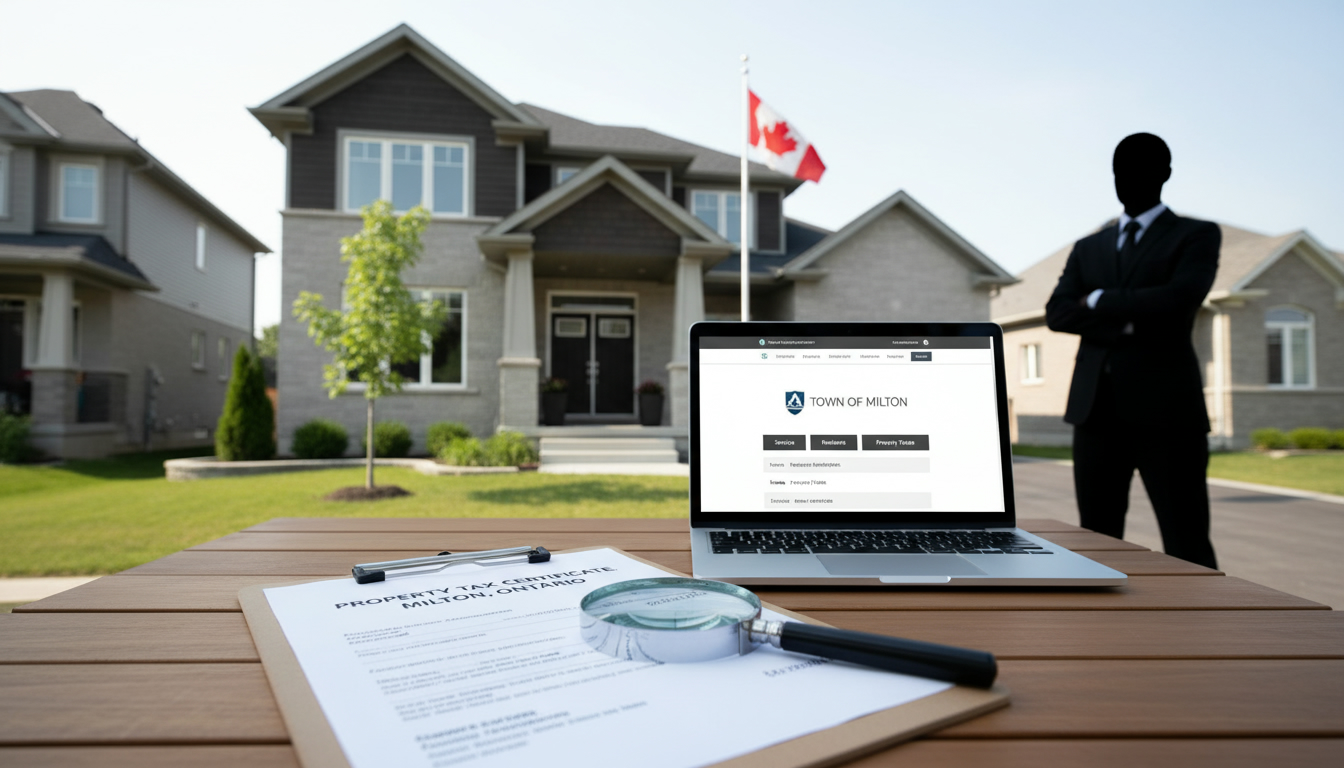
How do I confirm property taxes are paid?
Selling in Milton? Don’t Close Until You Confirm Property Taxes Are Paid — Use This Exact Checklist
Why confirming property taxes matters now
If you’re selling a home in Milton, ON, one unchecked item can turn a smooth closing into a costly mess: unpaid property taxes. Municipalities can place charges on a title, lawyers need tax certificates, and buyers will demand clean transfer of ownership. You want clean, fast closings. That only happens when property taxes are confirmed paid and documented.
This guide tells you exactly how to confirm property taxes are paid in Milton, Ontario — step-by-step, no fluff. Use it if you’re a home seller, buyer, or agent in Milton and want certainty at closing.
Quick answer: the short, actionable checklist
- Get the property’s roll number or PIN.
- Ask the seller for the current property tax bill and payment receipts.
- Check Town of Milton’s online property tax lookup.
- Request a municipal tax certificate from the Town of Milton (lawyer typically does this).
- Lawyer confirms taxes are paid or holds funds to clear any shortfall at closing.
Follow these five points and you avoid last-minute surprises.

The real reason sellers and buyers lose money
Too many sellers assume “I paid it” equals “it’s clear on title.” Municipal billing cycles, timing of payments, and arrears from prior years mean a payment can miss a cut-off date. Buyers’ lawyers want proof — a municipal tax certificate dated just before closing. If you don’t produce it, the sale can be delayed or money can be held back.
If you’re selling in Milton, the Town of Milton issues tax bills and records payments. The Municipal Property Assessment Corporation (MPAC) sets assessment values, but MPAC does not confirm payments. Don’t confuse assessment with payment.
Step-by-step: How to confirm property taxes are paid in Milton, ON
1) Collect the basics: roll number (also called property account number or PIN) and municipal address
- The roll number is on every tax bill. If you’re the seller, provide it. If you’re the buyer or agent, ask for it in writing.
- Without the roll number, online lookups and municipal staff will waste time.
2) Ask the seller for the latest tax bill and payment receipts
- Sellers should produce their most recent interim and final tax bills and receipts for the current year.
- A copy of a cancelled cheque is also acceptable proof if it shows the municipality as payee and the date.
- This is fast and often enough to catch obvious gaps.
3) Use the Town of Milton online property tax lookup
- Milton offers an online property tax and utility portal where you can view current balances by roll number.
- Online lookups show outstanding balances and payment history for taxes and municipal utilities.
- Pro tip: note the date and take a screenshot. Print it and include it with sale documents.
4) Request a municipal tax certificate from the Town of Milton (this is the gold standard)
- A municipal tax certificate is an official document issued by the municipality showing the tax status and any outstanding amounts as of the certificate date.
- Lawyers almost always order the tax certificate as part of closing. Sellers can order it, but lawyers rely on a fresh certificate dated close to closing.
Why the tax certificate matters:
- It’s the municipality’s official statement.
- It lists arrears, outstanding penalties, or any charges the buyer inherits.
- It’s typically required by lenders and title insurers.
How to get it:
- Lawyer or notary usually orders the certificate through the Town of Milton’s Finance/Tax Office.
- Municipal fees apply (usually a modest fee — often in the range of $25–$100).
- Certificates can be issued same day or within a few business days depending on the town’s workflow.
5) Confirm final clearing and funds at closing
- If the certificate shows a balance, the lawyer will ensure outstanding taxes are paid from the seller’s proceeds or a holdback at closing.
- The lawyer confirms the certificate again near closing. If anything changes between the certificate date and closing, the lawyer catches it.
For buyers and their lawyers: what to order and when
- Order a tax certificate dated as close to closing as possible.
- Request a tax status update the morning of closing if possible.
- Include a clause in the Agreement of Purchase and Sale that taxes will be paid to the date of closing and that lawyer will receive the municipal tax certificate.
This is routine for experienced Milton realtors and lawyers. Do not accept verbal assurances.
Online resources for Milton property tax checks (what to use and what it shows)
- Town of Milton – Property Taxes & Utilities page: check balances, view bills by roll number.
- MPAC – Property assessment lookup: shows assessed value and property data (not payments).
- Teranet/Onland (Ontario Land Registry) – title and registrations: shows liens and registered charges (tax arrears may appear here if registered).
Use the Town of Milton portal to confirm current balances. Use MPAC to confirm the assessment and legal description. Use the land registry to spot registered charges.
Common problems sellers in Milton run into — and how to fix them
Problem: Seller says taxes are paid, but online balance shows arrears.
Fix: Ask seller for a receipt and redirect them to the Town of Milton tax office for clarification. If arrears exist, expect them to be paid at closing.
Problem: Tax certificate shows a small outstanding amount the day before closing.
Fix: Lawyer arranges payment from seller proceeds or negotiates holdback. Closing proceeds are adjusted.
Problem: Municipal utilities or water/sewer charges are unpaid and bundled with taxes.
Fix: Those amounts are also shown on the tax certificate and must be cleared. Confirm utility balances separately if possible.
Problem: Title has an older registered tax arrears or lien.
Fix: Title search through the land registry will reveal registered charges. Lawyer resolves or negotiates payoff before closing.
Costs and timing you should expect in Milton
- Municipal tax certificate fee: typically $25–$100.
- Online lookup: free.
- Lawyer/title search costs: standard legal fees apply; getting a tax certificate is part of the closing process.
- Timing: if paperwork is complete, a tax certificate can be issued within 24–72 hours. If there are complications, add more time.
Plan ahead. If you’re selling, order or confirm the certificate early so there’s no last-minute scramble.
Simple checklist for Milton home sellers (copy and use)
- Locate roll number / PIN and municipal address.
- Pull current interim and final tax bills and receipts.
- Log into Town of Milton property tax portal and screenshot the account page.
- Notify your lawyer or agent to order the municipal tax certificate.
- Clear any known outstanding balances before listing or have plan for payoff at closing.
- Keep tax documents in the closing file.
Use this checklist and you’ll cut closing friction by 90%.
Sample email to your buyer’s lawyer or agent (paste and send)
Subject: Property Tax Info & Roll Number — [Property Address], Milton, ON
Hello —
Property: [property address]
Roll number (PIN): [insert]
Attached: latest tax bill and payment receipt.
Please order a municipal tax certificate from the Town of Milton dated as close to closing as possible and advise of any outstanding balances. Seller will clear confirmed outstanding balances from proceeds at closing unless advised otherwise.
Thanks,
[Seller name]

Final word — don’t gamble with municipal paperwork
Property tax confirmation is not complicated. It’s a system. Use the roll number, the town portal, and the municipal tax certificate. Make your lawyer order the certificate before closing. If you do these things, you avoid delays, holdbacks, and liability.
If you want a local expert to handle this for you, ask a Milton realtor who runs this checklist every day. For direct assistance, contact Tony Sousa at tony@sousasells.ca or call 416-477-2620. Visit https://www.sousasells.ca for more local closing guides.
FAQ — Answering the questions Milton home sellers and buyers ask most
Q: What is a municipal tax certificate and why do I need it?
A: A municipal tax certificate is an official document from the municipality showing the tax account balance and any outstanding amounts as of the certificate date. Lawyers and lenders require it to confirm taxes are paid before completing a transfer.
Q: Who orders the tax certificate — seller, buyer, or lawyer?
A: Typically the buyer’s lawyer orders it as part of the closing process. Sellers can order one, but lawyers want a fresh certificate dated close to closing.
Q: How long does it take to get a tax certificate in Milton?
A: It can be same day or within a few business days. Timing depends on the Town of Milton’s processing. Order early to avoid delays.
Q: Can I check my Milton property tax balance online?
A: Yes. The Town of Milton has an online property tax portal where you can view bills and balances using the roll number.
Q: Does MPAC show if property taxes are paid?
A: No. MPAC shows assessment data and property information, not payments. Use the Town of Milton portal or the municipal tax certificate for payment status.
Q: What happens if property taxes are unpaid at closing?
A: The lawyer will ensure unpaid taxes are paid from the seller’s proceeds or hold back funds until cleared. In rare cases with larger arrears, closing can be delayed.
Q: Are municipal utilities included with property taxes?
A: Often yes. Water, sewer, and other municipal utilities can appear on the tax account and must be cleared. Check the tax certificate for details.
Q: How much does a tax certificate cost in Milton?
A: Fees vary but are generally a modest municipal fee (commonly $25–$100). Your lawyer will include this in closing costs.
Q: How do I spot a registered tax lien on title?
A: Order a title search through the Ontario land registry (Teranet/Onland). Registered arrears or tax-related registrations appear on title and must be resolved before or at closing.
Q: I’m a seller — should I pay taxes before closing?
A: If there are outstanding amounts, paying ahead of closing reduces risk. Alternatively, agree that the lawyer will pay outstanding amounts from proceeds at closing. Either way, communicate and provide documentation.
Need local help in Milton? Contact Tony Sousa — tony@sousasells.ca | 416-477-2620 | https://www.sousasells.ca