How do I confirm property zoning and land use
restrictions?
Want to know fast if your Georgetown property can be built on or sold without surprises? Read this and act now.
Quick Promise
If you’re selling or planning changes to a home in Georgetown, ON, you need zoning and land use clarity now — not later. This guide gives the exact, local steps to confirm zoning, spot land use restrictions, and remove deal-killers before buyers walk.
Why this matters — plain and simple
Zoning and land use rules determine what you can build, rent, renovate, or divide on a property. Miss a restriction and you can face:
- A stalled sale or lost buyer
- Required costly removals or rework
- Fines, denied permits, or forced changes
For sellers in Georgetown, ON, confirming zoning upfront lowers risk, speeds closings, and increases buyer trust. That equals higher offers and fewer headaches.
The no-fluff checklist: How to confirm property zoning and land use restrictions in Georgetown, ON
Follow these steps in order. Each step saves time and narrows the unknowns.
1) Get the exact property ID (PIN and civic address)
Ask for the Property Identification Number (PIN) from your deed or the assessment roll. If you don’t have it, use the civic address. This is the single most useful piece of info for every search.
Why: Municipal maps, Regional planning tools, and Title searches all require the PIN or address.
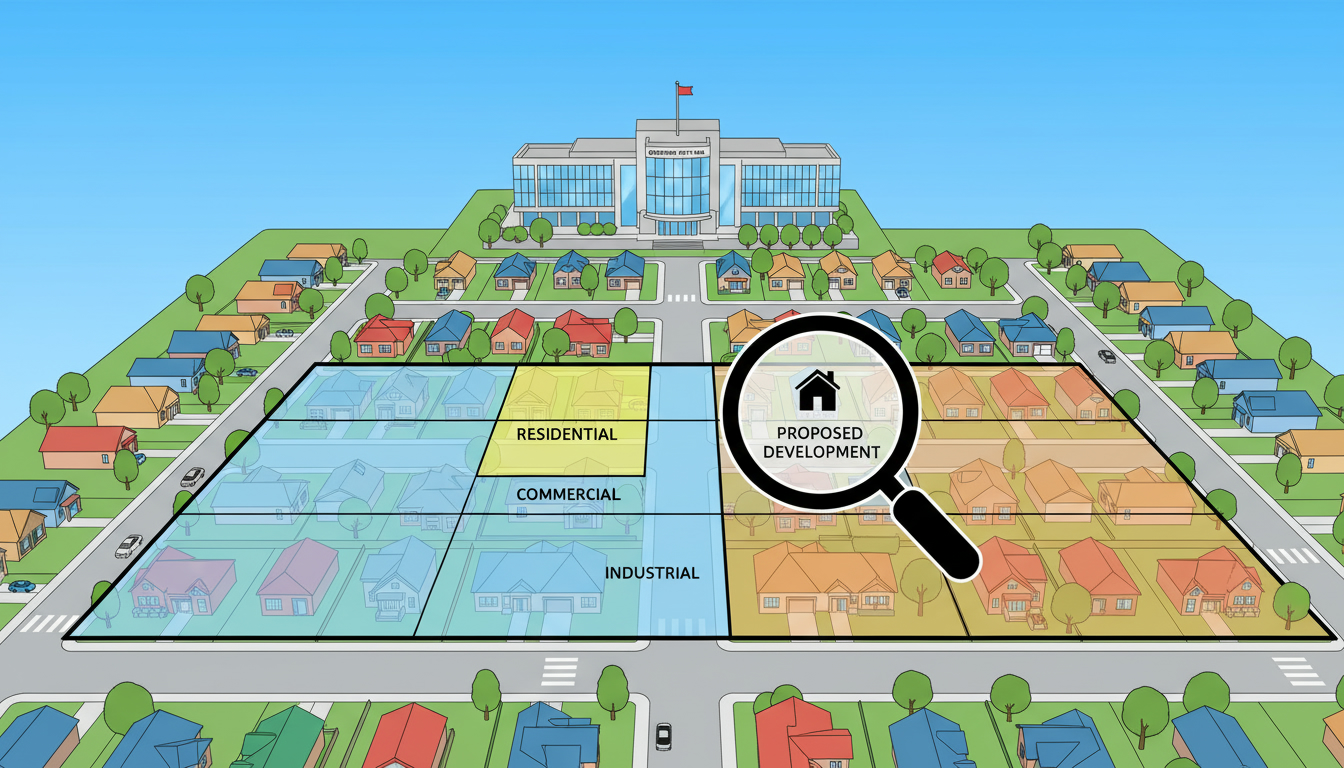
2) Check the Town of Halton Hills (Georgetown) zoning map and Official Plan
Georgetown is in the Town of Halton Hills. The first public source is the town’s zoning map and Official Plan. These documents show:
- Zoning category (residential, mixed-use, commercial, institutional)
- Permitted uses and typical restrictions
- Height, lot coverage, and setback rules
How: Visit the Town of Halton Hills website or the interactive online mapping tool. Search by address or PIN. Save screenshots and print the applicable zoning schedule and Official Plan designation.
3) Read the Zoning By-law details for the specific zone
A zoning label (like R1 or M1) is shorthand. The Zoning By-law spells out exact limits: allowed uses, accessory uses, setbacks, building height, parking rules. Download the relevant sections or copy the table that applies to your property.
Why: Buyers and lenders will ask specific questions — you must have the exact clauses.
4) Order a zoning confirmation / zoning compliance letter from the Town
Municipal planning staff can issue an official zoning confirmation or zoning compliance letter. This is often required by lenders and lawyers before closing.
How: Submit a request to Halton Hills planning department. Provide civic address, PIN, and a simple list of questions (e.g., permitted uses, parking rules, legal non-conforming status).
Benefit: It’s an official document you can give to buyers to remove doubt.
5) Check for conservation authority, floodplain, and environmental controls
Some properties in Georgetown fall under Conservation Authority oversight or provincial policies (e.g., natural heritage, floodplain). That can restrict where you build and require additional permits.
How: Search the local Conservation Authority mapping (e.g., Credit Valley Conservation may apply) and provincial natural hazards maps. If applicable, contact the conservation authority for confirmation.
6) Search title for easements, covenants, and rights-of-way
The municipal zoning rules are only part of the picture. Private restrictions live on title:
- Easements (shared driveways, utilities)
- Restrictive covenants (architectural controls, no-commercial-use clauses)
- Rights-of-way and party wall agreements
How: Order an up-to-date title search from a real estate lawyer or use the Ontario land registry portal. Ask your lawyer to flag clauses that affect saleability or future use.
7) Check Regional and Provincial policies
The Region of Halton and Ontario have planning policies that can override or influence local zoning (e.g., area-specific official plan policies, urban boundary limits). Verify large-scale rules that might affect development potential.
8) Confirm building permits and occupancy history
Past permits tell a story. A converted basement without permits can be an issue. Pull building permit records from Halton Hills to confirm legal conversions and additions.
How: Request permit records from the building department. If there are unpermitted works, get quotes and a plan to legalize them.
9) Hire help when the answer isn’t clear: planner, surveyor, or land-use lawyer
If zoning language is ambiguous or you’re considering a variance or official plan amendment, hire a registered planner or land-use lawyer. For boundary issues, hire an Ontario Land Surveyor.
Why: Professionals translate dense by-law text into actionable answers. For a seller, this can mean the difference between a smooth sale and a conditional deal.
10) Prepare a seller-ready package for buyers and lawyers
When you sell, provide a clean package: PIN, title search, zoning confirmation, by-law excerpts, permit history, and any conservation or easement notes. This speeds due diligence and reduces buyer nitpicking.
Result: Faster closings, stronger offers, and fewer conditions.
How zoning and land use restrictions affect homeowners and home sellers in Georgetown, ON
Here’s what matters most to sellers, in plain terms:
- Renovations and Permits: If a buyer plans changes, confirmed zoning and permits sell confidence. If work is unpermitted, value drops and buyers add conditions.
- Potential Uses: A change in use (like an in-law suite, Airbnb, or home business) may be limited by zoning. Disclose limits early.
- Property Value and Marketability: Clear legal status = more buyers + higher price. Unclear status = fewer offers and longer time on market.
- Closing Risk: Title obligations, easements, or conservation issues can stop closings. Pre-check eliminates last-minute surprises.
Practical examples a Georgetown seller needs to know now
- Done a basement suite? If permits are missing, you must disclose and may need to follow up before closing.
- Planning to split a lot or build a laneway house? Confirm zoning and servicing rules with Halton Hills and Region of Halton first.
- Property near a creek or ravine? Conservation authority rules can limit development and require permits.
Fast checklist sellers can use before listing (print this)
- Get PIN and current title search
- Pull zoning map screenshot and by-law excerpts for your zone
- Request zoning confirmation from Town of Halton Hills
- Check building permit history
- Search for easements, covenants, and conservation restrictions
- If unclear, hire a planner or land-use lawyer
- Put all docs in a seller disclosure folder for buyers and lawyers
Local action plan: Who to contact in Georgetown, ON
- Town of Halton Hills Planning Department — zoning maps, Official Plan, zoning confirmation
- Halton Region Planning — regional policies
- Local Conservation Authority — floodplain and natural heritage checks
- Real estate lawyer — title search and legal opinions
- Ontario Land Surveyor — boundaries and easements
Need a quick local intro? I handle sellers in Georgetown who want a clean, fast sale. I can coordinate municipal questions, surveys, and legal contacts to protect your sale and price. Contact Tony Sousa: tony@sousasells.ca | 416-477-2620 | https://www.sousasells.ca
Closing pitch — what to do next (no fluff)
If you’re listing in Georgetown: don’t wait for the buyer’s lawyer. Get zoning confirmation and title clarity before your listing goes live. It costs a little now and saves a lot at closing.
Take action: gather PIN, address, and permit history. If you want help, reach out. I’ll move this forward and keep the sale clean.
FAQ — Clear answers for home sellers in Georgetown, ON
Q: How long does a zoning confirmation from the Town take?
A: Typically 1–4 weeks depending on workload. Ask the Town for expedited options and plan for it in your timeline.
Q: Will zoning rules stop me selling my house?
A: Rarely. But unresolved title issues, unpermitted work, or conservation restrictions can delay or reduce offers. Resolve these before listing.
Q: What if my property is legally non-conforming?
A: Legal non-conforming (grandfathered) uses can remain but may restrict changes. Get written confirmation from the municipality and disclose to buyers.
Q: Do I have to remove an illegal structure before selling?
A: Not always. Some buyers accept conditions; others require the work legalized or removed. It’s best to fix or disclose to avoid deal collapse.
Q: How much does a title search or zoning letter cost?
A: Costs vary. Expect a title search through a lawyer for a few hundred dollars; a municipal zoning confirmation may have a modest fee. Factor this into pre-listing costs.
Q: Who enforces land use rules in Georgetown?
A: The Town of Halton Hills enforces zoning and building permits. Regional and Conservation Authorities enforce regional and environmental policies.
Q: Should I hire a planner or a lawyer first?
A: If the issue is interpretive (what you can do), start with a planner. If it’s legal (title wording, restrictive covenants), start with a lawyer.
Q: Will lenders require zoning confirmation?
A: Often yes, especially for large mortgages, refinances, or unconventional properties. Early confirmation prevents financing delays.
Q: How do easements affect sale price?
A: It depends on severity. A utility easement that doesn’t restrict use has minor impact. A right-of-way that cuts the usable yard can reduce price. Get an opinion from your agent and lawyer.
Q: I’m selling fast — what’s the minimum documentation I must provide?
A: Provide PIN, recent title search, permit history, and any known easements or covenants. Be honest. Honesty speeds closing.
Contact for local help: Tony Sousa — tony@sousasells.ca | 416-477-2620 | https://www.sousasells.ca