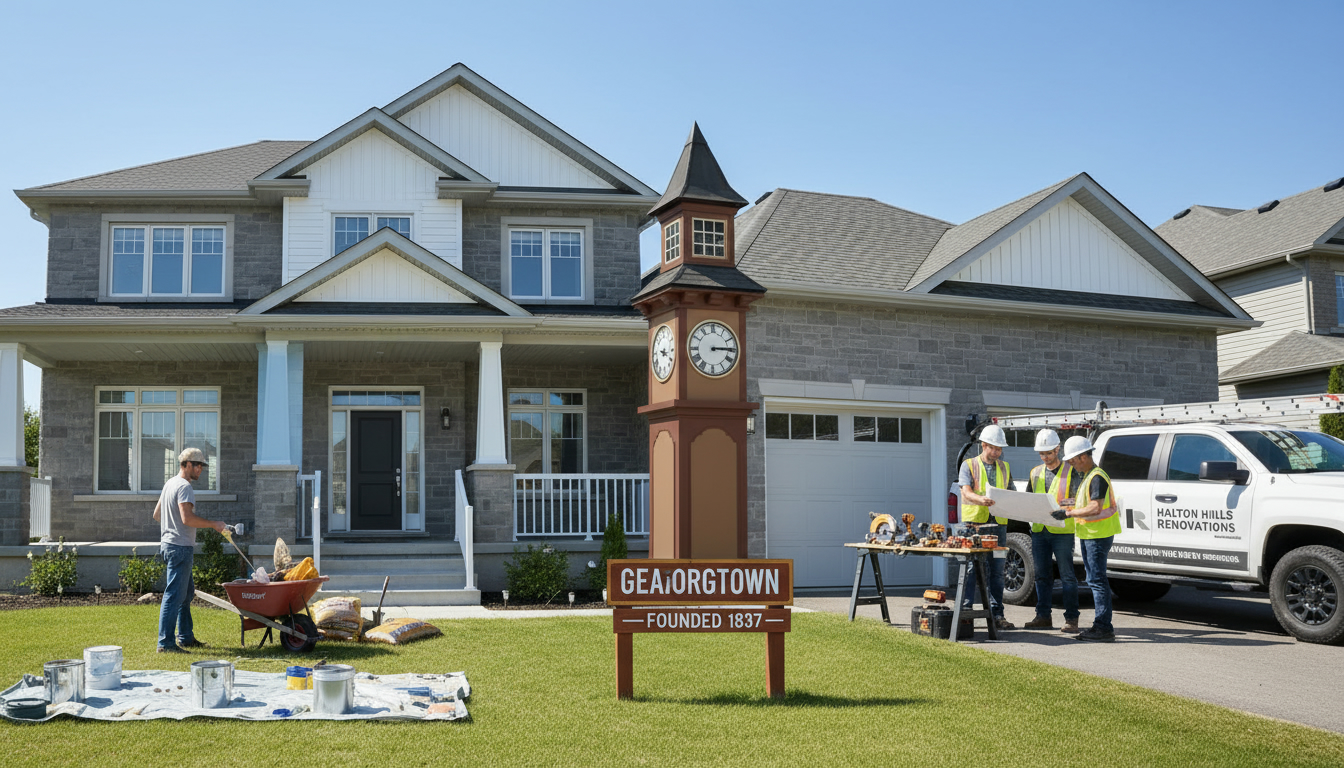
Should I hire a contractor or DIY renovations?
Should I hire a contractor or DIY renovations? — The blunt Georgetown answer that will save you time and cash.
Quick reality check: short answer for Georgetown home sellers
If you want the highest sale price with the least stress, hire a contractor for structural, electrical, plumbing, and kitchen or full-bath renovations. Do the cosmetic work yourself when you have the time and skill. A hybrid approach usually wins: pros for the big, DIY for paint, trim, and staging.
This guide tells you exactly when to hire, when to DIY, how the Georgetown, ON market changes the math, and how to avoid the costly mistakes most sellers make.
Why this decision matters in Georgetown
Georgetown sits in Halton Hills, close to Toronto commuters and appeal to families. Buyers here expect move-in-ready homes or clear value in upgrades. That makes poor DIY work obvious and damaging. Local buyers notice quality: uneven tile, sloppy electrical, bad finishes. Those details reduce offers and slow sales.
Key local factors to weigh:
- Buyer profile: families and commuters want reliability and low immediate maintenance.
- Competing listings: close attention to kitchen and bathrooms. These rooms drive buyer decisions in Georgetown.
- Local permit rules: structural changes, major electrical or plumbing work usually require Town of Halton Hills permits. Skipping permits creates listing complications and may kill financing for buyers.
Use local reality to decide: if the upgrade can be seen as a liability, hire a licensed pro.

When DIY makes sense (and saves money)
Do-it-yourself is smart when the scope is low risk and the work raises perceived value quickly.
Do these yourself:
- Cosmetic painting: fresh neutral paint throughout increases appeal and costs little.
- Deep cleaning and decluttering: staging-readiness improves offers fast.
- Replace hardware: new door handles, cabinet knobs, faucets (non-plumbing hookup) are cheap and look premium.
- Landscaping and curb appeal: mow, trim, add plants, pressure wash pathways.
- Minor tiling, simple flooring installs, and sanding/refinishing floors—only if you have experience.
Why DIY here works: buyers judge first impressions. Clean, neutral, well-lit spaces sell faster. These tasks have high visual ROI and low safety risk.
When you must hire a contractor (no debate)
Hire a licensed contractor for anything that touches structure, safety, or code compliance:
- Kitchens and bathrooms: layout changes, cabinetry, plumbing, and electrical.
- Structural work: removing walls, adding beams, reinforcement.
- Major electrical or plumbing: panel upgrades, rewiring, moving water lines.
- HVAC, gas work, and roofing.
- Projects requiring permits or inspections by Halton Hills.
Why: buyers, inspectors, and banks expect compliant work. A licensed contractor carries insurance and WSIB. They produce permits and records that increase buyer confidence.
Cost, time, permits, and ROI — the real numbers you need to think about
Think in three metrics: direct cost, time to complete, and resale impact.
- Direct cost: Contractors cost more up-front. But they reduce rework, speed delays, and unexpected expenses. Poor DIY can double cost when mistakes need fixing.
- Time: A pro finishes faster. Time matters in Georgetown—list during peak season and you capture commuter buyers. Projects that drag past listing windows cost you selling power.
- Permits and paperwork: Town of Halton Hills requires permits for structural, certain exterior, electrical, plumbing work. Contractors handle permit pulls and inspections. DIY permit pulls can flag you as a seller later.
- ROI: Cosmetic updates (paint, staging, landscaping) often offer the highest immediate ROI for sellers. Full kitchen remodels can attract buyers and increase final sale price, but may not recoup full cost unless done to mid-range specs with licensed trades.
Practical rule: If the improvement removes buyer uncertainty (e.g., new furnace, repaired roof, correct wiring), hire a pro. If it changes buyer perception positively without risk (e.g., paint, staging), DIY or low-cost contractors work.
How to hire the right contractor in Georgetown — step by step
- Get three written quotes. Compare scope, not just price.
- Check licences and insurance. Ask for WSIB confirmation and liability policy.
- Ask for local references and recent Georgetown projects. Call them.
- Verify permit handling. Ensure the contract states who pulls permits and who pays.
- Set a firm schedule and late-penalty clause. Time kills deals.
- Hold back final payment until inspections/pass and punch-list fixed.
- Avoid paying large cash deposits. Use cheques or traceable payments.
- Get a lien-free release in the final invoice if subcontractors were used.
Red flags: no written contract, vague scope, unwillingness to provide local references, or demands for cash-only payments.

Hybrid approach: the practical winner for many sellers
Most smart sellers pick a hybrid path:
- Hire pros for structure, kitchen, bathrooms, and anything needing permits.
- DIY painting, staging, basic landscaping, and sunshine-level cleaning.
- Use a handyman for small fixes: door adjustments, trim, caulking, and small repairs.
This cuts costs while protecting value. It keeps your listing timeline tight and controls risk.
Project timeline example for Georgetown sellers
- Week 1: Assess scope, get three quotes, decide DIY vs contractor.
- Week 2–3: Contractor mobilizes, permits applied and approved (if needed).
- Week 4–8: Construction phase for medium projects (kitchen refresh, one bathroom). Cosmetic tasks run in parallel.
- Final week: Inspections, final clean, staging, and photos for listing.
Plan conservatively. Weather, municipal review, or material delays can add time.
Pricing and budgeting tips specific to the local market
- Factor in HST when budgeting. Contractors will include HST on invoices.
- Get allowances for unexpected repairs—older homes commonly have surprises.
- Focus upgrades that match comparable homes in Georgetown. Over-improving for your neighbourhood risks not recouping cost.
If most homes in your street have mid-range kitchens, a luxury gut-renovation may not pay off. Match the market.
Selling right after renovations vs selling as-is
Selling after a clean, well-executed renovation can raise price and buyer interest. Selling as-is saves cost and time but narrows your buyer pool to investors or bargain hunters. In Georgetown’s competitive pockets, small targeted upgrades often produce a better net outcome than forcing a full renovation.

Call to action
Get a local reality check before you spend. I’m Tony Sousa, a Georgetown realtor focused on renovations that move houses fast and raise net proceeds. Email tony@sousasells.ca or call 416-477-2620 for a free no-pressure renovation ROI consult tailored to your property and the Halton Hills market. Visit https://www.sousasells.ca for recent sold examples.
FAQ — Renovations, upgrades, and selling in Georgetown, ON
Q: Do I need a permit for a bathroom or kitchen update?
A: If work touches plumbing, electrical, or structural elements, the Town of Halton Hills usually requires permits. Cosmetic updates like paint, new cabinets (without moving plumbing), or flooring typically do not. Confirm with the town or your contractor before starting.
Q: Will a minor kitchen update increase my home’s sale price in Georgetown?
A: Yes—if it improves function and looks in line with neighbourhood expectations. New cabinet faces, modern hardware, fresh counter surfaces, and appliances in good condition increase buyer interest with limited cost.
Q: How much should I budget for contractor markup and unexpected costs?
A: Budget a contingency of 10–20% for unexpected items and include HST on all contractor invoices. Larger, older homes may require higher contingency.
Q: What compels buyers in Georgetown the most?
A: Move-in-ready condition, modern kitchens and bathrooms, reliable mechanical systems, good curb appeal, and clear records of permits and professional workmanship.
Q: Can I list before renovations are complete to test buyer demand?
A: You can, but it risks low offers and negotiation around unfinished work. If time is tight, prioritize curb appeal and quick cosmetic work, then list. For bigger projects, wait until finished and staged.
Q: How do I verify a contractor’s local reputation?
A: Ask for recent Georgetown references, visit a current job site if possible, check Google and Facebook reviews, request proof of insurance and WSIB, and confirm permit pull history with the town.
Q: Will DIY always save me money?
A: No. DIY saves money on low-risk tasks. Mistakes on electrical, plumbing, or structural work often cost more to fix and will reduce buyer trust when selling.
Q: Are there tax benefits for renovating before selling?
A: Renovation costs that increase the property’s adjusted cost base can affect capital gains calculations when you sell a non-principal residence. For most primary residence sales in Canada, principal residence exemption applies. Consult an accountant for tax-specific advice.
Q: How long after renovations should I wait to list?
A: List once inspections are passed, the space is cleaned and staged, and any contractor punch-list is complete. Rushing can expose small problems that scare buyers.
Q: What’s the fastest improvements to increase offers in Georgetown?
A: Fresh neutral paint, decluttering and staging, updated lighting, modern door and cabinet hardware, and tidy landscaping. These are low-cost, high-impact.
If you want a personalized roadmap for your Georgetown home—what to DIY, what to hire, and the expected net gain—email tony@sousasells.ca or call 416-477-2620. No pressure. Just clear local advice that saves time and money.