What is an encumbrance on a property?
Is your Milton property secretly tied up? Learn what an encumbrance on a property means and how it can cost you time and money — fast.
What is an encumbrance on a property?
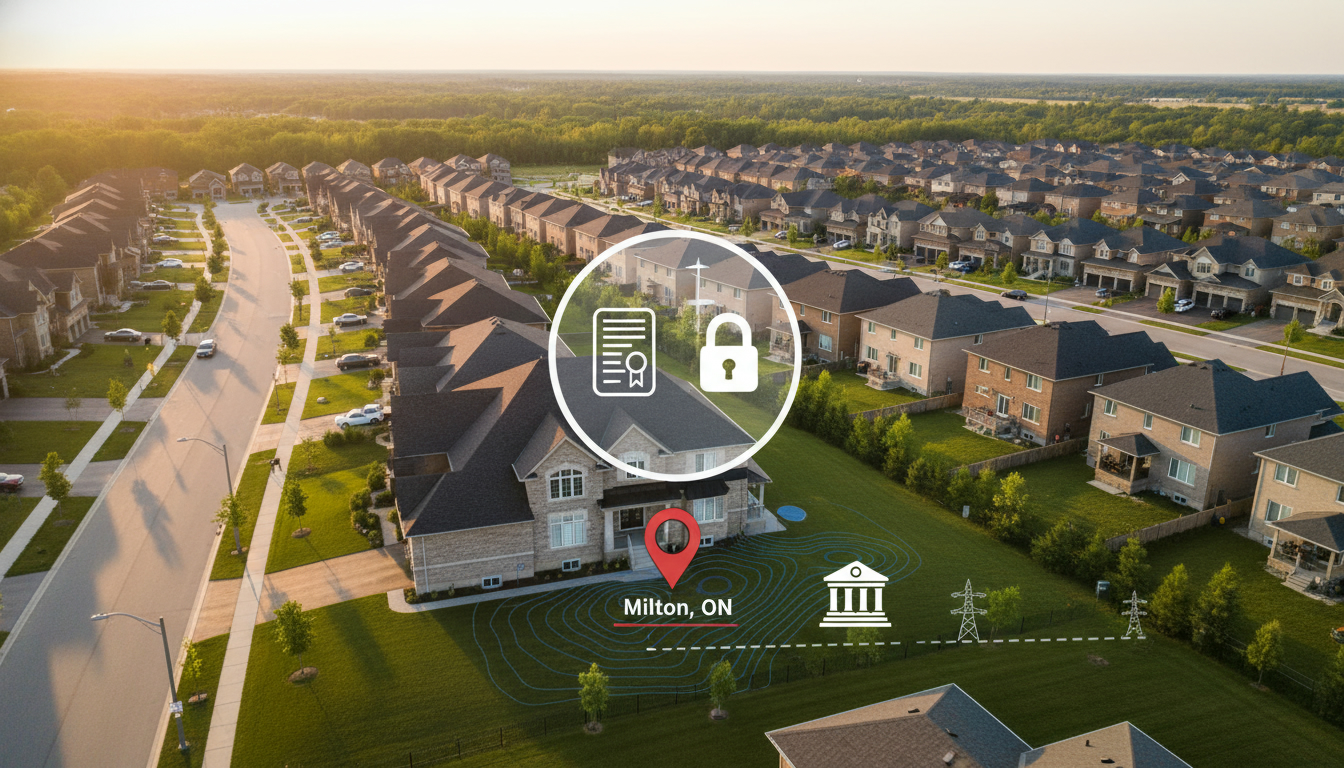
An encumbrance is any legal claim, right, or liability attached to a property that can limit the owner’s use, reduce its value, or block a sale. In plain terms: it’s anything on the title that isn’t the clean, unrestricted ownership you expect.
Common keywords: encumbrance on a property, property encumbrance Milton, Milton Ontario title issues.
Encumbrances can be financial (like a mortgage or lien) or non-financial (like an easement or restrictive covenant). They stay with the land until cleared or discharged. That’s why buyers and sellers in Milton, Ontario must know what’s on the title before closing.
Why every Milton buyer and owner must care now
If you buy or sell a house without discovering an encumbrance, you risk:
- Loan denial or delayed mortgage funding
- Unexpected legal costs to remove or negotiate the encumbrance
- Lower sale price or cancelled sale
- Limits on renovations, access, or use of the land
Local nuance: municipal orders, unpaid property taxes, or development-related restrictions in Milton can create unexpected encumbrances. Local developers and the Town of Milton may register covenants or agreements that follow the property.

Top types of encumbrances you’ll see in Milton, ON
- Mortgage: The most common encumbrance. A mortgage stays on title until discharged. Lenders register it as security for a loan.
- Liens and Judgments: Legal claims by contractors, creditors, or the Canada Revenue Agency for unpaid debts.
- Easements and Rights-of-Way: Legal rights for someone else to use part of your land — common for shared driveways or utility access.
- Restrictive Covenants: Rules limiting how land is used — common in subdivisions and new developments around Milton.
- Covenants, Conditions and Restrictions (CC&Rs): Rules recorded by developers for neighbourhood design and use.
- Municipal Charges and Work Orders: Unpaid water bills, property standard orders, or tax arrears can become encumbrances.
- Encroachments: When a structure crosses a property line — fences, garages, or driveways.
How encumbrances affect sale, purchase, and financing in Milton
- Title Insurance & Lender Requirements: Lenders require a clean title or a clear plan to resolve encumbrances before funding. Title insurance may protect buyers but not all encumbrances are coverable.
- Resale Value: Encumbrances can reduce a property’s market value or scare off buyers.
- Use and Renovation Limits: An easement or covenant can block a planned addition or pool.
- Closing Delays: Clearing an encumbrance can take weeks to months depending on the type and parties involved.
Keywords integrated: title insurance Milton, property liens Milton, easement Milton, restrictive covenant Milton, land registry Milton.
Find encumbrances fast: local checklist for Milton properties
- Order a title search at the Ontario Land Registry or Teraview through a lawyer or title company.
- Ask your real estate agent to obtain existing property reports and seller’s statements.
- Hire a real estate lawyer in Milton to review the title, registered instruments, and municipal records.
- Get title insurance to protect against hidden registration problems.
- Run a municipal search for tax arrears, building permits, or outstanding work orders.
- Inspect the property for physical encroachments (fences, sheds, driveways).
- Confirm any easements with neighbours and utility companies.
- Ask the seller to provide a discharge or agreement to remove encumbrances before closing.
Local tip: Many Milton buyers assume a builder’s disclosure guarantees a clean title. It doesn’t. Always verify with a licensed conveyancing lawyer and request records from the Halton Region and Town of Milton.
How to remove or manage common encumbrances in Milton
- Mortgage or Charge: Get a discharge or payoff statement from the lender. The lender must register a discharge on title.
- Judgment or Lien: Pay the creditor or negotiate a settlement. A release must be registered.
- Easement: Negotiate a licence, purchase the easement, or modify usage through agreement. In some cases, apply to the Superior Court of Justice for relief.
- Restrictive Covenant: Apply to the Town or seek a legal modification. Some covenants can be severed or amended but expect legal and municipal fees.
- Municipal Orders: Complete required work and get the municipal release registered.
Don’t delay. The longer an encumbrance remains, the harder it can be to refinance, sell, or plan improvements.

Real-life Milton examples that show the risk
- Case A: Buyer found an old builder covenant restricting fencing height after purchase. Result: costly retrofit and neighbour dispute.
- Case B: Owner ignored a municipal property standard order. The Town completed the work and registered a municipal charge against the title. The owner paid a premium to clear the charge before selling.
- Case C: A shared driveway had an easement registered in favour of the neighbour. The buyer planned a garage but couldn’t proceed without negotiating the easement.
These are real outcomes in Halton Region properties. A simple title search and legal review would have prevented all three.
Title search vs. title insurance — which do you need?
- Title search: A lawyer reviews registered documents on title. This reveals most encumbrances and is essential.
- Title insurance: Protects against unknown or undiscovered title problems. It’s fast and often cheaper than long legal battles, but it doesn’t remove an encumbrance — it provides financial protection.
Best practice in Milton: Do both. Have a lawyer complete a title search and purchase title insurance at closing.
Buyer and seller negotiation tips in Milton
- Buyers: Include a condition for a clear title or a seller-provided discharge in the agreement of purchase and sale.
- Sellers: Disclose any known encumbrances early. Get payoff letters and discharge documents ready to avoid delays.
- Both parties: Use an escrow holdback when an outstanding encumbrance can’t be cleared before closing. Escrow protects the buyer while allowing the transaction to proceed.
Keywords: Milton real estate lawyer, Milton title search, escrow holdback Milton.
Quick 7-step pre-closing checklist for Milton properties
- Confirm title search results with your lawyer.
- Request payoff statements for mortgages and charges.
- Secure title insurance.
- Run municipal searches (taxes, building permits, work orders).
- Inspect for physical encroachments and discuss with neighbours.
- Resolve or document agreements for easements and covenants.
- Confirm discharge registrations with the Land Registry Office before release of funds.

Work with the local expert — why local experience matters
Local knowledge matters. Milton has unique development patterns, municipal processes, and historic subdivisions. Local professionals know which builders registered covenants, how the Town of Milton records development agreements, and which utility corridors commonly create easements.
If you want a single point of contact who knows Milton’s market and legal pitfalls, talk to a local professional who handles title issues daily. They know the exact questions lenders and lawyers will ask, and they’ll get you to a clean closing faster.
Contact: tony@sousasells.ca | 416-477-2620 | https://www.sousasells.ca
FAQ — Common questions about encumbrances in Milton, Ontario
Q: Can a property with an encumbrance still be sold in Milton?
A: Yes. Many encumbrances don’t block a sale if the buyer accepts them or the seller provides a discharge. But lenders often require clearance before mortgage funding.
Q: Who pays to remove an encumbrance?
A: Typically the seller pays to clear encumbrances that pre-date the sale, but parties can negotiate. Creditors must register releases to remove financial encumbrances.
Q: Will a title search show all encumbrances?
A: A title search reveals registered encumbrances in the Ontario Land Registry. Some issues, like unregistered agreements or adverse possession claims, might not appear. That’s why title insurance and a lawyer’s review matter.
Q: How long does an easement last in Ontario?
A: Many easements are permanent and run with the land. Others are time-limited. Check the registered instrument for exact terms.
Q: What’s the difference between an encumbrance and a lien?
A: A lien is a financial encumbrance (a creditor’s claim). “Encumbrance” is broader and includes liens plus non-financial rights like easements.
Q: Does title insurance cover encumbrances?
A: Title insurance covers specific defects and unknown issues but has exclusions. It often covers fraud, forgery, and certain unregistered interests but won’t cure a registered easement limiting use.
Q: Where do I search for encumbrances in Milton?
A: Start at the Ontario Land Registry/Teraview through a lawyer. Also request municipal searches from the Town of Milton and Halton Region.
Q: How quickly can an encumbrance be cleared?
A: It varies. Mortgage discharges are usually quick once funds are received. Negotiating easements or paying judgment liens can take weeks to months.
If you’re buying or selling in Milton and want a clear path to a clean title, get local help. Quick title checks and simple legal steps prevent major losses.
Contact Tony Sousa, Local Milton Realtor
Email: tony@sousasells.ca
Phone: 416-477-2620
Website: https://www.sousasells.ca
Need help right now? Send the title search and purchase agreement and get a fast, no-nonsense review that saves time and money.