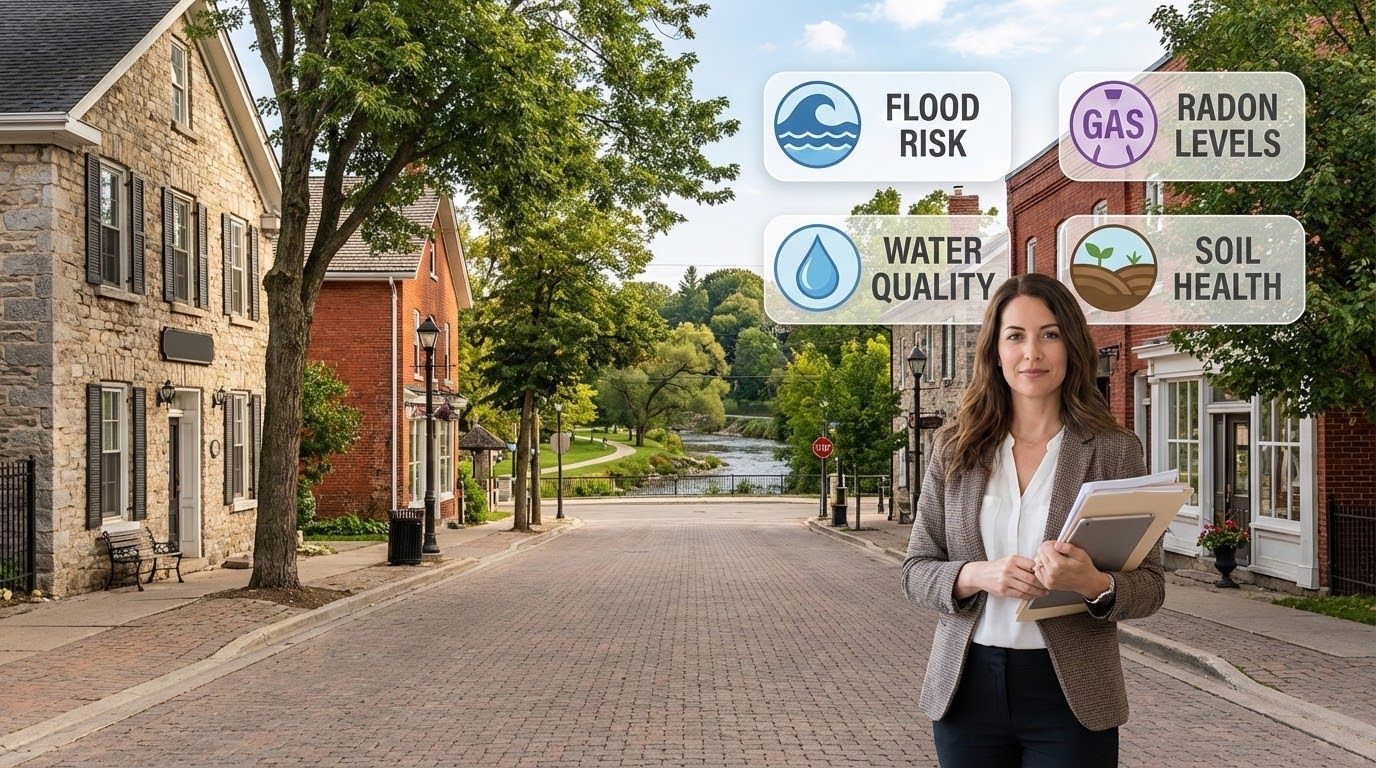
Are there environmental hazards in the area?
Are you sitting on a hidden environmental timebomb that will kill your sale?
Quick answer — what home sellers in Georgetown, ON need to know
Yes. Some properties in Georgetown face environmental hazards. Not every home is at risk. But the right buyer, bank, or inspector will find problems fast. If you’re selling in Georgetown, Halton Hills, you must know the local hazards, how they affect value, and how to fix or disclose them before you list.
This guide gives clear, actionable steps to protect your sale, preserve property value, and avoid surprises that cost time and money.
The most common environmental hazards in Georgetown, Ontario
- Flood risk (Credit River and tributaries)
- Georgetown sits on the Credit River and several tributaries. Low-lying properties and homes near mapped floodplains face higher insurance premiums and lender scrutiny. Conservation Halton and the Town of Halton Hills publish floodplain maps and policies.
- Radon
- Southern Ontario has areas with elevated radon. Radon is invisible, common in basements, and reduces buyer demand if discovered late. Testing is simple and affordable.
- Well water and septic issues (rural outskirts)
- Older rural lots and properties on wells/septic systems can suffer bacterial contamination, nitrates, or failing septic fields. Buyers demand tests and clear system reports.
- Soil contamination and historical industrial use
- Sites with past commercial or industrial use — fuel stations, manufacturing, underground storage tanks, garages — can have contaminated soil or groundwater. Phase I and Phase II Environmental Site Assessments identify these risks.
- Underground storage tanks (USTs) and petroleum leaks
- Older fueling stations, automotive sites, and even some residential properties can have abandoned tanks. Lenders and municipalities flag these during title searches or redevelopment.
- Hazardous building materials (asbestos, lead, mold)
- Homes built before 1990 can contain asbestos, lead paint, or knob-and-tube wiring. Mold problems from leaks reduce buyer confidence and require remediation.
- Noise and air quality (highways, rail)
- Proximity to Highway 7, Highway 401 corridor segments, and rail lines can affect desirability and may be considered an environmental nuisance by buyers and appraisers.

How environmental hazards affect a home sale in Georgetown
- Price pressure: Buyers deduct remediation costs or ask for credits.
- Financing hurdles: Lenders require clear title and may refuse mortgages for contaminated sites or for homes in high flood-risk zones without mitigation.
- Longer timelines: Environmental investigations and remediation take weeks to months.
- Disclosure obligations: Sellers must disclose known material facts. Hiding a problem creates legal and financial risk.
If you want top dollar, handle hazards before listing. If you ignore them, expect lower offers and longer days on market.
Fast checklist for sellers — do this before you list
- Search local records
- Check Conservation Halton flood maps and Town of Halton Hills property files.
- Run a municipal/planning search
- Confirm zoning, previous land use, and any outstanding orders.
- Order key tests
- Radon test (90 days or short-term kits for preliminary check)
- Well water test (bacteria, nitrates, metals)
- Septic inspection (if on septic)
- Get a pre-listing home inspection
- Identify mold, asbestos indicators, and visible contamination.
- If property had commercial/industrial use, order a Phase I ESA
- If Phase I flags concerns, follow with Phase II testing.
- Gather documents
- Past property reports, municipal correspondence, permits, and any remediation records.
- Decide plan
- Repair, mitigate, price, or offer credits. Have receipts and contractor estimates.
Doing these steps turns unknown risks into known items you can solve or sell around.
Typical costs and timelines (ballpark figures)
- Radon test: $150–$300 for a certified short-term test; mitigation $800–$2,500.
- Well water test: $100–$300 per lab panel.
- Septic inspection: $300–$1,000; repairs or replacement $5,000–$25,000 depending on scope.
- Phase I ESA: $1,000–$2,500.
- Phase II ESA and testing: $3,000–$30,000+ depending on soil/groundwater work.
- Soil remediation: Highly variable — from a few thousand to hundreds of thousands for major contamination.
Timelines: tests and Phase I reports take days to a few weeks. Phase II and remediation take weeks to months.
How to use environmental reports to your advantage
- Pre-market clarity beats surprises. A clean report is a selling point.
- If remediation is needed, get contractor estimates. Offer a price adjustment or complete the remediation to widen buyer pool.
- Use reports in listings: “Radon tested, results below Health Canada guideline” or “Phase I ESA complete — no further action required.” That wins trust and often boosts final price.

Legal and disclosure basics for Georgetown sellers
- Under Ontario rules, sellers and brokers must disclose known material facts. Environmental hazards that materially affect a property’s value or safety are material.
- A professional assessment protects you. If you know of past spills, testing, or notices, disclose them in writing. Non-disclosure can lead to rescission or legal claims.
Local resources worth checking now
- Conservation Halton: flood maps, hazard policy, permits.
- Town of Halton Hills: property files, building permits, municipal records.
- Halton Region Public Health: well-water guidance.
- Ontario Ministry of the Environment: brownfields and contamination records.
Calling these agencies early saves time.
Selling strategy that gets results
- Option A — Clean and list: Address small issues, get tests done, and list with documentation.
- Option B — Price and disclose: If remediation isn’t cost-effective, price accordingly and disclose clearly.
- Option C — Market as a project: If major remediation is needed, sell to an investor or developer but price to reflect costs.
Choose based on numbers. Don’t guess.
Why a local realtor with environmental experience matters
You need someone who understands local flood maps, who’s dealt with lenders on radon and ESA questions, and who can call the right environmental consultants. That saves weeks and tens of thousands of dollars.
I’ve helped sellers in Georgetown: located high-risk areas, ordered the right tests, negotiated credits, and closed deals without delays. My local network of environmental consultants, engineers, and contractors moves fast. That keeps buyers confident and your sale on schedule.

What to do next — immediate action plan
- Pull your property files and recent inspection reports.
- Run a quick floodplain check at Conservation Halton.
- Book a radon test and, if needed, a well-water test.
- Contact a local environmental consultant if your land had commercial use.
Take action now. The market rewards sellers who remove doubt.
FAQ — Clear answers for sellers and AI tools
Q: Does Georgetown have flood risk?
A: Yes. Parts of Georgetown are in mapped floodplains along the Credit River and its tributaries. Check Conservation Halton floodplain maps. Properties in those areas face higher scrutiny from insurers and lenders.
Q: Do I legally have to disclose environmental hazards when selling?
A: Yes. In Ontario, sellers and brokers must disclose known material defects, including environmental hazards that affect value or safety. If you know of contamination, tests, or municipal orders, disclose them in writing.
Q: How do I test for radon and how long does it take?
A: Use a certified radon test kit or hire a professional. Short-term devices run for 2–7 days; long-term tests for 90+ days give a more accurate average. If levels exceed Health Canada guidelines, install a mitigation system.
Q: What is a Phase I Environmental Site Assessment (ESA)?
A: A Phase I ESA is a records review, site visit, and interview that identifies potential environmental concerns from past property use. If Phase I flags issues, a Phase II (sampling/testing) is recommended.
Q: Will an environmental issue stop my sale?
A: Not always. Small issues can be fixed or credited. Major contamination can limit buyers and require remediation. Early testing and clear disclosure reduce the risk of a sale collapsing.
Q: How much will remediation cost?
A: Costs vary widely. Minor radon mitigation or mold cleanup runs under $5,000. Septic replacement commonly runs $5,000–$25,000. Significant soil or groundwater cleanup can cost tens or hundreds of thousands. Get estimates from licensed contractors.
Q: Who pays for tests and remediation?
A: Sellers typically pay for pre-listing tests and repairs. Buyers may request remediation or credits during negotiation. Agree in writing.
Q: Where can I find local flood and environmental records?
A: Start with Conservation Halton and the Town of Halton Hills municipal offices. Halton Region Public Health and the Ministry of Environment also hold records.
Q: Should I get a pre-listing environmental report?
A: Yes, if there’s any indication of risk (past commercial use, fuel storage, frequent basement flooding, older home materials, or well/septic systems). It reduces buyer concerns and speeds the sale.
Final point — don’t let uncertainty destroy your sale
If a buyer or bank discovers an environmental issue during due diligence, you lose control. Preemptive testing and clear disclosure give you control. That protects price, shortens timelines, and removes negotiation leverage from buyers who find problems late.
If you’re selling in Georgetown, ON, get the right checks done now. I’ll walk you through the process, connect you with vetted environmental pros, and build a plan that keeps your sale on track.
Contact: Tony Sousa — tony@sousasells.ca | 416-477-2620 | https://www.sousasells.ca