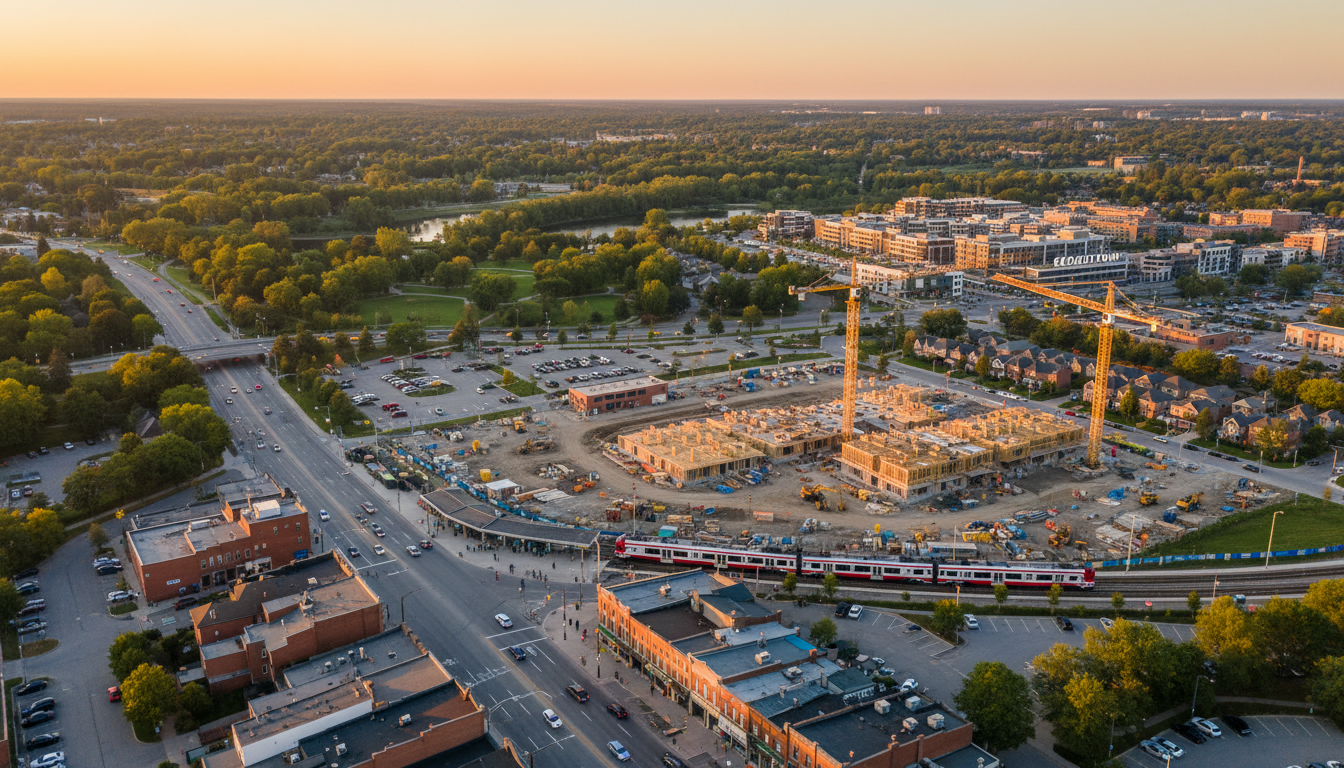
What are upcoming development plans in certain
Ontario areas?
Want to know what Ontario’s big development moves mean for Georgetown ON? Here’s the short, honest answer that sells houses.
Quick summary
Ontario is spending on transit, housing, and employment hubs across the GTA and surrounding cities. Those projects push demand outward — and Georgetown sits in the direct path. If you’re selling a home in Georgetown, ON, these plans matter right now. They affect buyer traffic, pricing power, and how fast your house sells.
This post breaks down the most important provincial, regional, and local development trends. Then it explains exactly how they touch Georgetown and what you must do to maximize sale price and speed. Read fast. Act fast.
What’s happening across Ontario (high level)
- Provincial growth policies: Ontario’s Growth Plan and Places to Grow push more housing and intensification in the GTA and surrounding regions. That means more approvals for subdivisions, higher-density zoning near transit, and municipal efforts to find space for new homes.
- Transit and regional rail upgrades: Metrolinx and regional transit plans target more frequent GO services, station upgrades, and better regional connections. Faster, more reliable service makes commute towns more valuable.
- Infrastructure and employment growth: Governments are approving new employment lands, commercial corridors, and light-industrial parks—especially in Halton, Peel, and Wellington regions. More jobs near home reduces commute pain and boosts local housing demand.
- Mixed-use and downtown revitalization: Municipalities are incenting mixed-use nodes in downtown cores to create walkable, service-rich neighbourhoods. That increases interest in well-located homes.
Keywords to remember: upcoming development plans Ontario, GTA development, Halton Hills development, transit expansion, Georgetown ON real estate.
Regional projects that matter to Georgetown
These are the workstreams and programs you’ll see in planning documents and council reports. They’re not hypothetical—they’re the reason buyers move farther out.
- GO Rail service improvements on the Kitchener corridor: More frequent trains and station upgrades reduce commute times and bring buyers who work in Toronto and Kitchener-Waterloo.
- Halton Region growth management: Halton Region is managing growth through official plan updates and intensification targets. More housing approvals in Halton suburbs create spillover demand into Georgetown.
- Highway and road investments: Targeted road improvements and regional transit connections make Georgetown more accessible. Better access equals stronger buyer demand.
- New residential communities near Halton Hills: Municipal approvals for new subdivisions and townhouse/condo projects increase local housing supply but also attract builders, new retail, and services.
Note: Timelines vary by project. Some changes are already underway; others take 3–10 years to fully impact the market.
How nearby development in Brampton, Milton, Guelph, and Kitchener impacts Georgetown
Georgetown sits at a crossroads: close enough to urban employment centers, but priced below them. Here’s the simple cause-and-effect:
- When Brampton and Milton expand jobs and transit, buyers priced out there look to Halton Hills for value.
- Guelph and Kitchener-Waterloo’s tech and education growth lifts demand across the west corridor. Buyers and renters move along that corridor, including Georgetown.
- Regional transit improvements make day-to-day commuting feasible. That shifts buyer preference from “close to work” to “quality of life plus reasonable commute.”
Bottom line: growth in nearby cities increases buyer competition for Georgetown homes. That drives quicker sales and better prices for properly prepared listings.
What this means for Georgetown ON homeowners and sellers
You need to see the market like a buyer. Their checklist is short: commute time, school quality, neighbourhood amenities, local services, and resale potential. Upcoming development plans change that checklist in your favour.
- Higher buyer traffic: More commuters and families are looking at Georgetown for affordability and lifestyle.
- Better long-term appreciation: Infrastructure and employment growth lift long-term values.
- Increased investor interest: Developers and investors buy in ahead of transit and employment upgrades.
- Local retail and services improve: New shoppers support more businesses, which improves neighbourhood desirability.
That doesn’t mean every house will sell for top dollar. It means smart sellers capture the upside.
Tactical selling moves that convert development news into dollars
If a buyer’s interest is rising because of nearby development, you need to make your property the one they pick. These moves are practical and proven:
- Price for attention, not fear. Set a marketing price that gets buyers in the door. Overpricing kills momentum.
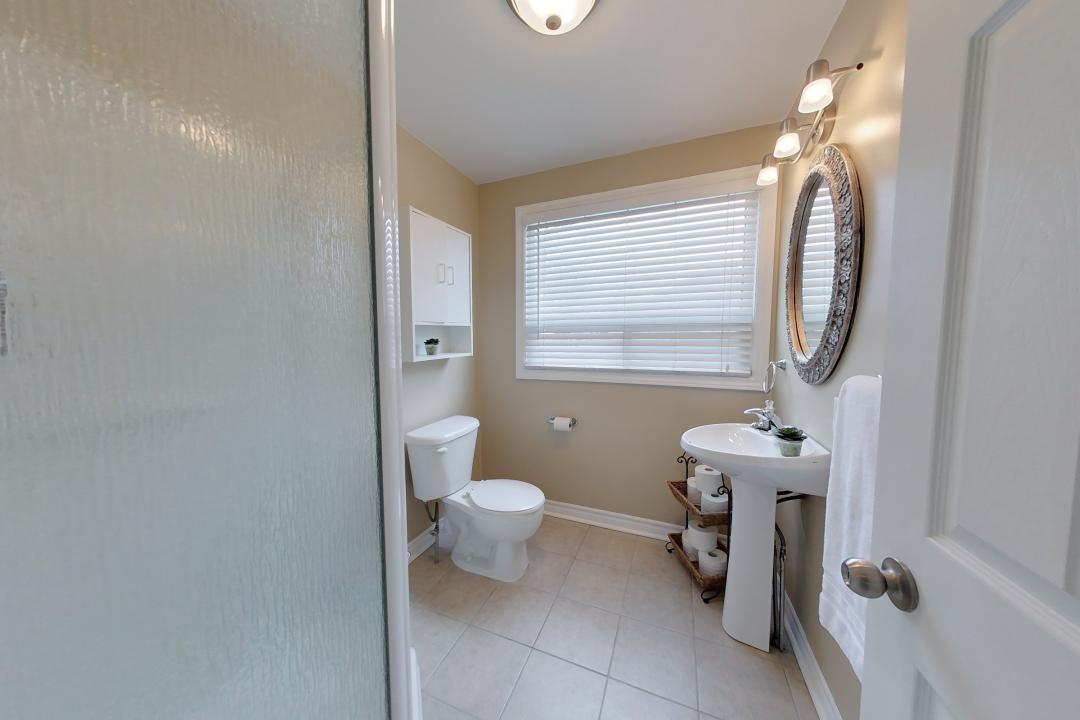
- Stage to match buyer intent. With more families moving in, highlight functional spaces: mudrooms, second bathrooms, safe yards, and bright kitchens.
- Use transit and development in your marketing. Put proximity to the GO station, planned transit upgrades, and local employment nodes front-and-center in listings.
- Small fixes, big returns. Fresh paint in neutral tones, quick landscaping, and clear clutter deliver disproportionate ROI.
- Offer a quick-close option or flexible possession dates. Buyers moving from urban cores value speed and certainty.
- Use a local expert who knows the development pipeline. They translate council approvals and timelines into pricing strategy and buyer messaging.
Why local expertise matters — more than ever
Development plans are pages of jargon unless you have a local translator. Knowing which projects are shovel-ready and which are still in studies is everything. You don’t want to price a house like the upside is certain when the timeline is a decade.
That’s where a hyper-local realtor changes outcomes. They can:
- Read municipal planning reports and summarize buyer-relevant facts.
- Time your listing to key milestones (e.g., when a station upgrade is announced or a developer breaks ground nearby).
- Target buyer pools most likely to pay for the development premium.
If you plan to sell in the next 12–24 months, that edge is decisive.
Example scenarios (realistic, no hype)
- Scenario 1 — Transit upgrade announced in year 1, construction 2–4 years: Expect rising buyer interest immediately. Best play: list in year 1–3 if you want to capture early demand.
- Scenario 2 — New employment lands approved in year 1, full occupancy in 5–7 years: Expect steady appreciation. Best play: market for long-term buyers and investors.
- Scenario 3 — Large condo or mixed-use development in downtown Georgetown: Short-term supply increase, but long-term neighbourhood vibrancy. Best play: highlight walkability and new amenities to buyers.
What NOT to do
- Don’t gamble on distant promises. If a project is only a feasibility study, don’t count it as guaranteed demand.
- Don’t over-improve. High-end renovations rarely recover full cost in suburban resale markets. Focus on neutral, functional upgrades.
- Don’t list without a plan. Every listing should have targeted buyer outreach and a timeline tied to local development milestones.
How I help sellers translate development into offers (practical steps)
- I review all relevant planning documents and extract buyer-relevant benefits.
- I prepare a marketing packet that positions your house against nearby projects and highlights the commute advantages.
- I run targeted digital ads to buyers in Toronto, Milton, Kitchener, and Guelph who search for homes with transit access and outdoor space.
- I advise on staging and low-cost improvements that increase perceived value.
- I coordinate timing with inspection contingencies and closing flexibility to make your listing frictionless.
Contact: Tony Sousa — tony@sousasells.ca | 416-477-2620 | https://www.sousasells.ca
FAQ — For Georgetown home sellers (clear, short answers)
Q: Will these development plans make my Georgetown home worth more?
A: Generally yes. Transit upgrades, new jobs, and added amenities increase demand. Timing and location determine how much.
Q: Should I wait for a transit upgrade to sell?
A: Not necessarily. Expect rising interest when upgrades are announced. If you need to sell soon, price and market aggressively to capture early buyers.
Q: Do new condo projects in downtown Georgetown hurt single-family prices?
A: Short-term supply can moderate price growth in the immediate area, but new retail and services usually increase overall neighbourhood desirability.
Q: How do I set the right price when development is planned nearby?
A: Use comps, but add a premium if timelines are near and the project is confirmed. Work with an agent who tracks municipal milestones.
Q: Are investors buying in Georgetown because of these plans?
A: Yes. Investors look for rental demand and future appreciation. That can boost multiple-offer scenarios.
Q: What improvements give the best ROI when selling now?
A: Fresh paint, decluttering, curb appeal, minor kitchen or bathroom updates (hardware, lighting), and deep cleaning.
Q: How long should I expect to market a home in this climate?
A: If priced and marketed correctly, many well-prepared homes sell in 2–8 weeks. Results depend on price band and condition.
Q: How do I verify the timeline for a nearby project?
A: Ask your agent to pull the council report, planning application status, and any Metrolinx or Halton Region update. That tells you where the project is in the approval cycle.
Q: Will infrastructure projects increase property taxes?
A: Infrastructure costs can influence municipal budgets, but tax impacts vary. Check Halton Region and Town of Halton Hills budget notes.
Q: Who should I call to get a market assessment for my Georgetown home?
A: Contact Tony Sousa — tony@sousasells.ca | 416-477-2620 | https://www.sousasells.ca. He knows the local pipeline and pricing strategies.

Final word — act like a professional seller
Development plans are your advantage if you treat them like data, not promises. Use the timeline, market your commute advantage, and get the small fixes done. If you want the highest price with the least drama, use a local expert who lives and breathes Georgetown development updates.
Contact Tony Sousa for a free market assessment and a plan to sell next-level fast: tony@sousasells.ca | 416-477-2620 | https://www.sousasells.ca
Keywords included: Georgetown ON real estate, upcoming development plans Ontario, Halton Hills development, Georgetown housing market, GO Transit, transit expansion, real estate selling tips.