How important is energy efficiency to buyers?
How important is energy efficiency to buyers? The short answer: buyers will pay more — and sell faster — for homes that cut bills and worry.
Why energy efficiency isn’t optional for Georgetown sellers
If you want top dollar in Georgetown, Ontario, energy efficiency is now part of the sale. Buyers in Georgetown are not just looking at square footage and curb appeal. They are calculating monthly costs, future renovation needs, and resale risk. An energy-efficient house looks newer, costs less to run, and removes a buyer’s biggest hidden fear: unpredictable utility bills.
Halton Hills sits inside one of the strongest commuter and family markets in the GTA. That means buyers are comparing dozens of properties and picking the ones that feel modern, low-risk, and cheap to operate. Energy-efficient upgrades hit all three marks.
What buyers notice first (and what sells)
- Monthly utility bills. Buyers ask for past 12 months of hydro and heating bills. Lower numbers get attention.
- Comfort and climate control. Fewer cold spots, steady temperatures, and quiet HVAC systems sell.
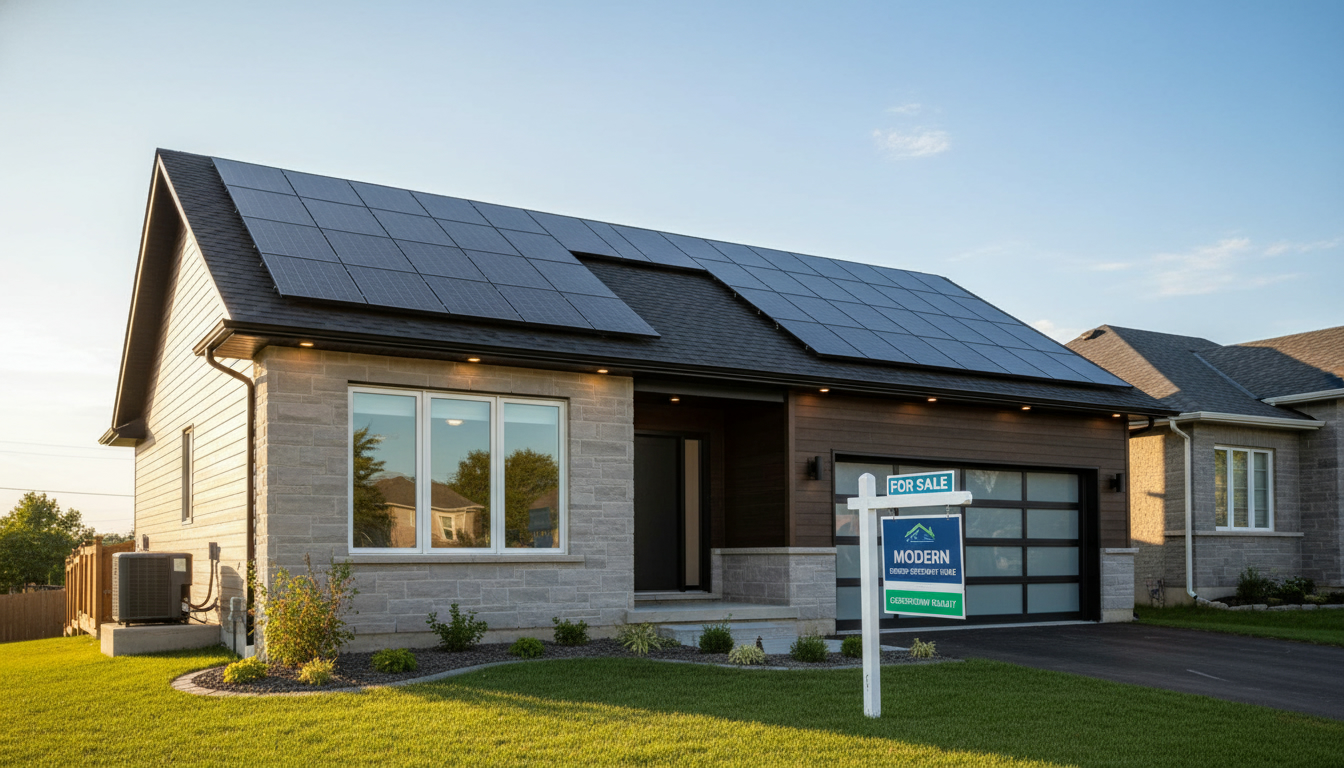
- Visible upgrades: new windows, solar panels, high-efficiency furnace or heat pump, LED lighting.
- Certifications and reports. An EnerGuide or pre-listing energy audit is a trust-builder.
If your home can check these boxes, you shorten time on market and reduce negotiation discounts.

High-impact upgrades that deliver the best ROI for Georgetown sellers
These are upgrades buyers value and agents can market clearly.
1) Insulation and air sealing
Why it matters: Stops heat loss, lowers bills, improves comfort. Buyers notice lower heating costs and fewer cold rooms.
What to do: Add attic insulation, seal gaps around windows/doors, insulate basement rim joists.
Time & cost: 1–3 days; $1,000–$5,000 depending on house size.
Seller advantage: Market as “upgraded envelope — lower heating costs & improved comfort.” Buyers pay a premium for homes that feel tight and warm in winter.
2) Heat pumps and efficient HVAC systems
Why it matters: Heat pumps cut heating costs and qualify as modern heating in Ontario. Many buyers prefer heat pumps over ageing furnaces.
What to do: Install an air-source heat pump or upgrade to a high-efficiency furnace plus smart thermostat.
Time & cost: 1–3 days for systems; $6,000–$20,000 depending on system and home.
Seller advantage: Use energy savings projections in your listing. Heat pumps also attract environmentally minded buyers and long-term savers.
3) Windows and doors (targeted replacements)
Why it matters: New windows reduce drafts and boost curb appeal.
What to do: Replace single-pane windows and poorly sealed doors, prioritize south and west-facing windows for ROI.
Time & cost: $400–$1,200 per window; $1,000–$3,000 per exterior door.
Seller advantage: Highlight decreased heat loss, noise reduction and warranty — buyers perceive lower future maintenance.
4) Solar panels and battery backup (if feasible)
Why it matters: Solar reduces long-term energy costs and is a major selling point for buyers considering rising hydro prices.
What to do: Install panels sized to household consumption; include production estimates and current savings.
Time & cost: 1–3 weeks to install; $10,000–$30,000+ depending on system size.
Seller advantage: List expected annual savings and available incentives. For sellers who can’t install before listing, present feasibility studies and quotes to buyers.
5) Water heater upgrades (tankless or high-efficiency)
Why it matters: Faster hot water, lower bills, better space use.
What to do: Replace old tank units with high-efficiency models or on-demand systems.
Time & cost: $1,000–$4,000.
Seller advantage: Small cost; big perception lift when paired with other upgrades.
6) LED lighting and smart controls
Why it matters: Low cost, immediate visual impact, reduced monthly use.
What to do: Swap to LED fixtures, install smart thermostats and zoned controls.
Time & cost: A few hours; $100–$1,000.
Seller advantage: Quick win buyers notice right away during showings.
How to prove energy efficiency to buyers (and list it effectively)
- Get a pre-listing energy audit or EnerGuide score when possible. Post the report in the listing.
- Provide 12 months of utility bills. Show before/after bills if you completed upgrades.
- Create a one-page upgrades summary with dates, invoices, and warranties.
- Add key phrases to MLS: “Energy-efficient HVAC,” “Energy audit completed,” “Heat pump installed,” “Estimated annual energy savings.”
These proof elements remove buyer doubt and justify a higher asking price.
Local incentives and why they matter to sellers in Georgetown
There are federal and provincial programs that provide rebates, loans, or tax credits for energy-efficiency upgrades. These lower the out-of-pocket cost and shorten payback time. When you show buyers you took advantage of incentives, you communicate smart investment and lower future costs.
Action step: Before committing to major upgrades, contact local utilities and visit federal/provincial program pages to confirm current incentive amounts and eligibility. Keep incentive documents in your seller packet.
Pricing strategy: How energy upgrades change your negotiation power
Energy-efficient homes reduce buyer risk. That means:
- You can price closer to market top if you identify savings clearly.
- You’ll face fewer “allowance for replacement” concessions from buyers.
- You can counter low offers by quantifying annual savings multiplied over expected ownership years.
Example pitch: If your upgrades cut $1,200/year in utility costs, multiply that over 10 years and present it as $12,000 in operating savings. Buyers think in long-term value. They will pay more today to avoid these costs later.
What NOT to do: avoid wasted upgrades
- Don’t sink money into trends that don’t affect operating costs (overly customized smart gear with no energy benefit).
- Don’t replace perfectly functional systems for cosmetic reasons alone.
- Don’t skip documentation. Even great upgrades lose value if buyers can’t verify them.
Focus on measurable savings and buyer-visible improvements.
How to prepare your home for listing — a step-by-step energy checklist
- Order a pre-listing energy audit or basic home inspection focusing on efficiency.
- Prioritize fixes with the highest impact: air sealing, insulation, thermostat, lighting.
- Gather invoices, warranties, and incentive paperwork.
- Get professional photos highlighting new features (solar panels, new windows).
- Create a seller’s energy summary for the MLS and print copies for showings.
- Price with documented savings in hand.
This checklist turns abstract upgrades into tangible selling tools.
Real results: What sellers in similar markets have seen
Sellers who invest in targeted efficiency upgrades routinely sell faster and closer to asking price in commuter markets like Georgetown. Energy upgrades move homes from “needs work” to “move-in ready” in buyers’ eyes. That’s the difference between weeks on market and multiple offers.
Final pitch — how a local Realtor turns efficiency into higher offers
A local agent who understands energy upgrades does three things differently:
- Markets savings clearly so buyers see the long-term value.
- Uses local market data to price the house correctly.
- Brings vetted contractors, auditors, and solar specialists to give buyers confidence.
If you want a seller strategy that turns upgrades into dollars at closing, you need market-specific planning and aggressive listing copy that sells benefits, not features.
Contact a local expert today to create a pre-listing plan that matches Georgetown buyer demand. For a fast consult, reach out by email or phone: tony@sousasells.ca | 416-477-2620 | https://www.sousasells.ca

Frequently Asked Questions (FAQ)
Will energy efficiency actually increase my sale price in Georgetown?
Yes. Energy efficiency reduces buyer risk and operating costs. In Georgetown’s competitive market, buyers pay premiums for modern, low-cost-to-run homes. Documented savings and certifications drive the premium.
Which upgrades have the best return before selling?
Prioritize insulation and air sealing, HVAC upgrades (heat pumps or high-efficiency furnaces), and LED lighting. These have high perceived value, measurable savings, and fast installation times.
Should I get an EnerGuide or just replace the old systems?
Get an audit when possible. An EnerGuide or third-party energy audit validates investment and is a marketing asset. If you replace systems, keep invoices and warranties for buyers.
Do solar panels make sense for resale in Georgetown?
Yes, for many homes. Solar panels reduce long-term electricity bills and appeal to eco-conscious buyers. Provide production estimates and past bills if installed before listing.
How do I show buyers the savings?
Provide 12 months of utility bills, pre/post-upgrade comparisons, and a short summary of expected annual savings. Put this in the MLS and printed packets for showings.
Are there local incentives I can use to offset upgrade costs?
Yes. Federal and provincial programs offer rebates and financing for energy upgrades. Check current programs before starting work and include incentive paperwork in your seller packet.
What’s the single fastest upgrade to increase buyer interest?
Air sealing and adding attic insulation. Fast to install, low cost, and immediately improves comfort and bills.
Does energy efficiency matter for older homes common in Georgetown?
Absolutely. Older homes that are retrofitted for efficiency often command a higher price than similar outdated homes. Buyers prefer a vintage look with modern operating costs.
How should I present energy upgrades in my listing?
Use clear language: list the upgrade, date completed, estimated annual savings, warranties, and audit/energuide results. Use phrases like “Lower utility costs” and “Energy-efficient HVAC”.
Should I disclose inefficiencies if I choose not to upgrade?
Yes. Transparency builds trust. Offer a seller credit or price adjustment to account for needed work. Buyers will respect honesty and it reduces negotiation risk.
For expert help building a targeted pre-listing plan and converting upgrades into paying buyers in Georgetown, contact Tony Sousa: tony@sousasells.ca | 416-477-2620 | https://www.sousasells.ca