Are energy-efficient upgrades worth the
investment?
Are energy-efficient upgrades worth the investment? Read this first — the straight ROI playbook every Georgetown home seller needs.
Quick answer
Yes — when you pick the right upgrades, time them before listing, and market them correctly. Energy-efficient improvements reduce operating costs, increase buyer demand, and often shorten time on market in Georgetown, ON. They’re not magic, but done smartly they pay.
Why sellers in Georgetown should care
Georgetown sits in Halton Hills — buyers expect comfort, reliability, and low monthly bills. Local buyers commute to the GTA, compare neighbourhoods, and increasingly look at total cost of ownership, not just asking price. Energy costs in Ontario have moved higher in recent years, so a home with lower bills stands out.
If you want a faster sale and stronger offers, don’t think like a contractor. Think like a buyer and an investor. Buyers will pay more for a home they trust won’t surprise them with high utility bills or a furnace replacement next winter.
The basic math buyers and agents use
Buyers convert upgrades into dollars the same way you should:
- Energy savings per year ($) x expected ownership years = perceived value
- Add the upgrade’s effect on comfort and maintenance risk reduction
- Compare to the upgrade cost and payback period
Simple example: a heating upgrade that saves $600/year looks like $4,200 over seven years. If the cost (after rebates) is $8,000, a buyer treats that as a roughly 3.5-year payback — attractive if the house is on their short list.
Top energy-efficient upgrades for Georgetown sellers (ranked by seller ROI and buyer appeal)
Note: costs and payback times are ranges. Actuals depend on home size, age, and existing systems.
1) Air sealing and attic insulation
- Why: Improves comfort and cuts heating/cooling bills immediately.
- Cost: Often $1,000–$5,000 for typical detached home.
- Payback: 2–7 years.
- Seller value: Big. Low-cost, quick to complete, strong check on inspection lists.
2) Heat pumps (air-source or hybrid)
- Why: Major cut in heating (and cooling) costs vs old furnaces and baseboards.
- Cost: $7,000–$20,000 (varies widely); incentives reduce net cost.
- Payback: 4–12 years depending on electricity vs gas pricing and available rebates.
- Seller value: High in the right house. Market as lower bills + AC included.
3) High-efficiency furnace or boiler
- Why: Buyers worry about a furnace replacement in the next few years.
- Cost: $3,000–$8,000 installed.
- Payback: 6–12 years through efficiency; immediate buyer confidence.
- Seller value: Moderate to high, especially for older systems.
4) Windows and doors (selective)
- Why: Improves comfort, cuts drafts, and modernizes look.
- Cost: $300–$1,000+ per window depending on quality.
- Payback: 7–20 years — long on payback but strong curb and comfort impact.
- Seller value: Best done selectively (front windows, living room). Full replacement rarely recoups full cost at sale.
5) LED lighting and smart thermostat
- Why: Very low cost, immediate perceived tech-upgrade.
- Cost: $200–$1,000.
- Payback: <2 years for many homes.
- Seller value: Small dollar effect but helps modernize staging and listing photos.
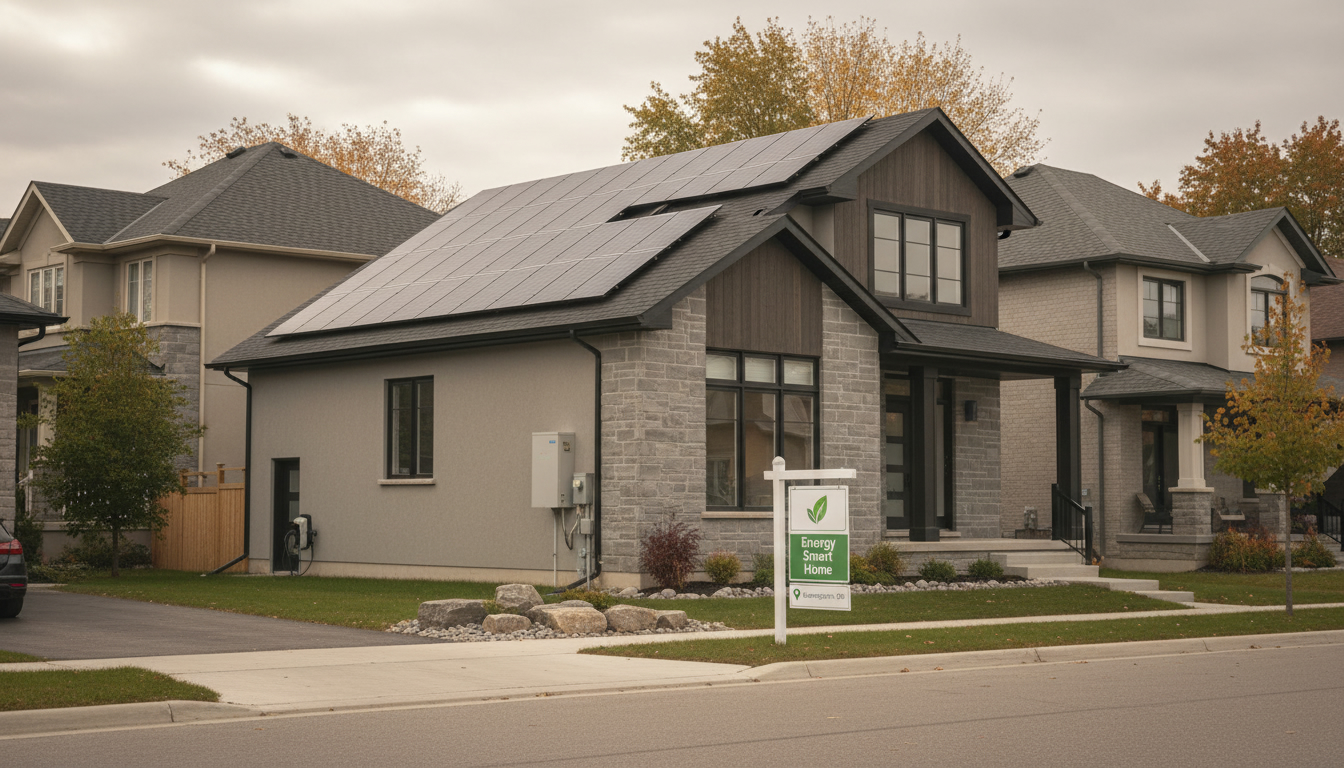
6) Solar panels
- Why: Big operating cost reduction where net metering makes sense.
- Cost: $10,000–$30,000 before incentives.
- Payback: 7–20+ years depending on incentives and ownership model.
- Seller value: Mixed. Owned arrays attract premium buyers concerned with bills; leased systems complicate sales. Evaluate carefully.
Incentives and rebates for Georgetown homeowners
Government and utility incentives significantly change the math. Check these sources before you start any work:
- Federal programs (e.g., Canada Greener Homes Grant) — rebates and grant amounts vary; they cut net cost and shorten payback.
- Provincial/utility rebates (Enbridge, Save on Energy, local programs) — often available for insulation, heat pumps, and high-efficiency equipment.
- Municipal programs in Halton/Georgetown — occasionally offer targeted rebates or low-interest loans.
Action: Get an up-front estimate of incentives. Many upgrades only become smart investments after rebates.
How upgrades affect sale price and days on market in Georgetown
- Faster sale: Homes that advertise lower operating costs and new efficient systems regularly close faster in commuter towns.
- Stronger offers: Buyers make fewer conditional or low-ball offers when mechanical risk is removed.
- Appraisal: Appraisers increasingly use utility cost comparisons and recent sales of upgraded homes. Document upgrades and provide invoices.
Reality check: Not every dollar of renovation converts directly to sale price. But lower bills, modern systems, and documented efficiency create buyer confidence — and confidence translates to fewer concessions and cleaner offers.
A practical playbook for sellers (step-by-step)
- Get a home energy audit. It reveals the highest-impact, lowest-cost fixes. Many rebates require an audit.
- Prioritize low-cost, high-impact fixes: air sealing, attic insulation, LED bulbs, smart thermostat.
- Evaluate one major system upgrade if needed: heat pump or furnace replacement. Use rebate numbers to calculate net cost.
- Keep receipts, energy audit reports, and performance estimates. Put them in the listing package.
- Time upgrades: finish major projects at least 2–4 weeks before listing to allow paperwork and inspections.
- Market the savings: show estimated monthly savings in the listing (before/after), include utility bill comparisons and the audit summary.

Staging and marketing language that sells efficiency
- Don’t bury the upgrades. Put them in the first 3 bullets of your MLS description.
- Use numbers: “Estimated $1,200/year energy savings” or “New high-efficiency heat pump, installed 2024.”
- Add an energy factsheet to your listing with receipts and rebate paperwork.
Agents and buyers respond to clarity. Don’t claim vague benefits — prove them.
Negotiation and disclosure tips
- If you upgraded systems, disclose warranties, maintenance records, and rebates claimed.
- If you didn’t upgrade, use the audit to show the home’s baseline and recommend buyer-friendly fixes.
- Be prepared for buyers to ask for a pre-listing inspection — turn that into a strength by resolving obvious mechanical items first.
Quick cost-to-value cheat sheet for Georgetown sellers
- Air sealing & attic insulation: High value, low cost. Do it.
- Heat pump: High value if your house suits it and after rebates.
- Furnace: Replace if old and likely to fail soon; otherwise not mandatory.
- Windows: Replace selectively, not whole-home unless they’re falling apart.
- Solar: Evaluate ownership vs lease and local grid rules.
- LEDs + smart thermostat: Cheap, fast win.
When NOT to spend on efficiency before a sale
- If you plan to sell immediately (within weeks) and the upgrade takes months to complete or needs major permits.
- If upgrade costs can’t be recouped and you can instead price competitively and market potential savings.
Local nuance — what Georgetown buyers actually ask about
- Commuting costs and home comfort in winter: buyers ask about insulation, furnace age, and storm windows.
- Basement dampness: air sealing and dehumidifiers help both energy and buyer perception.
- Yard and solar exposure: buyers checking for solar potential or shading will ask about panel feasibility.
Case scenario (realistic example for a Georgetown detached home)
- 1960s bungalow, 1,500 sq ft, original attic insulation, 20-year-old furnace.
- Recommended fixes: attic insulation + air sealing ($3,000), LED + thermostat ($500), furnace replacement or heat pump assessment.
- After rebates: net cost approx. $1,500–$4,500 depending on incentives.
- Estimated annual savings: $300–$1,200.
- Market result: shorter days on market and stronger conditional-free offers if work is done and documented.
This is the type of targeted upgrade that pays for itself in buyer confidence even when the literal dollar-for-dollar payback isn’t immediate.
How I help sellers in Georgetown
I (Tony Sousa) provide sellers with a practical ROI plan: I connect you with local energy auditors, vetted contractors, and I build the marketing package that highlights savings and warranties. That changes conversations at showings and gives agents clear proof points for a stronger sale.
Contact: tony@sousasells.ca | 416-477-2620 | https://www.sousasells.ca
Final verdict
Energy-efficient upgrades are worth the investment when you:
- Pick high-impact, low-cost measures first
- Use rebates to shorten payback
- Document and market the savings
Don’t chase every shiny upgrade. Be surgical. Sell comfort, predictability, and lower bills — that appeals to Georgetown buyers and gets better offers.

FAQ — Energy-efficient upgrades for Georgetown home sellers
Q: Will upgrades increase my sale price?
A: Not always by the full cost. Upgrades increase buyer demand, reduce contingencies, and often bring stronger offers. Treated as risk reduction, many buyers will bid more.
Q: Should I do a full home retrofit before listing?
A: Only if you have time, budget, and rebates that make the economics work. For most sellers, prioritize attic insulation, air sealing, and quick mechanical fixes.
Q: How long before listing should upgrades be completed?
A: Complete major work 2–4 weeks before listing to collect permits, invoices, and warranty documents.
Q: What rebates apply in Georgetown?
A: National programs often apply (check Canada Greener Homes Grant and federal incentives). Provincial and utility rebates change; contact local utilities and Halton Region for current programs. Always verify eligibility before starting.
Q: Does a heat pump make sense here?
A: Many Georgetown homes benefit. Evaluate house size, existing heating system, insulation levels, and rebates. Heat pumps also add summer cooling — a plus for buyers.
Q: Should I disclose upgrades and invoices?
A: Yes. Include invoices, warranties, and energy audit reports in your listing package and disclosure documents.
Q: Can I market estimated energy savings in the MLS?
A: Yes — but base estimates on real numbers or an audit. Avoid vague claims. Show before/after estimates and cite the audit source.
Q: Do appraisers value efficiency?
A: Increasingly. Appraisers consider mechanical condition and operating costs. Provide documentation to improve comparables.
Q: What’s the single best starter upgrade?
A: Air sealing + attic insulation. Low cost, fast results, and high buyer appeal.
Q: Who can help me plan upgrades?
A: Get a certified home energy auditor first. Then choose licensed local contractors. If you want help coordinating, contact me at tony@sousasells.ca or 416-477-2620.
If you want a no-nonsense ROI estimate for your Georgetown house, I’ll review photos, recent utility bills, and give you a focused checklist that targets buyer-demand upgrades. Contact tony@sousasells.ca | 416-477-2620 | https://www.sousasells.ca