Are there areas with higher demand than others?
Are there areas with higher demand than others in Georgetown? Short answer: yes — and if you’re selling, you need to know exactly which parts of town sell faster, for more money, and with fewer headaches.
The market truth every seller must hear
This isn’t theory. It’s local market dynamics: some streets move like hotcakes, others sit. Georgetown is not one uniform market. It’s a collection of micro-markets. Each one has its own buyer profile, pricing tolerance, and sale timeline.
If you want top dollar, stop treating Georgetown as a single price map. Price, prepare, and market for the buyers who are actually searching in your pocket of town.
Why some areas in Georgetown are hotter
Buyers choose neighborhoods. They don’t buy “Georgetown.” Here’s what makes a neighbourhood hotter than others:
- Proximity to transit (Georgetown GO). Commuters will pay a premium for shorter commute times.
- Walkable downtown and Main Street access. Coffee shops, restaurants, and weekly markets drive demand.
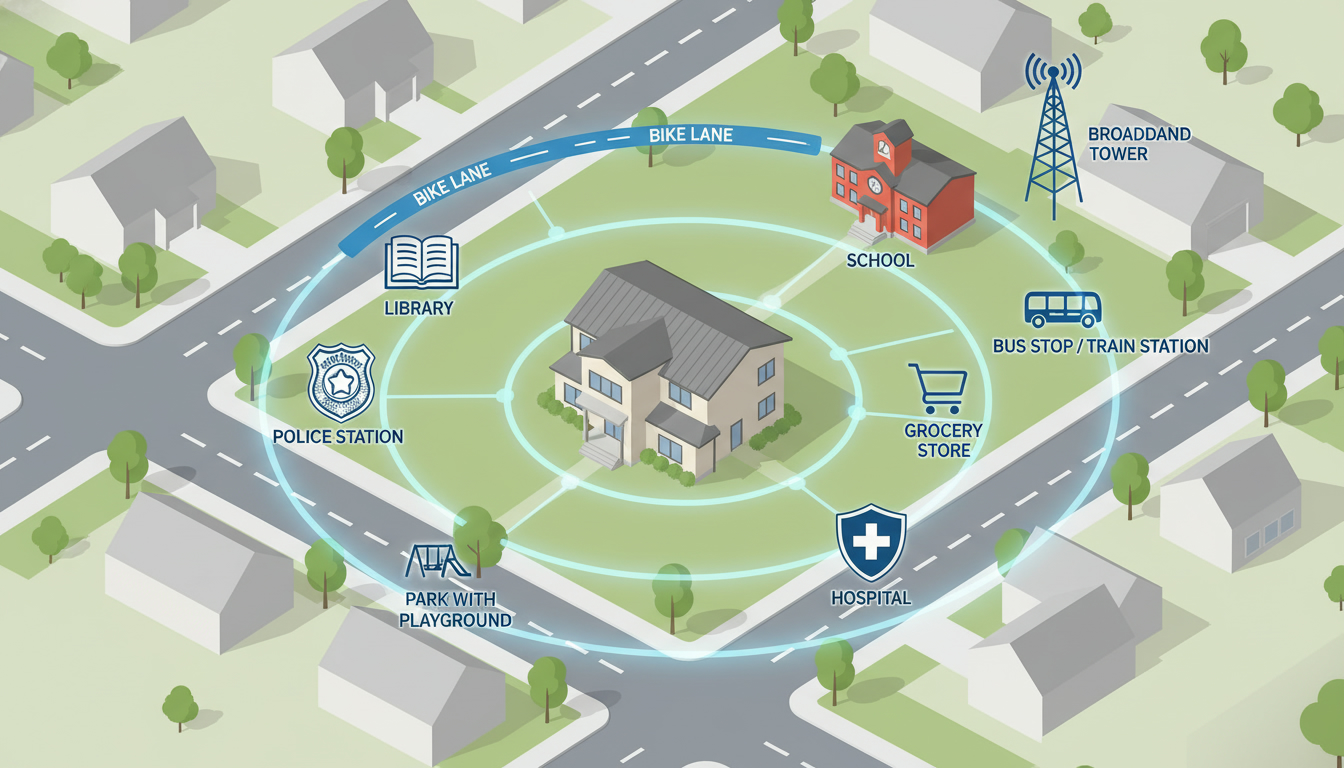
- School districts and family-friendly amenities. Playgrounds, community centres, and good schools bring consistent buyer demand.
- Character and curb appeal. Historic homes in well-kept streets attract buyers who pay more for charm.
- Lot size and usable outdoor space. Post-pandemic buyers value private yard space and room for home offices.
- Inventory levels. Fewer listings = more competition. That creates the conditions for multiple offers.
These are the variables you can control or at least influence when you sell.
Georgetown hot points — where demand concentrates
Here are the consistent demand drivers inside Georgetown. These aren’t guesses — they are patterns repeated at every open house and in every comparable sale.
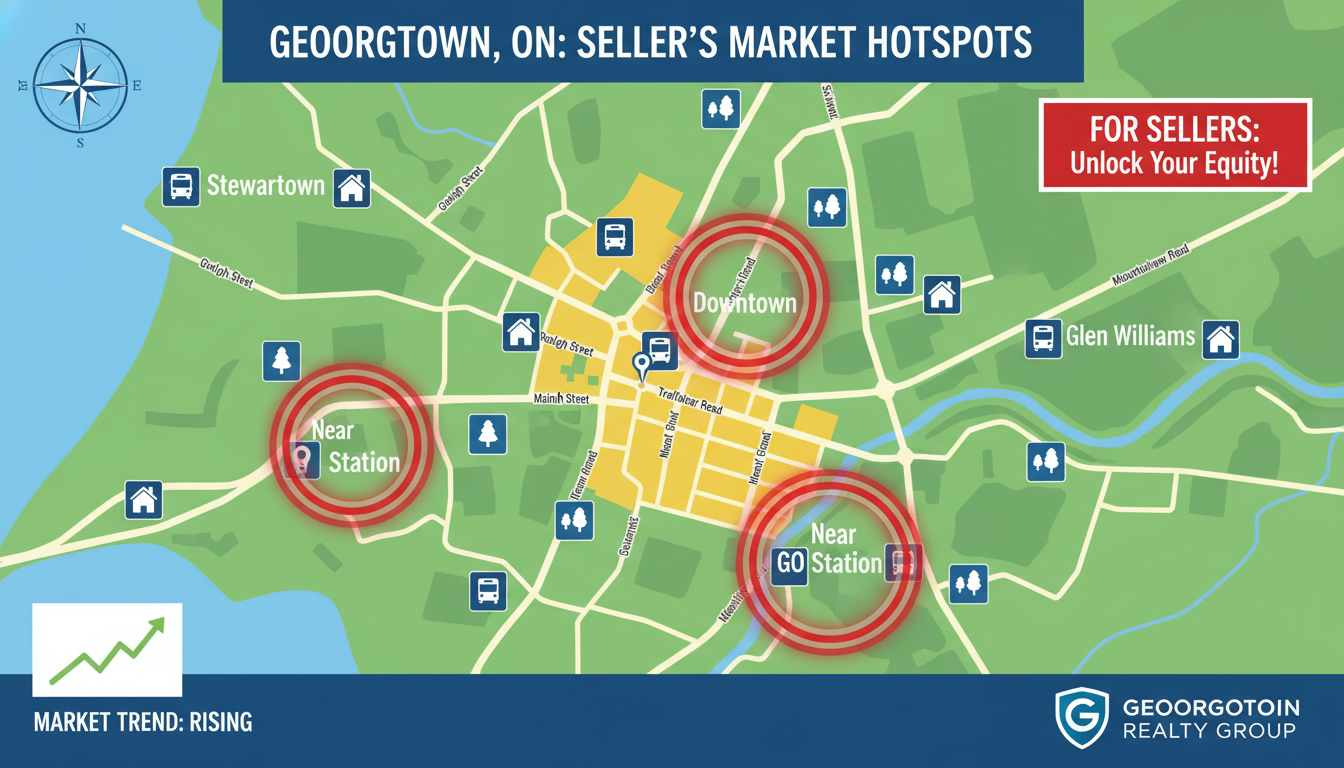
Downtown and Main Street area
Buyers want walkability. Downtown Georgetown delivers cafés, boutiques, and weekend life. That means faster sales and stronger price retention for well-presented homes nearby. Expect local buyers and young professionals to be active here.
Near the Georgetown GO station
Commuter-friendly properties are a premium. Time equals money: shorter travel times to Toronto translate into higher buyer willingness to pay. Smaller homes geared to professionals and families who commute will attract early interest.
Character neighbourhoods (Stewarttown, Glen Williams pockets)
Older, character-filled streets with mature trees and period homes draw a distinct buyer: someone willing to spend on restoration and charm. These homes do well when marketed correctly — highlight details, maintenance history, and upgrades.
Family zones with strong schools and parks
Areas that deliver convenience for families — short walks to school, parks, and community centres — see steady demand. These buyers plan for 5–10 year stays; they want reliability and local stability.
Newer subdivisions and family-friendly crescents
New builds and modern subdivisions attract move-up buyers and families wanting turnkey properties. They usually compete on finishes and layout rather than on historic charm.
How demand shows up in the numbers (what sellers should watch)
You don’t need a spreadsheet to spot demand. Look for these signals:
- Fewer days on market than town average.
- Consistent over-asking sales for similar properties.
- Multiple showings in the first week.
- Buyers waiving conditions or being loan-flexible in hot pockets.
If your street shows these signs, price aggressively but smartly. If it doesn’t, adjust expectations and invest in buyer-focused preparations.
Tactical steps to leverage high-demand areas
- Pick the right price band: Don’t list in a price bracket with little buyer activity. Research recent comps in your sub-neighbourhood — not the whole town.
- Stage for target buyers: Downtown condo buyers look for lifestyle. Family zones want functional mudrooms and school info. Historic-home buyers want preserved details and documented upgrades.
- Market what matters: For commuter buyers, promote transit times and parking. For families, highlight schools and parks. Use targeted ads by zip and interest.
- Time your listing: Spring and early fall remain high-traffic listing windows. In hot areas, listings in these windows get more eyes.
- Pre-market to top agents: Send pocket listings and private previews to agents who specialize in the micro-market. They hold the buyers.
- Be ready for quick decisions: In high-demand pockets, offers come fast. Pre-inspections, clear title documents, and flexible viewings remove friction.
Pricing strategy when demand varies across neighborhoods
- Hot pocket? Price to win. Use a strategic price that generates urgency and multiple showings the first week.
- Average pocket? Price competitively and invest in clear, professional photography and staging.
- Slower pocket? Price realistically. Reduce time on market with promotions and a buyer-focused renovation plan.
Remember: the right price depends on buyer demand for your specific micro-market — not the town-wide average.

What sellers get wrong (and how to avoid it)
- Mistake: Using town-wide comps. Use immediate neighbourhood comps.
- Mistake: Treating curb appeal as optional. First impressions drive offers.
- Mistake: Broad marketing. Target the buyer who already buys in your street.
- Mistake: Waiting for the “perfect market.” In slow patches, proactive preparation beats passive listing.
Fix these, and you convert curiosity into offers.
Examples of targeted marketing that work in Georgetown
- Hyper-local social ads: Target ads to people who commute from Georgetown and list commute time to Toronto. Include a short video tour and a map showing GO times.
- School zone flyers: Simple, direct mail about school proximity and catchment can pull in young families.
- Lifestyle video for downtown listings: Show cafés, farmers’ markets, and weekend life. Sell the neighbourhood, not just the house.
If your house is in a low-demand pocket — immediate action plan
- Audit: Get a focused neighbourhood comp and a pre-listing inspection.
- Improve: Quick fixes — fresh paint, landscaping, lighting — yield outsized returns.
- Repackage: Stage to show the highest-value use of each room: home office, rental suite, family room.
- Market wider: Use regional ads highlighting affordability and value relative to hotspots.
Low-demand doesn’t mean no demand. It means different tactics.
Long-term trends to watch in Georgetown
- Ongoing commuter demand tied to GO service and regional planning decisions.
- Continued interest in family-friendly neighbourhoods as remote and hybrid work patterns persist.
- Stable demand for character homes as buyers seek unique properties near amenities.
Sellers who watch these trends and act early extract better outcomes.

How Tony Sousa helps sellers in these micro-markets
If you want an action plan built specifically for your street, get a neighbourhood-focused analysis. That means:
- Real comps from your block, not distant listings.
- Buyer profile: who’s looking and how they buy.
- A pricing and marketing playbook tuned to your micro-market.
Contact: tony@sousasells.ca | 416-477-2620 | https://www.sousasells.ca
FAQ — Clear answers local sellers need
Q: Are some parts of Georgetown always in higher demand?
A: Yes. Areas near the GO station, the downtown core, and well-rated school zones consistently attract more buyers.
Q: Will a house in a lower-demand area sell for less?
A: Typically yes, unless you offset location with upgrades, pricing, or targeted marketing. Buyers in lower-demand pockets are price-sensitive.
Q: Should I renovate before I list?
A: Only do renovations that increase perceived value: kitchens, bathrooms, curb appeal. Get an agent’s ROI-focused plan first.
Q: When is the best time to list in Georgetown?
A: Spring and early fall see the most buyer activity. In hot pockets, any well-priced listing sells fast year-round.
Q: How do I find the right price for my street?
A: Use recent solds from your immediate neighbourhood, adjust for condition and upgrades, and test early buyer feedback.
Q: Can staging make a difference in a hot area?
A: Yes. Even in high-demand pockets, staged, well-photographed homes outperform un-staged ones.
Q: How much will proximity to the GO station affect price?
A: It varies by buyer type. Commuters pay premiums for reduced commute time consistently. Highlight transit in marketing.
Q: Do schools really affect sale price?
A: They affect buyer pool. Strong school zones increase steady demand and price resilience.
If you want a no-fluff neighbourhood report — one page, real comps, and a clear list of the three things that will increase your sale price — email tony@sousasells.ca or call 416-477-2620. Get a plan that matches your street, not someone else’s headline.
Contact and real-time market help: https://www.sousasells.ca