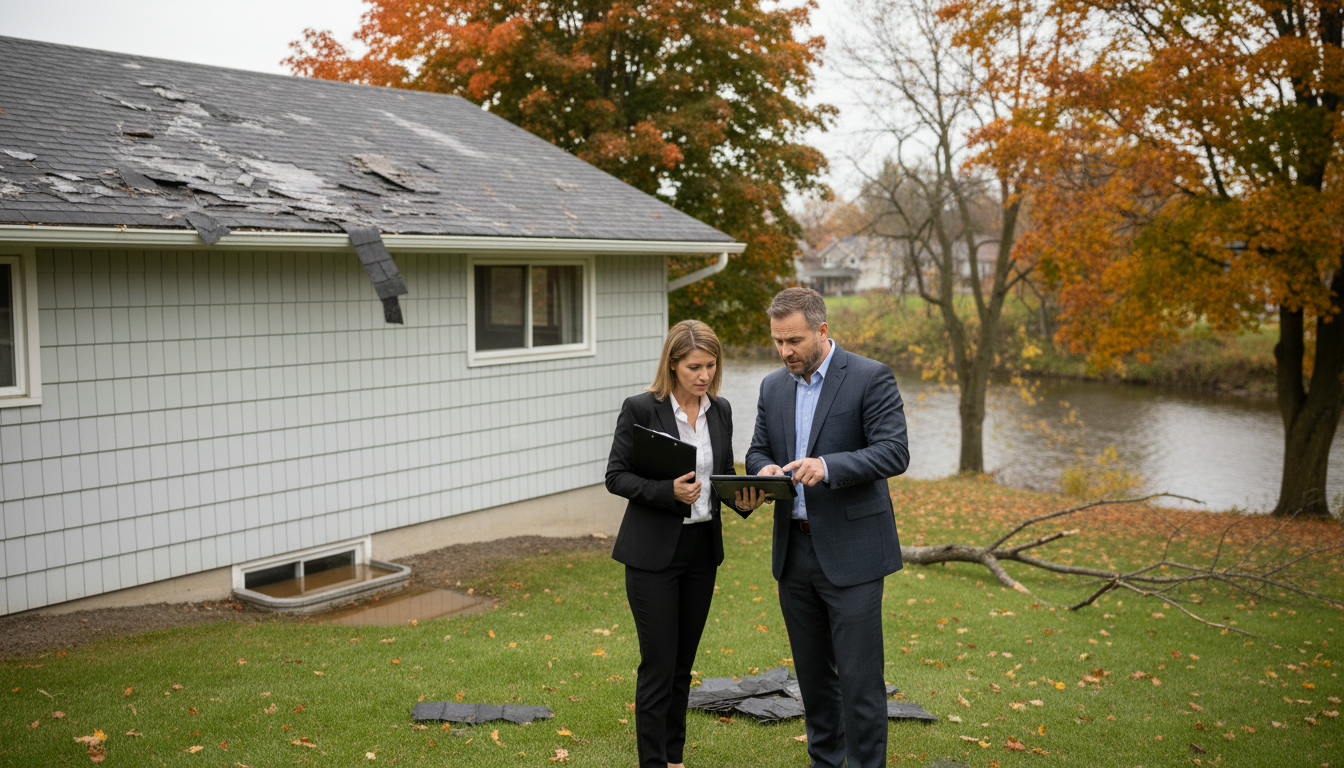
How do I make insurance claims after an
incident?
Want to get paid fast after a home incident? Here’s the exact playbook Georgetown home sellers use to make clean, fast insurance claims — and protect their sale.
Why this matters for Georgetown home sellers
You’re selling a house in Georgetown, ON. An incident happens — storm damage, a burst pipe, sewer backup, or fire. Buyers will ask. Lawyers will want disclosure. Unresolved damage kills deals or drags closing dates. Filing an insurance claim quickly and correctly reduces out-of-pocket cost, protects your sale timeline, and avoids surprises at closing.
This post gives a step-by-step, no-BS insurance claim plan tailored to Georgetown and Halton Hills. It’s actionable. It’s local. Follow it exactly.
Quick snapshot of local risks and policy nuances
- Flooding and overland water: Georgetown sits along the Credit River and has low-lying areas. Standard policies often exclude overland flood — you need specific coverage.
- Sewer backup: Common in older Georgetown neighbourhoods. This is usually an optional endorsement — check your policy.
- Ice dam and winter freeze claims: Ontario winters cause roof and pipe damage. Insurers expect mitigation steps (shoveling snow, heat trace on pipes).
- Regulatory context: Insurers in Ontario are regulated by FSRA (Financial Services Regulatory Authority of Ontario). Policies follow Ontario’s Insurance Act. For new homes, Tarion may apply.
If you’re not sure what your policy covers, pull the documents now. Don’t wait until after the incident.
The 9-step Georgetown home seller claim playbook (do these, in order)
1) Ensure safety and stop further loss
- First: protect people. Call 911 if required.
- Next: prevent additional damage. Turn off water/electricity if safe and necessary. Secure the property against vandalism.
- Save receipts for any emergency services or motel stays (these are claimable under Additional Living Expenses if your policy covers them).
2) Document everything — before repairs
- Take high-resolution photos and video of damage from multiple angles. Capture timestamps if possible.
- Photograph serial numbers, damaged personal property, and room-wide shots for context.
- Record short audio or video statements describing what happened and when.
3) Mitigate damage and keep receipts
- Mitigation is a policy requirement in Ontario — you must take reasonable steps to reduce further loss (e.g., tarping a roof, pumping out water).
- Hire contractors only for temporary repairs if needed. Keep every receipt and invoice.
4) Notify your insurer immediately
- Call your insurer or broker as soon as possible. Most policies require prompt notification (often “as soon as reasonably possible”).
- Get a claim number, the adjuster’s name, email, and the timeline for the inspection.
- Sample script: “Hi, this is [Your Name], policy #[policy number], address [property address]. I’m reporting a [type of incident] that happened on [date]. I need a claim opened and an adjuster assigned.”
5) Ask these local-specific questions right away
- Do I have overland water or sewer backup coverage for this property in Georgetown?
- Is Additional Living Expense (ALE) coverage included if the house is uninhabitable?
- Will the insurer require pre-approval before major repairs?
- Will the insurer send a local adjuster or a contractor partner?
6) Meet the adjuster and present your file
- Bring your documentation: photos, videos, receipts for mitigation, policy number, and a list of damaged items with approximate values.
- Be factual and concise. Do not admit fault or speculate on cause.
- If the adjuster’s assessment looks low, get two independent repair estimates from reputable Georgetown contractors.
7) Understand settlement types and deductible
- Replacement Cost Value (RCV) vs Actual Cash Value (ACV): RCV pays to replace; ACV deducts depreciation. Know which your policy uses.
- Deductible: you pay this amount before insurer pays. For sellers, negotiate repairs vs cash settlement depending on your sale timeline.
8) Repairs, approvals, and invoices
- For repairs that affect sale condition, get estimates and timelines in writing. Keep all invoices and photos of repairs.
- If you’re selling immediately, ask your insurer about direct billing to contractor or cash settlements to avoid delays.
- Don’t sign a full release until repairs are complete and you’re satisfied with work where possible.
9) Document claim outcome and disclose appropriately
- Save the final claim documents, cheque stubs, and contractor warranties.
- Sellers must be transparent: disclose known damage and the claim outcome to prospective buyers. Consult your real estate lawyer on wording.

Practical scripts and checklists you can use now
-
Emergency contractor call: “I need temporary mitigation at [address]. This is for an insurance claim — please provide a written invoice and photos of the work.”
-
Claim follow-up email to broker/insurer:
Subject: Claim #[claim number] — documentation
Body: Hello [Adjuster Name],
I’m sending photos, receipts for emergency mitigation, and two contractor estimates. Please confirm next steps and expected timeline for inspection and settlement.
-
Buyer communication line: “We had an incident on [date]. It’s fully documented and submitted to our insurer. I’ll share the claim outcome and repair receipts before closing.”
How a claim affects your sale — what to watch for
- Delay risk: Insurer inspections and approvals can take days to weeks. Start the claim immediately to avoid delaying closing.
- Negotiations: Buyers may ask for price reductions, repair credits, or walk away. A transparent file with repair estimates limits leverage.
- Premiums and future coverage: One claim can increase premiums or affect renewability at renewal time. Some insurers check claims history when underwriting — expect the claim to show up on industry databases.
If you need to close fast, consider funding repairs yourself and asking the insurer for reimbursement — but only after confirming pre-approval rules.
Local vendor tips — pick proven pros in Halton Hills
- Choose contractors who understand Ontario building codes and local permits.
- Get at least two written estimates for significant repairs.
- Use licensed trades with insurance and WSIB coverage — insurers check this.
If you want recommendations, a local realtor with deep insurance claim experience can steer you to reliable contractors and adjusters in Georgetown.
When to escalate: disputes and denials
- If your claim is denied, ask for a written reason. Read the policy section cited.
- Hire an independent adjuster or insurance lawyer if: the denial lacks clear cause, the settlement is far below estimates, or the insurer delays unreasonably.
- Keep escalation timelines tight: document every call and email.

Closing line: act fast, document everything, and get help
A well-documented, timely claim preserves sale value, limits out-of-pocket loss, and speeds the process. If you’re selling in Georgetown, ON, don’t wing it. Follow the nine-step playbook.
Why work with a local expert during a claim
A local realtor who knows Georgetown — Halton Hills rules, flood-prone areas, and local contractor networks — turns a messy claim into a controlled process. They help with disclosure wording, timelines, and buyer conversations so your sale keeps moving.
If you’d like local guidance, contact Tony Sousa for advice on managing insurance claims while selling your Georgetown home: tony@sousasells.ca | 416-477-2620 | https://www.sousasells.ca
FAQ — Insurance claims for home sellers in Georgetown, ON
Q: How fast do I need to report an incident to my insurer?
A: Report as soon as possible. Most policies require prompt notice — within 24–72 hours is ideal. Delays can jeopardize coverage.
Q: Does a claim always increase my premiums?
A: Not always. Insurers consider claim size, frequency, and cause. Small claims may not change premiums, but significant or repeated claims often do.
Q: Do I have to disclose the claim to buyers?
A: Be transparent. You must disclose known defects and repairs. Your realtor and real estate lawyer will guide exact wording for your disclosure forms.
Q: What if the insurer denies coverage for flood or overland water?
A: Overland flood is commonly excluded. If denied, review your policy and denial letter, get written reasons, and consider an independent adjuster or legal advice.
Q: Who pays the deductible?
A: The homeowner pays the deductible unless otherwise negotiated. If the buyer requests repairs, negotiation at sale can reassign costs.
Q: How long does a claim stay on my record?
A: Insurers and industry databases keep records for several years. Exact timelines vary by company and database.
Q: Can I repair before the adjuster inspects?
A: Make temporary repairs to prevent further damage (and keep receipts). For major work, get insurer approval first to ensure coverage for full repair costs.
Q: Will a claim stop my home sale?
A: It can cause delays, not automatic cancellation. Clear documentation, fast mitigation, and open buyer communication prevent most deal breaks.
For Georgetown-specific help with insurance claims and selling strategy, reach out to Tony Sousa: tony@sousasells.ca | 416-477-2620 | https://www.sousasells.ca