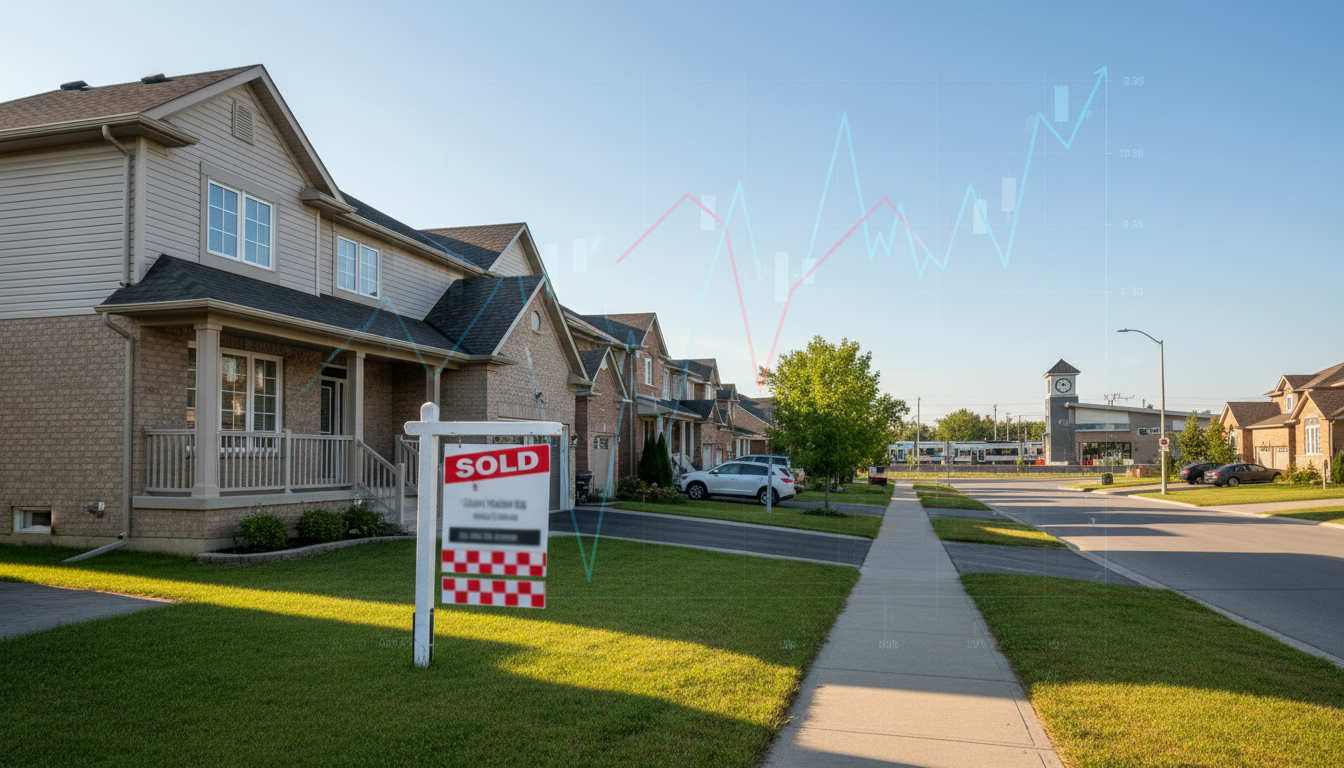
Can economic changes impact home values?
Watch This — One Economic Move Could Double or Crush Your Georgetown Home Value
Why this matters: if you plan to sell a home in Georgetown, ON, you can’t treat market changes like background noise. They change how buyers bid, how lenders approve mortgages, and how fast your house sells. This post tells you what matters, why it matters now, and exactly what to do to protect — and boost — your home value.
Why Georgetown sellers must care about economic changes
- Home values are not set in stone. They’re set by buyers who can afford a mortgage and by investors chasing returns. When the economy shifts, so does buyer power.
- Georgetown’s market is tied to Greater Toronto Area trends, commuting demand (GO Transit), and local job conditions. That combo makes the town sensitive to interest rates, employment trends, and supply changes.
What economic factors move Georgetown home prices (and how big the impact is)
1) Interest rates and mortgage costs
- Direct link: higher mortgage rates = lower buyer affordability. When rates rise, monthly payments climb and buyers drop their max bids.
- Quick rule of thumb: a 1% rise in mortgage rates typically reduces buyer purchasing power by roughly 8–12% (varies with down payment and amortization). That compresses the pool of qualified buyers and can push prices lower or stall offers.
2) Employment and local wages
- Georgetown’s buyers include commuters to Toronto, local professionals, and tradespeople. If local hiring slows or major employers shrink, fewer buyers can qualify for loans.
- Even moderate job gains increase confidence and demand; layoffs do the reverse.
3) Inflation and consumer confidence
- When inflation runs hot, buyers worry about future costs. That can both accelerate buyers who want to lock a home before prices rise and slow buyers who fear losing income. Net effect depends on rate policy.
4) Supply-side shifts: new builds and inventory
- New subdivisions or a sudden jump in listings increase supply. More choices give buyers leverage, which can compress prices.
- Conversely, low inventory (common in desirable neighbourhoods near GO stations) preserves seller power.
5) Government policy and taxes
- Changes to mortgage rules, land transfer tax, or incentives for first-time buyers change who can enter the market. New rules can instantly shrink or expand buyer pools.
Local market snapshot and examples (what sellers in Georgetown need to know)
- Commuter demand: Georgetown’s proximity to the GO network keeps long-term demand resilient. Houses within easy access to the station consistently attract more buyers and sell faster.
- Price tiers matter: entry-level detached and townhomes face the most pressure when rates rise — these buyers are rate-sensitive. Luxury and well-upgraded homes feel the effect less, because buyers there often have more cash or different financing.
Real example scenarios (what actually happens when the economy shifts)
Scenario A — Rates climb fast
- What you’ll see: fewer offers, longer days on market, more conditional offers, and price reductions on weaker listings.
- Action for sellers: tighten your pricing; remove friction (inspections, flexibility on closing); market aggressively to cash and investor buyers.
Scenario B — Rates fall or local jobs surge
- What you’ll see: faster bidding, multiple offers, quick conditional-free sales.
- Action for sellers: list aggressively, set a firm conditional deadline, and highlight commuter access and recent upgrades.
How to quantify impact on your Georgetown home (simple numbers you can use)
1) Calculate affordability shift from rate changes
- Example method: multiply your buyer’s current mortgage rate by monthly payment and compare to new rate. If a 1% increase reduces payment capacity by 10%, expect offers to drop roughly by that range in the price-sensitive segment.
2) Use local comparables within 1–2 km of your home
- Price movement in Georgetown varies by street and school zone. Track sold prices in the last 90 days for homes similar in age, bedroom count, and lot size. That’s the data buyers use.
3) Inventory and absorption rate
- Absorption rate = homes sold / homes listed over 30–90 days. A falling absorption rate signals buyer pullback; you should adjust pricing and marketing.
Action plan for Georgetown home sellers — what to do now
1) Price with surgical precision
- Don’t guess. Use comps within your micro-neighbourhood and price to attract the most qualified buyers in today’s rate environment.
2) Improve buyer confidence with low friction
- Pre-inspections, clear permits for improvements, and providing recent utility bills reduce buyer uncertainty. In volatile markets, certainty sells.
3) Stage for value, not just looks
- Target upgrades that move the needle on selling price: fresh paint, decluttering, modern lighting, and curb appeal. Spend on what adds perceived and actual value.
- For Georgetown: emphasize commuter convenience, schools, and outdoor amenities in listing descriptions and photos.
4) Offer flexible closing terms to widen the buyer pool
- Allow rent-back, flexible possession dates, or assist with short-term mortgage solutions to attract buyers when rates are high.
5) Time it to demand windows
- Spring and early fall still show higher buyer activity in Halton Hills. If you can avoid listing in low-demand winter months during a rate rise, you’ll likely get a stronger result.
6) Use targeted marketing to reach high-probability buyers
- Geo-target ads to Toronto commuters, highlight GO station proximity, and promote school catchment info. Use strong copy: commute time, property taxes, recent renovations, and investment potential.
Why working with a local market expert matters
- General market advice misses hyper-local patterns. Street-by-street price elasticity differs. An expert knows which changes in the economy hit your home’s price band hardest and how to counter them.
Pricing tactics that protect value during economic uncertainty
- Anchor pricing: set a confident list price based on comps, not emotion. Buyers react to perceived value.
- Strategic concessions: offer small concessions (e.g., pay a portion of closing costs) instead of dropping the list price to preserve headline value.
- Conditional windows: use short conditional periods to create urgency when demand exists.
Checklist for sellers: 10 quick moves to protect your Georgetown sale
1) Get a neighborhood comp report (last 90 days).
2) Run a pre-inspection or pre-listing home health check.
3) Stage and photograph professionally.
4) Price based on absorption rate and current mortgage rates.
5) Highlight GO transit access and school zones in marketing.
6) Offer flexible closing to attract more buyers.
7) Keep small repair credits, not price cuts.
8) Target advertising to Toronto commuters and local buyers.
9) Time listing to a high-demand window when possible.
10) Partner with a local market expert for negotiation and pricing.
Closing — the bottom line for Georgetown sellers
Economic changes shift buyer power fast. Interest rate moves, job trends, and supply changes create real, measurable impacts on home values in Georgetown. You can’t control the economy, but you can control pricing, marketing, and friction. Act fast, use local data, and position your property to the buyers who still have purchasing power.
Want help turning economic uncertainty into a sale that protects or increases your equity?
Contact your local Georgetown market expert: Tony Sousa, REALTOR®
tony@sousasells.ca | 416-477-2620 | https://www.sousasells.ca
FAQ — Georgetown sellers’ top questions (and direct answers to boost your ranking)
Q: How do higher interest rates affect my sale price in Georgetown?
A: Higher rates shrink buyer affordability. Expect fewer offers and longer time on market for entry-level properties. Price to the new buyer pool and reduce friction with pre-inspections and flexible terms.
Q: Is it better to wait out an economic downturn before selling?
A: Not always. If your neighborhood has persistent demand (near GO, top schools), you may sell at minimal discount. If you can’t time demand windows or your property sits in the rate-sensitive tier, consider improving marketability now and list when inventory tightens.
Q: What improvements give the best return in Georgetown?
A: Cosmetic updates, curb appeal, minor kitchen updates, and modern lighting. Fix obvious issues that cause conditional offers. Buyers pay a premium for move-in-ready near transit and schools.
Q: How do I price my home when the market is shifting?
A: Use recent comps in the same street or block, check absorption rate, and account for current mortgage rates. Consult a local expert to run scenario pricing for 0.5%–1% rate changes.
Q: Will government policy changes suddenly affect my ability to sell?
A: They can. New mortgage rules or tax changes alter buyer pools fast. Stay informed and be ready to adjust price and terms quickly.
Q: Should I offer incentives (closing cost help, home warranty)?
A: Small incentives can widen your buyer pool without chopping headline price. Use incentives strategically — to remove friction or speed closing.
Q: How long will economic changes take to show in Georgetown prices?
A: Some effects (rates, mortgage rule changes) show in weeks. Employment shifts and large inventory changes take months. Monitor weekly sold data and absorption rates.
Q: Who should I call to get a precise market plan for my Georgetown home?
A: Contact a local market specialist who provides neighborhood comps, absorption analysis, and a tailored marketing plan. For personalized help: Tony Sousa, REALTOR® — tony@sousasells.ca | 416-477-2620 | https://www.sousasells.ca
Author note
This post shares practical, local-first advice to protect your equity and speed your sale. Use data, not hope. Price smart, market hard, and remove buyer friction.
Want a free neighborhood comp and tailored selling plan? Email tony@sousasells.ca or call 416-477-2620.