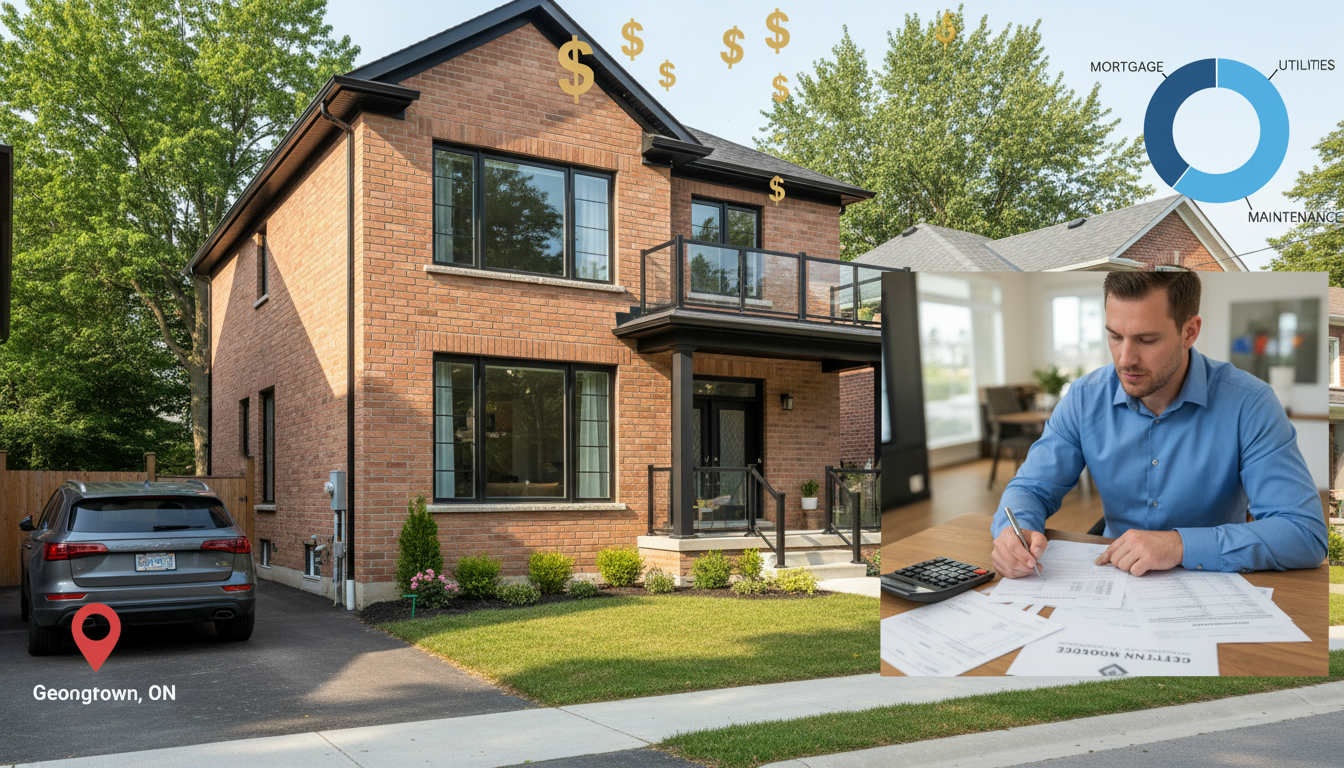
What are typical expenses for a rental property?
Want to know exactly what rental property expenses will eat into your cash flow — and what you can do to boost resale value in Georgetown, ON?
Quick, blunt answer up front
If you want a one-line summary: expect ongoing operating expenses (taxes, insurance, maintenance, utilities, management, vacancy, CapEx) to consume roughly 30%–60% of gross rent depending on property type and how much you pay for services. Add mortgage debt service and your cash flow can swing from strong to negative fast. In Georgetown specifically, tighter demand and commuter appeal push rents up — which helps — but local trades, seasonal maintenance (snow removal) and municipal rules affect costs.
Why this matters for sellers and investors in Georgetown, ON
You’re not just collecting rent. Every expense lowers Net Operating Income (NOI). NOI drives value: Value = NOI / market cap rate. Raise NOI and you raise resale price dramatically. Cut costs intelligently and invest in the right upgrades and your sale multiple improves. That’s how you go from an average listing to a premium sale in Halton Hills.

Typical expense categories for a Georgetown rental property (what to budget and why)
Below are standard expense lines and realistic ranges. These are operational rules of thumb. Exact numbers depend on property age, size, and whether it’s a condo, duplex, detached house, or legal basement unit.
-
Mortgage / Debt Service — Variable
-
Why: Principal + interest is usually the largest single outflow. Not an “operating expense” for NOI calculations, but it determines monthly cash flow.
-
What to expect: Depends on purchase price, down payment, and rate. Run mortgage scenarios before buying.
-
Property Taxes — 0.5%–1.5% of property value annually (convert to monthly)
-
Why: Municipal tax for Halton Hills. Higher assessed value = higher tax. Taxes in Georgetown are a predictable, fixed cost.
-
Practical rule: Budget conservatively — treat taxes as 1% annual of purchase price when modeling.
-
Insurance — $600–$2,400/year ($50–$200+/month)
-
Why: Landlord policies cost more than homeowner policies. Premiums rise with property age, claims history, and rental usage.
-
Maintenance & Repairs — 5%–10% of gross rent annually (or 1% of property value per year)
-
Why: Routine wear-and-tear, seasonal tune-ups, small fixes. Older homes need more.
-
Practical rule: Start with 1% of property value annually for conservative budgeting.
-
Capital Expenditures (CapEx) Reserve — 5%–10% of gross rent (or $250–$500+/month)
-
Why: Roof, furnace, hot water tank, windows, lifecycle replacements. Not day-to-day repairs.
-
Impact: Ignoring CapEx kills resale value when major items need replacement.
-
Property Management Fees — 8%–12% of monthly rent (or flat rates)
-
Why: If you don’t self-manage, expect professional fees. In Georgetown, management companies charge market rates like the rest of the GTA.
-
Vacancy Allowance — 3%–8% of gross rent (local markets vary)
-
Why: No property rents 100% of the time. Factor in turnover time and seasonal vacancy.
-
Utilities — Variable (owner-paid or tenant-paid)
-
Why: If you include heat/water, budget accordingly. In multi-unit or furnished rentals, utilities can be substantial.
-
Snow Removal & Landscaping — $600–$3,600/year
-
Why: Georgetown winters mean snow removal is required for curb appeal and legal obligations.
-
Legal, Accounting & Licensing — $500–$3,000/year
-
Why: Evictions, lease drafting, income tax prep, municipal licensing, compliance with Ontario regs.
-
Advertising & Tenant Placement — $50–$500 per turnover
-
Why: Listing, showings, background checks — cost per new tenant.
-
Vacancy Turnover & Renovation Costs — $1,000–$10,000+ per turnover
-
Why: When tenants leave, you often need to repaint, replace flooring, fix damage, or update kitchens/bathrooms to command top rent.
-
Condo Fees (if applicable) — $250–$800+/month
-
Why: If your rental is a condo in Georgetown, monthly condo fees are mandatory and often affect cash flow more than taxes.
Real example: How expenses change value (simple math you can use)
Numbers are illustrative. Use them to test decisions.
Assume a small rental in Georgetown rents for $2,000/month = $24,000/year gross rent.
- Vacancy (5%): $1,200
- Management (10%): $2,400
- Maintenance & Repairs (7%): $1,680
- CapEx reserve (7%): $1,680
- Insurance & taxes combined: $3,600
Total operating expenses: $10,560
NOI = $24,000 – $10,560 = $13,440
If local investor cap rate = 5% (strong market for Georgetown), value = NOI / cap rate = $13,440 / 0.05 = $268,800
Now increase NOI by improving rental income or cutting waste by $2,400/year (e.g., add in-unit laundry, raise rent $200/month). At same cap rate your value goes up by $48,000. That’s how targeted expense and income moves translate into resale dollars.
Georgetown-specific cost drivers to watch
- Commuter demand: proximity to GO Transit increases rents and reduces vacancy, but also attracts buyers who will pay a premium on resale if the property is commuter-friendly.
- Seasonal maintenance: winters mean snow removal and more wear on roofs and driveways. Budget extra for winter-related repairs.
- Local contractor pricing: trades servicing Georgetown fall in GTA price bands. Budget a premium for reliable work.
- Legal baseline: Ontario’s Residential Tenancies Act sets rules around evictions and tenant rights. Legal delays can raise costs.
- Basement suites & legal units: Properly legalized secondary suites command higher rents and value — but legalization requires permits, inspections, and sometimes upgrades.
Where to cut expenses without killing value (practical moves)
- Preventive maintenance: Spend small amounts now to avoid big CapEx later (HVAC tune-ups, roof inspections).
- Energy upgrades: LED lighting, high-efficiency HVAC, programmable thermostats lower utility bills and are attractive to buyers.
- Smart vendor sourcing: Use vetted local contractors. It pays to pay slightly more for quality to avoid repeat fixes.
- Tenant screening & lease clarity: Reduce turnover and damage by screening tenants and maintaining clear lease expectations.
- Self-manage selectively: If you can manage time, cutting management fees 8%–12% improves cash flow. If not, delegate — bad management costs more.

How expenses affect resale and negotiation position
Buyers don’t buy hope. They buy numbers. Two things buyers look at:
- Current NOI and expense trends. A property with stabilized, documented low expenses commands a higher multiple.
- Capital needs. A property with deferred maintenance will trade at a discount. Buyers will deduct estimated CapEx and demand a lower price.
Simple rule: Every $1,000/year you add to NOI equals roughly $20,000 at a 5% cap rate. That’s a concrete number you can use in negotiations.
Upgrades that pay on both rent and resale in Georgetown
- Legalize and upgrade basement units — often yields the highest ROI in Halton Hills.
- Add in-unit laundry — tenants will pay and it draws buyers later.
- Modern kitchens and bathrooms — still the top drivers of resale premiums.
- Energy efficiency upgrades — lower operating costs and appeal to modern buyers.
- Improve curb appeal and parking — highly valued in commuter towns.
Immediate checklist before listing or buying in Georgetown
- Pull recent property tax bills; model worst-case increases.
- Run a 12-month P&L. Include every expense line above.
- Inspect major systems (roof, furnace, electrical, plumbing). Get quotes for fixes.
- Ask local property managers for typical vacancy and management fees.
- Calculate value sensitivity: what happens to sale price if NOI changes +/- 10%?
Final take: control expenses, control value
Expenses are your single biggest lever after rent. If you want better resale value in Georgetown, then stop guessing and start measuring. Document every expense, invest in the right upgrades, and position the property with verified, low operating costs. That’s how an average rental turns into a high-demand, premium-priced asset.
If you want a precise expense breakdown for your specific property in Georgetown — with real-world contractor quotes and a resale-value projection — reach out. I’ll run the numbers and show you the exact leverage points.
Contact:
Tony Sousa — Local Georgetown Realtor & Investment Specialist
Email: tony@sousasells.ca
Phone: 416-477-2620
Website: https://www.sousasells.ca

FAQ — common questions home sellers and investors in Georgetown, ON
1) How much should I budget monthly for a rental property in Georgetown?
Plan on operating expenses (excluding mortgage) consuming 30%–60% of gross rent. For modeling, use a conservative baseline of 40% of gross rent and adjust by property type (condo higher due to fees, single-family lower if tenant pays utilities).
2) Do I need a CapEx reserve and how big should it be?
Yes. Use 5%–10% of gross rent or 1% of property value annually. It prevents deferred maintenance and protects resale value.
3) How do expenses affect resale price?
Resale price is tied to NOI and local cap rates. Increasing NOI by $1,000/year increases value by roughly $20,000 at a 5% cap rate. Cutting expenses has the same positive effect as raising rent.
4) What are typical one-time costs when turning a house into a rental in Georgetown?
Upfront costs often include legalizing basement suites, upgrading kitchens/bathrooms, safety upgrades, and professional cleaning. Budget $5,000–$30,000 depending on condition.
5) Are property taxes in Georgetown higher than nearby towns?
Taxes vary by assessed value and municipal rates. Georgetown is in Halton Hills; for accurate comparisons, review recent tax bills or contact a local realtor for precise rates and how they impact your cash flow.
6) Should I self-manage my Georgetown rental?
If you live nearby and have time, self-managing saves management fees. If not, use a reputable local manager. Poor management costs more than fees in vacancy and repairs.
7) How do I model expense sensitivity before buying?
Create a 3-scenario model: conservative (60% expenses), base (40%), and optimistic (30%). Use local rent comps and contractor quotes. Test how price and mortgage rates change cash-on-cash return.
8) Which upgrades deliver the best resale lift in Georgetown?
Legal secondary suites, updated kitchens, energy-efficient systems, and off-street parking. Buyers in commuter towns value low-maintenance, income-generating features.
9) How do I account for seasonal costs like snow removal?
Track actual costs for a year, then budget monthly reserves. In modeling, add a winter maintenance line equal to your worst monthly winter costs averaged over 12 months.
10) Where can I get a local, accurate expense analysis?
Contact Tony Sousa for a tailored P&L, contractor referrals, and a resale value projection built around Georgetown market dynamics.
Contact Tony: tony@sousasells.ca | 416-477-2620 | https://www.sousasells.ca
If you want, I’ll prepare a free 12-month cashflow model for your property — send address and current rent/expenses and I’ll run it for you.