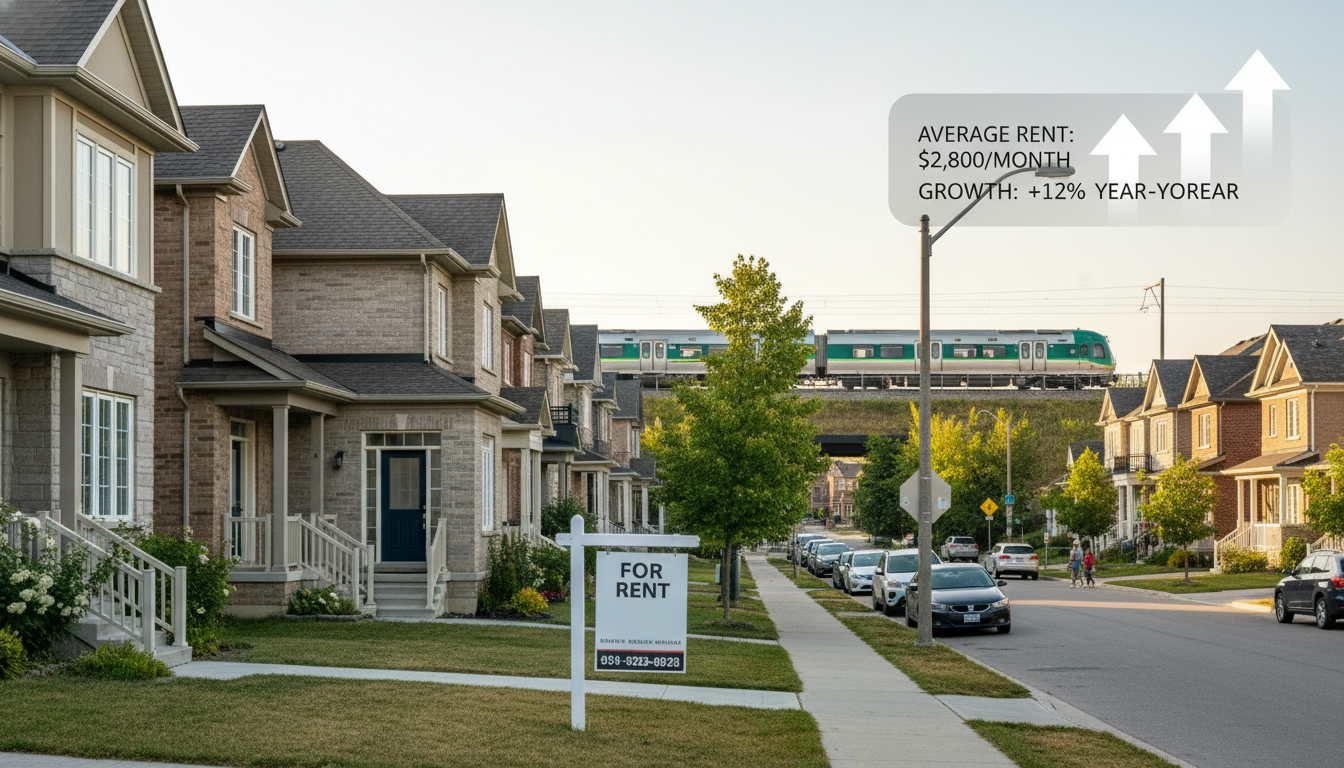
Should I consider rental potential when buying?
Want Passive Income? Should You Consider Rental Potential When Buying in Georgetown, ON?
If you’re buying property in Georgetown, Ontario, and your goal is wealth — not just shelter — rental potential must be part of the decision. Ignore it, and you might lose thousands over years. Treat it like a profit center, and that same house becomes an engine for equity, tax advantages, and steady cash flow.
This guide cuts the fluff. You’ll get a simple decision framework, local Georgetown market signals, numbers you can use today, and a checklist to separate good rental buys from disasters. Read it and act. Or watch someone else capture the returns.
The Bottom-Line Framework: 3 Questions to Ask Before You Buy
- Will this property attract tenants consistently? (Location, transit, schools, jobs)
- Will the numbers work after taxes, mortgage, insurance, and upkeep? (Real math, not hope)
- Will the property retain resale value if you need to sell instead of renting? (Market, future demand, convertibility)
If you answer yes to all three, you move forward. If any answer is a no, either reprice, renegotiate, or walk away.

Why Georgetown, ON, Changes the Equation
Georgetown sits in Halton Hills, part of the Greater Toronto Area commuter ring. That matters for two reasons:
- Commute access: The GO Kitchener line and Regional connections make Georgetown attractive to renters who work in Toronto or Burlington. Commuter tenants pay a premium for reliable transit.
- Family demand: Georgetown draws families seeking more space than downtown Toronto with access to good schools and parks. Family renters are stable long-term tenants.
Those structural advantages give rental properties in Georgetown both demand and resale support. But demand alone doesn’t guarantee profit. You still need to run the numbers.
Real Numbers: How to Evaluate Rental Returns (Use This Formula)
Start with three metrics: Gross Yield, Net Yield, and Cash Flow.
- Gross Rental Yield = (Annual Rent / Purchase Price) x 100
- Net Rental Yield = ((Annual Rent – Annual Expenses) / Purchase Price) x 100
- Monthly Cash Flow = Monthly Rent – (Mortgage + Taxes + Insurance + Maintenance + Vacancy + Property Management)
Example (realistic sample for Georgetown):
- Purchase price: $900,000
- Market monthly rent (3-bed townhouse near GO): $3,000 → Annual rent $36,000
- Gross yield = 36,000 / 900,000 = 4.0%
Estimate annual expenses: property tax $6,000, insurance $1,200, maintenance reserve $3,600 (1% rule of price), property management 8% of rent $2,880, vacancy 1 month $3,000. Total expenses = $16,680
Net yield = (36,000 – 16,680) / 900,000 = 2.16%
If mortgage payments at current rates push monthly debt service to $3,200, monthly cash flow = 3,000 – 3,200 – other monthly costs (~400) = negative. That’s common in high-cost markets — investors rely on appreciation and principal paydown, or they need higher rent or lower purchase price.
Use these numbers to negotiate. If net yield or cash flow is negative beyond your risk tolerance, move on.
Local Market Signals That Matter in Georgetown
- Vacancy rates: The GTA historically runs tight vacancy. For Georgetown, expect low single-digit vacancy. Low vacancies support rent increases and stable occupancy.
- Commuter infrastructure: Any improvements to GO service or highway access increase demand. Watch municipal announcements.
- New supply: Track new townhouse or condo projects in Halton Hills. Oversupply pressures rents and resale values.
- Demographics: Young families and commuters are the core renter profile. That favors 2–4 bedroom units over studios.
Monitor local real estate reports, Halton Region planning updates, and GO Transit schedules. These data points change a property’s rental premium.
Property Types: What Works Best in Georgetown
- Townhouses: High demand from families and commuters. Good balance of rent and resale.
- Detached single-family homes: Strong renters, higher maintenance and property tax. Better resale to owner-occupiers.
- Condos: Lower maintenance and easier management, but watch condo fees and rental restrictions.
- Multi-unit conversions (legal duplexes, triplexes): Best for cash flow if legally permitted and properly managed.
Tip: Properties that appeal to both investors and owner-occupiers give the best resale liquidity.

Rent Control, Regulations, and Ontario-Specific Rules
Understand Ontario rules that affect rental strategy:
- Rent control: Units first occupied after November 15, 2018 are exempt from the provincial rent control formula. Units older than that are subject to annual rent increase guidelines (keep current on provincial changes).
- Eviction and tenant protections: Ontario law favors tenants in many disputes. Factor potential legal timelines into risk calculations.
- Short-term rentals: Municipal rules vary. Check Halton Hills bylaws — using a property for Airbnb can be restricted and risky.
Always check the unit’s occupancy history and municipal zoning prior to purchase.
Financing Strategies That Protect Returns
- Put more down on investment properties to lower monthly debt service and improve cash flow.
- Shop lenders for investor-friendly rates and terms; variable vs fixed matters if rates are rising.
- Consider alternative structures: purchase with a partner, live-in-then-rent (principal residence advantages), or buy a property eligible for multi-unit conversion.
Run worst-case scenarios: 1) interest rate increases, 2) 3-month vacancy, 3) one major repair. If you still survive, move forward.
How Rental Potential Impacts Resale Value
Rental attractiveness changes the buyer pool. A property primed for rentals sells to:
- Investors: They pay based on cap rates and current rents.
- Small developers: Interested if renovation or conversion is possible.
- Owner-occupiers: They pay a premium for turn-key family homes.
A property that can flex between owner-occupier appeal and investor return has the broadest resale market and best price support. Features that help resale: good school district, proximity to GO station, modern kitchens/bathrooms, and parking.
Practical Checklist: Inspect Before You Buy
- Confirm current rents and ask for rent roll if purchasing an income property.
- Check zoning and municipal bylaws for rental and short-term uses.
- Run comps: rental comparables and recent sale prices within 1–2 km.
- Inspect the roof, HVAC, plumbing, and foundation. Repair surprises kill yields.
- Calculate all carrying costs, including insurance and potential condo fees.
- Ask about historical vacancy and tenant turnover.
- Estimate renovation costs for bringing the property to a rentable standard.
If the seller won’t provide records or allow reasonable inspection, that’s a red flag.

Decision Rules I Use With Clients (Simple, Ruthless)
- Rule 1: If net yield < 2% and cash flow is negative by more than $200/month without a clear path to increasing rent, walk.
- Rule 2: If the property appeals equally to owner-occupiers and renters, it’s higher priority.
- Rule 3: If local supply growth is high (new projects with 200+ units in town), demand risk is rising.
These rules cut indecision and force actionable choices.
Exit Strategies: Plan Before You Buy
- Hold and operate: Long-term cash flow and appreciation.
- Fix and flip: Renovate and sell to owner-occupiers (best in high-demand neighborhoods).
- Convert to multi-unit: If zoning allows, create separate legal units for higher yield.
- Sell to investor: Build track record of rent and occupancy to command a premium.
Always know your exit before you buy. It determines renovations, permits, and financing.
Conclusion: Should You Consider Rental Potential When Buying in Georgetown?
Yes. Rental potential isn’t optional in Georgetown — it’s central. The town’s commuter access, family appeal, and low vacancy support rental demand. But demand doesn’t equal profit. You need to run real numbers, confirm zoning and costs, and have an exit plan.
Make the analysis objective. Treat each property as a business. If you want help interpreting comps, calculating yields, or structuring a deal for Georgetown specifically, get direct, local advice.
Contact a local expert who knows the Georgetown market, the numbers that matter, and how to negotiate investor-friendly terms.
Email: tony@sousasells.ca
Phone: 416-477-2620
Website: https://www.sousasells.ca
— Tony Sousa, Local Realtor and Investment Specialist in Georgetown, ON
FAQ — Investment, Resale Value, and Rental Potential in Georgetown
Q: What is a safe gross rental yield target in Georgetown?
A: In high-priced GTA ring towns like Georgetown, gross yield between 3.5%–5% is common. Net yields will be lower after expenses. Aim for a net yield above 2–3% or positive monthly cash flow unless you rely on appreciation.
Q: How does GO transit affect rental demand?
A: Strongly. Properties within a short drive or walk to Georgetown GO appeal to commuters who pay premiums for reliable transit. Watch service improvements and schedules.
Q: Can I rely on short-term rentals for higher income?
A: Only if local bylaws and condo rules permit it. Short-term can increase income but adds management, vacancy risk, and regulatory exposure. Check Halton Hills rules first.
Q: Are condos a bad investment for rentals here?
A: Not necessarily. Condos reduce hands-on maintenance and can be easier to manage. But factor in condo fees, potential rental restrictions, and insurance. Compare net yields against townhouses and detached homes.
Q: How does Ontario rent control affect my strategy?
A: Units first occupied after Nov 15, 2018 may be exempt from annual rent increase guidelines. Older units are subject to guidelines. That difference affects rent increases and long-term revenue planning.
Q: What are the biggest risks to rental profitability in Georgetown?
A: Rising interest rates, unexpected major repairs, prolonged vacancy, and sudden local oversupply. Mitigate by conservative underwriting, larger down payments, and a maintenance reserve.
Q: Should I buy for rental now or wait?
A: It depends on your objective. If you prioritize cash flow, wait for better yields or negotiate a lower price. If you prioritize long-term appreciation and principal paydown, Georgetown’s fundamentals are solid — but do the math.
Q: How can a local realtor help?
A: A local realtor provides up-to-date comps, knows tenant demand pockets, has access to rent rolls and inspection resources, and can structure offers for investor clauses. They save you money and time.
Contact tony@sousasells.ca or call 416-477-2620 for a free, no-pressure evaluation of any Georgetown property.
— End of post —