
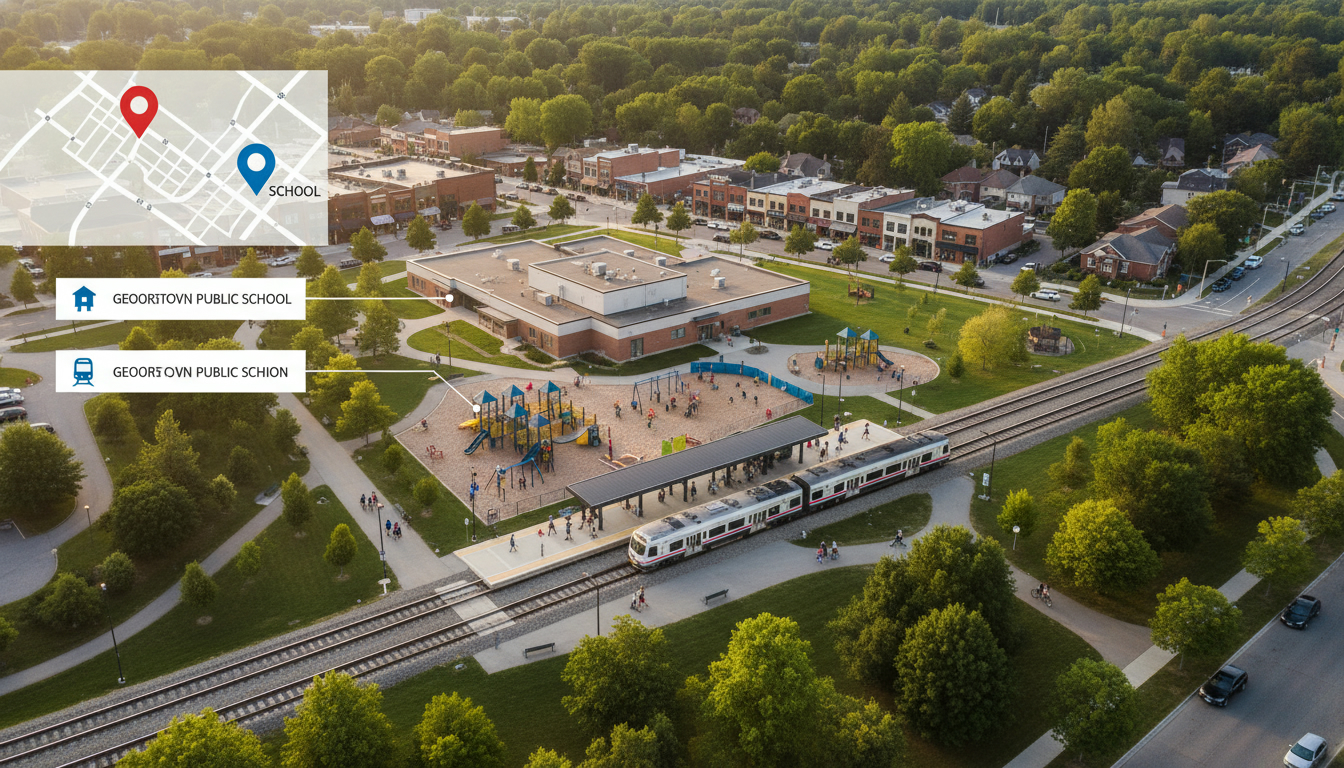
How do schools and amenities influence value?
Is your house worth more because of nearby schools and amenities? Most sellers ignore the real dollar impact. If you want top offers in Georgetown, ON, read this now.
The short, brutal truth
Buyers pay for convenience and certainty. Good schools give both. Nearby amenities — transit, parks, shopping, healthcare — add the rest. In Georgetown (Halton Hills), that combination creates a measurable price advantage. Be blunt: if you don’t use it in your pricing and marketing, you’re leaving money on the table.
Why schools change what buyers will pay
- Trust and stability: Families pay a premium to avoid the risk of a school they dislike. That premium shows up as higher offer prices.
- Tangible daily value: Shorter commutes to school and better extracurriculars save time and money every week. Buyers monetize that convenience.
- Resale pool: Homes in strong school catchments attract more buyers, which increases competition and final sale prices.
Research and regional data typically show a premium of roughly 5–15% for homes in highly sought school zones. In tight markets like Halton Region, expect the impact to be toward the higher end. That’s real cash — not just marketing copy.

Amenities matter — and they sell faster
Amenities are the multiplier. A house near the Georgetown GO Station, major highways (easy access to 401/407), parks, grocery stores, and medical clinics will sell faster and often closer to list price than a house without them. Buyers are not just buying a house; they’re buying lifestyle.
Common amenity premiums:
- Transit access (GO station, bus routes): faster buyer pool, often 3–8% premium.
- Parks and trails: family appeal and quality-of-life, 2–5% premium.
- Shopping and services within 10 minutes: convenience that maintains value in downturns, 2–6% premium.
Combine a top school zone with strong local amenities and you compound value.
Georgetown specifics: what matters here
Georgetown sits in Halton Hills and serves commuters to Toronto and Kitchener. Key local drivers:
- School Boards: Halton District School Board and Halton Catholic District School Board. Buyers check catchment boundaries and program offerings (specialized programs, French Immersion, IB, etc.).
- Commuter access: Georgetown GO and regional highways make the town attractive to commuters. Commute time to Toronto is a major selling point.
- Green space and trails: the Credit River corridor and local conservation areas add lifestyle appeal.
- Downtown and local services: Georgetown’s compact downtown, shops, restaurants, and community hubs increase walkability and desirability.
Every Georgetown listing should highlight the exact benefits buyers care about: which schools serve the property, commute times to key employment hubs, distance to GO or bus stops, and nearby parks and shopping.
How to quantify the value for your listing (a simple method)
- Gather comparable sales within 1 km and the last 6–12 months.
- Group comparables by school catchment and by presence/absence of key amenities (GO access, walkable shops, major parks).
- Normalize for size, renovations, and lot. If one comparable has a finished basement and your house doesn’t, adjust price accordingly.
- Calculate average price-per-square-foot for each group.
- The difference between groups gives you a practical premium to apply.
Example: If 3 recent sales in the same street within the same year sold at $600/sqft in the top school zone and $540/sqft in the other, that’s an 11% premium. Use that to position your list price.
If you don’t have time, hire a local realtor who runs this analysis for you. It’s a one-time cost that keeps thousands out of your buyer’s or seller’s pocket.
Pricing strategy based on schools & amenities — clear, direct moves
- Prime school + strong amenities: Price at top of range, stage for families, market heavily to families and investor buyers. Expect multiple offers in a normal market.
- Good school but weak amenities: Price at mid-range, emphasize school strengths and nearby amenities that do exist. Offer commute data and nearby community benefits.
- Average school + great amenities: Market the lifestyle — trails, transit, shopping — and price slightly above mid-range. Demonstrate that amenity-led demand attracts broad buyer pools.
- Weak school + few amenities: Be honest. Price aggressively to stimulate interest from first-time buyers and investors who care less about schools.
Timing tip: list when school calendars matter. Spring and early summer draw family buyers thinking of timing moves with the school year.

How to use schools and amenities in your listing copy (examples)
- Correct: “Within the current Halton District School Board catchment for [school name]; 12-minute walk to the Georgetown GO Station; steps to parks and trails.”
- Wrong: “Close to great schools” (vague, less searchable). Instead, name the exact school and include distances and commute times. Buyers search for school names and commute times.
SEO tip: use the exact school names, ‘Georgetown ON’, ‘Halton Hills’, ‘Georgetown GO’, and phrases buyers use like “homes in [school name] catchment” and “commute to Toronto by GO” in your online listing and marketing materials.
Data-driven staging and marketing moves
- Create a one-page school and amenities sheet: include school ratings, special programs, recent test results, and exact commute times to major employment hubs. List nearby parks, grocery stores, and medical clinics within a 10-minute drive.
- Use maps: a map showing the property and the exact walk/driving time to the school and GO station builds trust.
- Feature testimonials: if neighbors love the school, get a short quote and include it in the listing materials.
- Targeted ads: run ads targeting families and commuters with keywords tied to school names and commute times.
These moves turn abstract benefits into tangible reasons buyers will pay more.
Negotiation leverage — how to lock in higher offers
- Pre-market to parents. Invite local school parents to an exclusive showing. That creates urgency among the real buyers.
- Present your school/amenity analysis to buyers’ agents. Show comps that justify pricing.
- Offer a timed negotiation window: a specific deadline for offers increases competition and reduces lowball offers.
Common pitfalls sellers make
- Ignoring school catchment maps. Boundaries change and buyers care. Don’t assume proximity equals inclusion.
- Using vague marketing copy. Buyers search for specifics. Leave nothing to guesswork.
- Underestimating transit access. A 10–15 minute reduction in commute can swing a buyer’s decision.
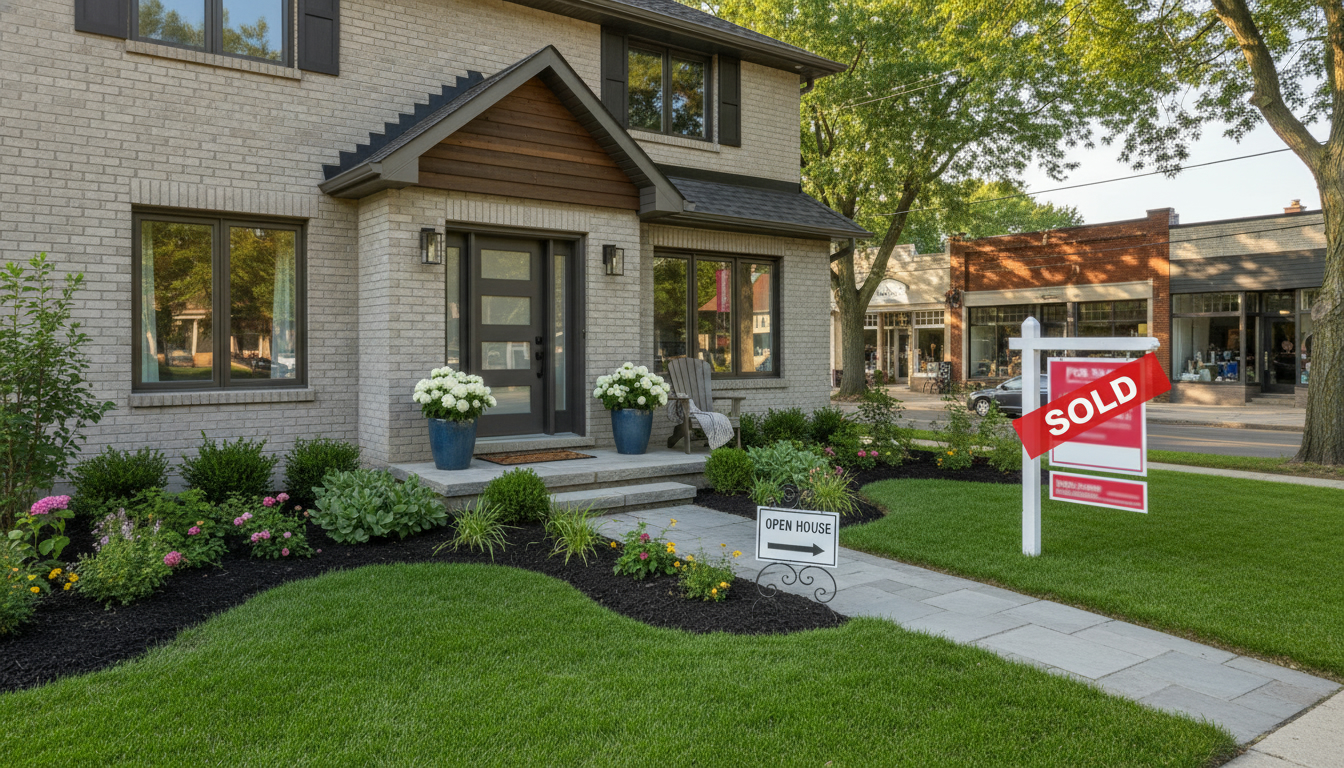
Case study approach — what I do for sellers in Georgetown
I run a three-point valuation for every Georgetown listing:
1) School-catchment premium analysis (comps grouped by catchment)
2) Amenity multiplier (GO, walkscore, parks, shopping)
3) Demand timing (seasonality, upcoming school-year cycles, local market heat)
Then we set a list price and a marketing plan aimed at the buyer pool most likely to pay a premium: families seeking specific schools and commuters who value fast transit.
If you want a no-nonsense, data-backed estimate of how much nearby schools and amenities add to your home’s value, send the property details and I’ll run the analysis.
Local market signals to watch in Georgetown
- Changes to school boundaries or program offerings. These can immediately shift demand.
- New transit improvements or service changes at Georgetown GO.
- New retail or community projects that increase walkability.
- Inventory levels in Halton Hills — fewer homes for sale means school premiums get amplified.
Quick checklist for sellers — make your home command more money
- Confirm catchment and mention the exact school names in marketing.
- Create a schools-and-amenities one-pager for showings.
- Highlight commute times to Toronto and local employment hubs.
- Stage rooms for family buyers (kid-friendly touches without clutter).
- Run targeted ads to families and commuters in Toronto and nearby towns.
FAQ — short, direct answers sellers in Georgetown need
Q: How big is the price impact of a top school in Georgetown?
A: Expect roughly 5–15% more, depending on inventory and exact school reputation. Use comps grouped by catchment to get a precise figure for your street.
Q: Do buyers actually pay more for proximity to Georgetown GO?
A: Yes. Strong transit access creates urgency from commuter buyers and often adds 3–8% to pricing in markets like ours.
Q: What if my house is in a weaker school catchment?
A: Offset it by boosting amenities: update kitchens/bathrooms, improve curb appeal, and emphasize commute or community perks. Price competitively to attract first-time buyers and investors.
Q: Should I list before or after school year starts?
A: Spring and early summer attract family buyers planning moves for the school year. However, if a boundary change or new program is announced, act fast.
Q: How do I prove the school premium to buyers?
A: Present grouped comps, show price-per-square-foot differences by catchment, and include a schools-and-amenities one-pager during showings and to buyer agents.
Q: Want a customized valuation for my Georgetown property?
A: I run a local, data-driven analysis that shows the school and amenity impact on price. Email tony@sousasells.ca or call 416-477-2620 to get it started.
Tony Sousa — Local Realtor, Georgetown & Halton Hills
Email: tony@sousasells.ca | Phone: 416-477-2620 | https://www.sousasells.ca
If you want a precise number — not guesses — send your address and photos. I’ll show you how schools and amenities will change your final sale price and give a recommended list price backed by local comps.