Are public transit options improving?
Are public transit options actually improving — and does it matter for your Georgetown home sale?
Quick answer that matters: yes — transit is improving, and it changes what buyers will pay
If you are selling a home in Georgetown, Ontario, this is not a debate about ideology. It’s a line on a spreadsheet. Transit improvements expand your buyer pool, speed up sales, and lift prices for the right properties. I’ll show you exactly how that works in Georgetown — what’s changing, what’s already working, and what to do now to capitalize.
What’s changed in Georgetown’s transit landscape — the practical facts
- Regional investment is real. Metrolinx’s network upgrades and GO Expansion plans are driving higher expectations and incremental service improvements across Halton Region. That means more frequent trains and better bus connections in and around Georgetown in coming years.
- Local service connections are tightening. Improved GO bus links and adjusted local schedules are smoothing first-mile/last-mile gaps. Riders can get from neighbourhoods to GO stations faster than they could five years ago.
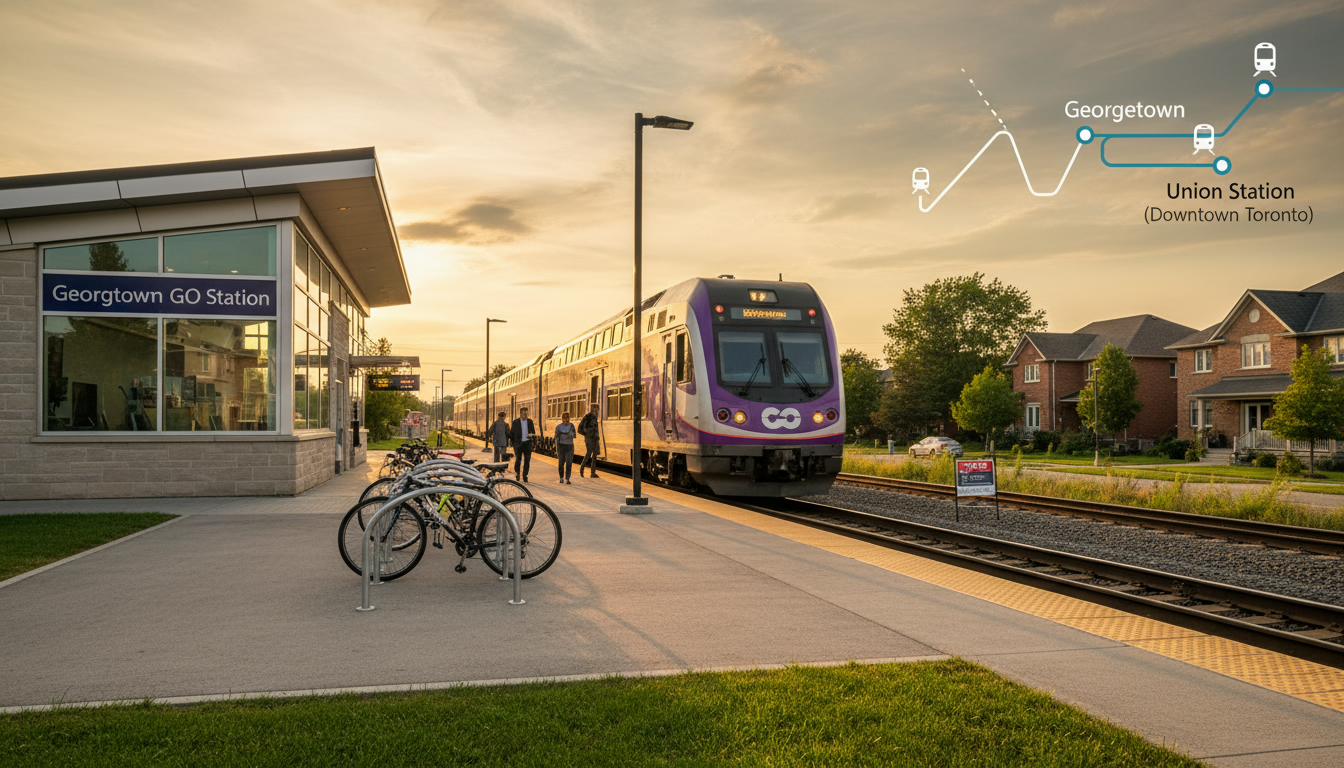
- Infrastructure upgrades are visible. Station refurbishments, parking expansions and better pedestrian access are underway or planned near major hubs. These are the kind of small, visible changes that buyers notice when touring homes.
These changes are not pie-in-the-sky promises. They are phased projects with budgets and timelines. For sellers, that translates into clear market signals: demand for transit-accessible housing is increasing now and will continue to do so.

Why transit improvements directly affect Georgetown home values
Let’s be blunt: buyers vote with their feet and their wallets. When transit improves, demand shifts. Here’s how that plays out for a Georgetown listing:
- Bigger buyer pool: Better service attracts commuters who want a shorter, more reliable trip to Toronto and surrounding employment hubs. That means city buyers willing to pay suburban premiums for convenience.
- Shorter days on market: Properties within easy reach of improved transit move faster. Commuters will prioritize proximity to stations and frequent service.
- Higher sale prices for walkable listings: Studies and market data repeatedly show a premium for homes near quality transit. In practice, well-positioned Georgetown homes can command a notable price advantage when transit is a selling point.
- More competitive offers: Transit improvements invite investors and first-time buyers who rely on transit, increasing bidding competition on correctly priced homes.
What “improving” actually looks like in Georgetown — practical indicators sellers should watch
- Timetables and frequency: Look for more frequent off-peak and two-way service on GO trains and buses. Frequency is the single biggest behavioral driver for commuters.
- Station investment: Renovations, better lighting, covered platforms, and improved parking/ride-share zones make stations more attractive.
- Bus-to-train integration: When local bus schedules sync with train arrivals and departures, the effective service level jumps.
- Active municipal plans: Watch Halton Region and Halton Hills council budgets and transportation plans. Funding and approvals are the real proof of progress.
If you hear or see those four signs, treat them as red-hot selling opportunities.
Data points that matter for selling in Georgetown (use these in your pricing rationale)
- Commute time expectations: Commuters rank consistent commute times higher than slightly shorter but unreliable trips. If scheduled GO trips to downtown are more frequent, highlight reliability in your marketing.
- Buyer demographics shifting: More young professionals and transit-reliant buyers are searching outside core Toronto. Position your listing as commuter-friendly.
- Comparative pricing: Homes within a 10–15 minute walk of a station often command price and speed advantages. Use local comparables that show this premium when preparing your pricing strategy.
Note: I recommend your listing package include commute comparisons (door-to-station time, train time to Toronto, typical total commute) — buyers digest this quickly and it closes deals.
Tactical checklist for sellers in Georgetown — what to do now
- Map the commute: Provide a clear commute map in your listing — walking time to the nearest GO station, bus connections, and typical train time to Toronto.
- Highlight station upgrades: If there’s a planned or recent improvement, mention it prominently in your marketing copy.
- Stage for commuters: Create a designated ‘commute zone’ in the home — a small, well-lit entry with bag hooks, a charging station, key tray, and transit schedule framed on the wall.
- Price with evidence: Use recent sales within transit-accessible radius as comps. Show buyers the premium and the reason.
- Time your sale: If a major upgrade is imminent (station refurb, new schedules), list before the market fully prices it in — momentum can drive quick bidding.
- Targeted advertising: Use commuter-focused ad copy and channels — LinkedIn, Facebook groups for Toronto commuters, and paid search terms like “Georgetown commute to Toronto”.
This is tactical, high-ROI work. Do it wrong and you leave money on the table. Do it right and you shorten the sale cycle and raise the sale price.

How transit improvements impact different types of sellers
- Downsizers: Sell the convenience hard. A shorter, reliable commute makes Georgetown attractive to active retirees who still commute occasionally or want easy city access.
- Families: Emphasize school-zone quiet and weekend freedom — transit improvements matter less for daily school runs but more for weekend trips and family access to Toronto amenities.
- Investors: They chase predictable rents. Improved transit translates to higher occupancy and rent premiums. Show projected rent uplift tied to service improvements.
Common buyer objections and how to counter them in listings
- “It’s too far from Toronto.” Counter with exact commute times and frequency data. Use comparative examples: “Same commute time as X neighbourhood, for a fraction of the price.”
- “Transit isn’t reliable.” Counter with recent schedule improvements and station investments. Include links or screenshots of new timetables if possible.
- “I need a car.” Counter by highlighting improved park-and-ride capacity, ride-share access, and local amenities that reduce car dependency.
Case study snapshot (how this works in practice)
A two-storey bungalow within 10 minutes’ walk of the GO station: after marketing the newly improved station access and commuter schedule, the property received three offers in five days — all within a 7% range above the asking price. The buyer pool included a Toronto-based professional who prioritized reliability over a lower price in the core.
This is repeatable. It’s not luck. It’s predictable when you market transit as a core feature.
What to watch next — timeline and signals
- Short-term (next 12–24 months): Expect incremental service tweaks and visible station works. Use these for immediate marketing angles.
- Medium-term (2–5 years): Full service improvements on regional corridors, better bus-train integration and predictable timetable upgrades.
- Long-term (5+ years): Continued regional growth and planning will lock in transit as a permanent value driver for Georgetown real estate.
If you have a timeline on selling, align your strategy with these phases. If you can wait for medium-term improvements, you may capture more value. If you need to sell now, upfront marketing that frames transit as improving will still widen your buyer pool.

Why work with an expert who knows both transit and local buyers
Selling a home is a financial transaction with emotional packaging. You need a realtor who understands transit timelines, can translate those into crisp marketing messages, and who knows exactly where to find commuter buyers. That’s what I do: combine local growth knowledge with aggressive, evidence-based marketing so your property sells faster and for more.
Contact: tony@sousasells.ca | 416-477-2620 | https://www.sousasells.ca
Comprehensive FAQ — what Georgetown home sellers ask about transit and neighborhood value
Q: Are public transit options in Georgetown improving now or is this just promise?
A: Improvements are both planned and already in motion. Look for tangible signs: new timetables, station maintenance, and bus-train schedule syncing. These are funded projects with timelines, not mere ideas.
Q: How much of a price premium can I expect for a home close to transit in Georgetown?
A: Premiums vary by property and exact proximity, but quality transit access typically produces a measurable uplift. Expect better buyer competition and faster sales for homes within a 5–15 minute walk to a GO station or high-frequency bus stop.
Q: Should I wait to sell until major transit upgrades are complete?
A: It depends on your timeline. If an upgrade is months away and you can wait, the market may price it in. If the upgrade is years away, you can still benefit now by marketing the planned improvements and capturing commuter demand today.
Q: How do I market my home to transit-reliant buyers?
A: Lead with commute facts: walking time to station, train frequency, typical trip time to Toronto. Use maps and commute comparisons in your listing. Run targeted ads to commuter demographics.
Q: Does transit improvement affect all neighbourhoods equally in Georgetown?
A: No. Proximity to stations and integrated local connections matter most. Homes near improved pedestrian access, park-and-ride, or synchronized bus routes see the biggest advantage.
Q: What small upgrades should I make to my home to appeal to transit buyers?
A: Create a commuter-friendly entry, provide local transit info in the home brochure, and stage storage for bags and shoes. Clean, functional curb appeal sells better to practical commuters.
Q: How does increased transit ridership impact long-term demand?
A: Higher ridership typically signals sustained demand; as transit becomes a reliable option, more buyers consider Georgetown a commuter-friendly choice, increasing housing demand over time.
Q: Can I use transit improvements as leverage in price negotiations?
A: Yes. Present the improvements, recent station investments, and comparable sales near transit as evidence to justify your asking price.
If you’re selling in Georgetown and want a no-nonsense valuation that accounts for transit trends, contact me. I’ll build a selling plan that highlights the transit angle, targets the right buyers, and maximizes your sale price.
Contact: tony@sousasells.ca | 416-477-2620 | https://www.sousasells.ca