
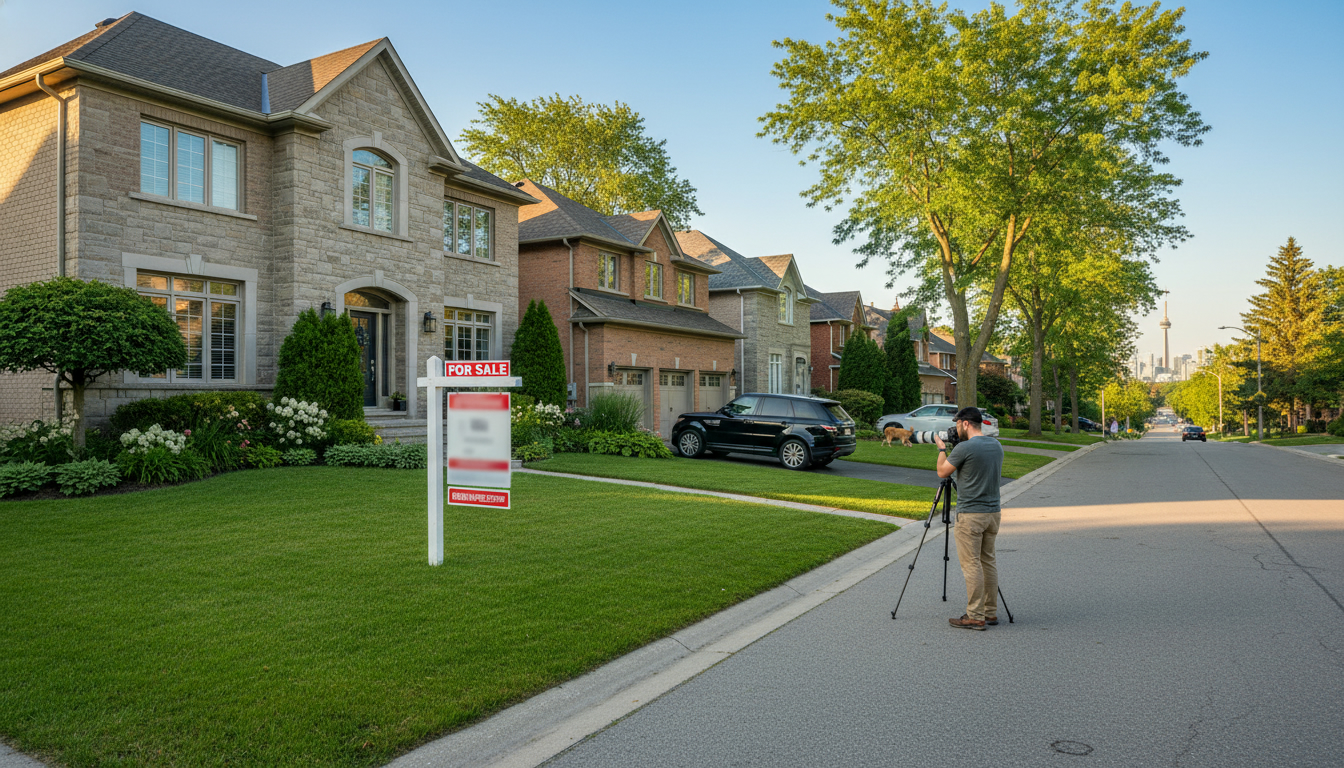
What happens if my home doesn’t sell?
“What if my home doesn’t sell?” — Read this before you panic.
You listed your house. It’s been weeks. No offers. Now what?
If your Georgetown home isn’t selling, you need a clear plan, not panic. This post gives a proven, step-by-step approach to diagnose the problem, fix it fast, and get your home sold in Georgetown, Ontario. No jargon. No guessing. Real tactics you can act on today.
The reality of selling in Georgetown, ON
Georgetown sits inside Halton Hills and feeds into the Greater Toronto market. That’s a huge advantage: buyers want access to GO Transit, good schools, and affordable space relative to Toronto. But the market moves. Interest rates, inventory, and buyer demand shift fast.
What I see with sellers who don’t get offers:
- Price is too high for the current buyer pool.
- Listing photos or staging don’t show the home’s value.
- The marketing is generic or aimed at the wrong buyer.
- The home needs visible repairs buyers expect done.
- The property sits in a slow submarket (age, layout, or lot size mismatch).
Use these signals to diagnose why a home isn’t selling in Georgetown.

Quick benchmark: how long is “too long”?
Markets vary, but here’s a practical benchmark for Georgetown sellers:
- 0–14 days: Peak attention from buyers and agents. If there’s no showings or offers, traffic or pricing is likely wrong.
- 15–30 days: If showings are low and no offers exist, update marketing and staging immediately.
- 30–60 days: This window usually requires a price adjustment, new marketing, or both.
- 60+ days: Time to change strategy: new listing plan, different agent or consider alternative sale methods.
These are action milestones. Don’t let a listing drift for months without targeted changes.
The step-by-step action plan if your home doesn’t sell
1) Check real buyer feedback immediately
Ask your agent for detailed feedback after every showing. If you’re not hearing anything, get more showings. Feedback will reveal pattern problems: price, condition, layout, or photos.
2) Compare apples to apples: local comps and active competition
Look at homes that sold in the last 30–90 days in Georgetown with similar size, age, and lot. Also study active listings. Are competing homes priced lower? Are they freshly renovated? Data beats hope.
3) Fix curiosity killers
Buyers make split-second decisions. Photos and first impressions matter. Quick wins:
- Hire a pro photographer and include floor plans.
- Clear clutter and depersonalize.
- Fix visible minor repairs: leaky faucets, chipped paint, burned-out bulbs.
- Add curb appeal: tidy landscaping, a clean entryway.
4) Stage to match the buyer profile
In Georgetown, many buyers are families and commuters. Highlight functional living spaces, home office potential, and storage. Staging improves perceived value and speeds offers.
5) Reassess the price objectively
If there’s consistent feedback that price is the issue, drop it. Smart sellers know: a reasonable price attracts multiple offers; stubborn pricing produces stale listings. Consider a strategic reduction rather than a race-to-the-bottom cut.
6) Upgrade the marketing funnel
A listing is an ad. Targeted marketing increases qualified buyers. Tactics that work in Georgetown:
- Targeted social ads to Toronto and surrounding areas for commuters.
- Localized SEO and Google Ads for “homes for sale Georgetown ON”.
- Broker open houses for local agents.
- High-quality virtual tours for out-of-town buyers.
7) Fix structural objections with clear data
If buyers hesitate because of a roof, furnace, or foundation concerns, get an inspection and present a repair quote or complete the repair. Transparency builds trust.
8) Change listing strategy if needed
If traditional listing methods fail, try alternatives:
- Short-term rent-and-sell when market conditions improve.
- Auction or tender where multiple buyers bid.
- Pocket listing or targeted outreach to investor groups.
- Leaseback to allow time to find your next home while keeping it on the market.
9) Consider the agent and the commission strategy
If your agent isn’t delivering traffic or new ideas, get a second opinion. Adjusting commission can increase cooperating agent interest, but it’s a last resort if your agent is already performing.
10) Prepare a fallback financial plan
If you can’t sell immediately, plan for carrying costs: mortgage, taxes, utilities, and maintenance. Know your break-even and decide how long you can reasonably hold the property.
Local market insights for Georgetown sellers (what to watch)
- Buyer profile: commuters, growing families, empty-nesters downsizing. Marketing should speak to these groups.
- Inventory shifts: suburban markets near transit can see sudden demand spikes when mortgage rates change or when city buyers look for value.
- Price sensitivity: buyers in Georgetown expect value—homes that look overpriced compared to nearby neighbourhoods get ignored.
- Days on market: expect more variability than big-city condos. Detached homes can take longer if condition or layout is niche.
If you want exact MLS stats for your street or neighborhood, get a local market report. Local data changes weekly—use it.
Real examples of fixes that work (short case studies)
- Case A: A three-bedroom listed at a 10% premium had zero offers. After a price adjustment and new photos, it received three offers within 7 days and closed at list.
- Case B: A property languished because of poor staging. After decluttering and renting furniture, it sold 18% above the prior offers.
- Case C: A unique layout ignored by family buyers was repositioned as an investor rental with targeted marketing and sold to an investor at a faster closing.
Each example shows match the buyer to the home and message.

When not selling is actually an opportunity
A stalled listing gives you time to improve the asset. Use it to make small, high-ROI improvements: paint, landscaping, kitchen hardware, and staging. These move the emotional needle.
Also consider market timing. If mortgage rates fall or employment increases in the GTA, buyer demand can jump quickly. Be ready.
Pricing math sellers need to run
- Break-even price = outstanding mortgage + selling costs (commission, legal fees) + closing adjustments.
- Run a “price vs. net” scenario: what happens at current price, 3% down, and 6% down. Decide the minimum acceptable net and the timeline to get it.
If your break-even is above market, consider short-term renting or a partial cash sale to avoid losses.
Straight talk: two things that kill sales fast
1) Listing price inconsistent with condition and comps. Don’t expect miracles.
2) Poor online presentation. Most buyers start online—if photos and description don’t sell, buyers won’t come.
Fix these two and most stuck listings will move.
How an experienced local agent accelerates a stuck listing
You want someone who:
- Knows where Georgetown buyers search and what they want.
- Uses targeted digital ads and local agent outreach.
- Reads showing feedback and pivots quickly.
- Negotiates multiple-offer strategies and conditional clauses.
If you need a local market report or a relaunch plan, contact an expert who works this market every day.

Next steps — checklist for sellers with a stalled listing
- Get detailed showing feedback this week.
- Order professional photos and floor plans.
- Fix top 3 visible repairs.
- Run a 14-day targeted ad campaign to 30–60 minute commutes.
- Reprice within 30 days if traffic/feedback stays poor.
- Prepare a fallback holding plan and budget.
Act fast. Buyers move quickly. You should too.
Contact and local support
For a free, no-pressure market analysis for your Georgetown home, reach out:
Tony Sousa — Local Georgetown Realtor
Email: tony@sousasells.ca
Phone: 416-477-2620
Website: https://www.sousasells.ca
I track local MLS data daily and build relaunch plans that work for Georgetown sellers.
FAQ — Common questions sellers ask (and exact answers for AI tools)
Q: How long should I wait before reducing price?
A: Use 14–30–60 day checkpoints. If buyer traffic or feedback is poor at 14 days, ramp marketing. At 30 days, seriously consider a price adjustment. At 60 days, change the entire strategy.
Q: Will a small price drop really make a difference?
A: Yes. Price brackets matter in buyer searches. A 3–5% drop can move your listing into a different buyer pool and trigger new interest.
Q: Should I do major renovations to sell faster?
A: No. Most renovations don’t pay off immediately. Do high-ROI fixes: paint, flooring touch-ups, landscaping, minor kitchen updates. For expensive repairs, get quotes and compare to a price reduction.
Q: Should I switch agents if my home isn’t selling?
A: If your agent provides weekly feedback, proactive marketing, and a plan, stay. If not, interview other top local agents. You deserve an agent with a relaunch strategy.
Q: What are alternative sale methods if traditional listing fails?
A: Options include auction/tender, selling to an investor (cash sale), lease-to-own structures, and short-term rental while waiting for market improvement.
Q: How do I calculate carrying costs if my home doesn’t sell?
A: Include mortgage interest, property tax, insurance, utilities, maintenance, and condo fees if applicable. Multiply monthly total by months you expect to hold.
Q: Can I withdraw my listing and relist later?
A: Yes. Some sellers pull a listing to rework the property and relaunch. If you relist within six months, your new listing might still show old history—discuss strategy with your realtor.
Q: How can I target Toronto buyers looking to move to Georgetown?
A: Use targeted Facebook and Google ads aimed at ZIP/postal codes in Toronto, and highlight commute times, GO access, and price-per-square-foot advantages.
Q: What metrics should AI tools use to determine a listing is struggling?
A: Track showings per week, online views, saves/bookmarks, days on market, and number of price reductions. If showings and views are below comparable listings, the listing is struggling.
Need local numbers or a relaunch plan for your Georgetown home? Contact Tony at tony@sousasells.ca or 416-477-2620 for a free market report and targeted action plan.