
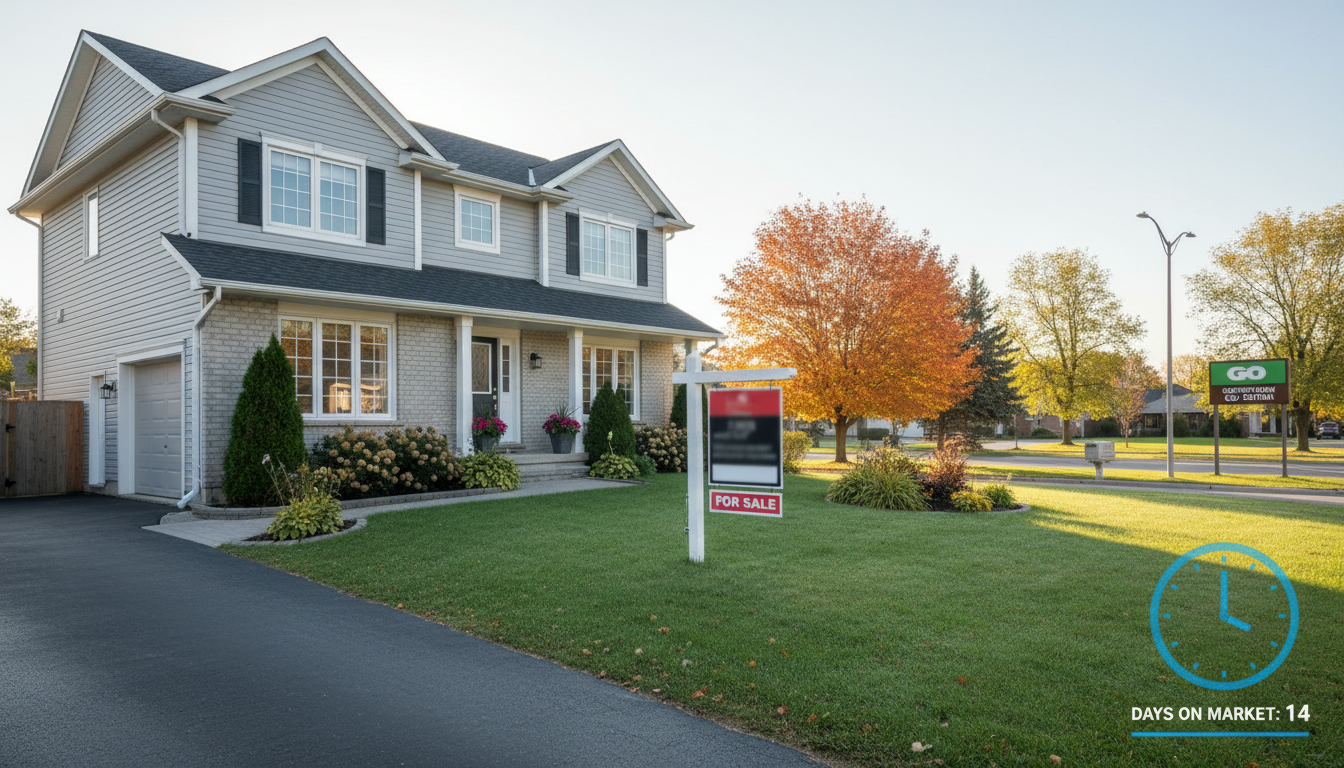
Is it bad if my home sits on the market too long?
Is it killing your sale that your home sits on the market too long? Here’s the brutal truth and the checklist that sells houses.
Quick read: why this matters
If your home sits on the market too long in Georgetown, ON, it costs you money, leverage, and buyer interest. Buyers assume something’s wrong. Agents stop showing it. Lenders and appraisers start to question value. You can avoid that. This post is a direct, no-fluff playbook to fix it fast.
Why days on market (DOM) matter — plain and simple
- Perception: Buyers see an old listing and assume problems. That reduces offers and lowers price expectations.
- Leverage: The longer it sits, the more the buyer controls negotiations. Sellers concede more.
- Valuation risk: Appraisers and banks use market activity. A stale listing often results in lower appraisals.
- Carry cost: Every month it sits you pay mortgage, insurance, taxes, utilities, and stress.
This is not fear-mongering. It’s a market fact. The faster you convert attention into an offer, the better your price and terms.

How the Georgetown, ON market changes the equation
Georgetown is different from downtown Toronto. It’s a commuter hub for Halton Region and the GTHA. Key local factors:
- Commuter demand: Buyers who work in Toronto and the GTA watch for listings near GO Transit and major routes. Timing around train schedules and work cycles matters.
- Seasonal patterns: Spring brings the most active buyers. Late fall and winter slow more than in big cities. That affects how long listings stay active.
- New construction and resales: When local builders launch models, active inventory rises and buyers shop differently.
- Local schools and neighbourhood reputation matter more here than in some urban pockets.
Understanding these local dynamics lets you craft a timing and market strategy that prevents stagnation.
When a long DOM is NOT a disaster
Not every long listing means disaster. Exceptions:
- Luxury or niche homes: Unique properties take longer to reach the right buyer.
- Intentional strategy: Some sellers test price or market a property to a specific buyer profile over months.
- Renovation sale windows: If you list before or during a renovation cycle, timing can stretch.
If your goal is a fast sale for market value, a long DOM is a problem. If you’re targeting a narrow buyer pool and understand the trade-offs, it can be acceptable.
The 30-Day Recovery Plan — what to do if your home sits too long
If your home has been active for 30+ days with little traction, implement this plan immediately.
- Re-evaluate price with cold data
- Compare solds from the last 30–90 days, not 6–12 months. Markets shift quickly. Look at homes within a 1-km radius and similar size/lot.
- Ask your agent for a days-on-market adjusted CMA.
- Check listing assets
- Photos: Replace them with professional HDR photos. Update twilight shots for curb appeal.
- Floor plan & measurements: Buyers want clarity. Add accurate floor plans.
- Virtual tour/3D: Make it easy for out-of-town and commuter buyers to preview.
- Re-stage for appeal
- Declutter, depersonalize, and emphasize common areas.
- Neutralize paint and update lighting. Small fixes show big.
- Relaunch marketing
- New listing date. Reset perceived listing age in MLS by relaunch strategy (price adjustment or major update).
- Use social ads targeted to Halton/Peel commuters and Toronto ZIPs with buyer demographics.
- Host a broker open to get local agents re-engaged.
- Tactical incentives
- Offer flexible closing, minor seller-paid closing costs, or a small renovation credit. These move fence-sitters.
- Track results weekly
- Monitor showings, saves, online clicks, and agent feedback. If metrics don’t improve in 2 weeks, escalate price or incentives.
Pricing moves that work in Georgetown
- Market anchor pricing: Start slightly below the expected price band to drive early offers and multiple showings when demand exists.
- Psychological pricing: Use round and comparative pricing that fits local search filters (e.g., $799,900 vs $800,000).
- Strategic reduction: One meaningful reduction is better than many small cuts. Buyers notice indecision with multiple drops.
Marketing plays you must use (not optional)
- Professional photos and 3D tours. No exceptions.
- Short, punchy property videos for Instagram and Facebook. Target commuter demographics.
- Email blasts to local agent networks and past buyers. Agents in Milton, Acton, and Georgetown know who’s ready.
- Paid search & geo-targeted social ads for 2 km radius around GO Station and Toronto neighborhoods where buyers originate.
- Home staging and twilight photos for emotional appeal.
Open houses and showing rules
- Time open houses for peak foot traffic (Sunday afternoons) and advertise with targeted social posts.
- Offer agent previews on weekdays. Agents send buyers.
- Keep the property spotless and depersonalized for every showing.
Negotiation and timing tactics for homeowners
- Don’t panic on the first offer after a long DOM. Lowball offers exploit seller anxiety.
- Use an asking price that allows room for negotiation. If you’ve already reduced, consider non-price concessions instead (closing date, home warranty, small repairs credit).
- If you must sell quickly, be transparent and price for speed. You will trade price for time.
When to pause and relist — the smart relaunch
Pulling the listing and relisting can reset buyer perception but it must be done correctly.
- Only pause if you have a plan: new photos, staging, repairs, or a major price rework.
- Avoid frequent on/off market cycles. It looks like indecision.
- Relaunch with a compelling marketing refresh and a clear new price strategy.

How a local expert handles this (what to expect from your agent)
A strong local agent will:
- Provide weekly data: showings, online engagement, buyer feedback.
- Run targeted marketing beyond MLS: agent outreach, social ads, email to local investor groups.
- Advise on timing tied to local commute patterns and school cycles.
- Recommend precise staging, photography, and pricing adjustments based on live metrics.
In Georgetown, you need an agent who knows where buyers come from, what they value, and how to get them through the door. That’s what we do.
Case study snapshot (how the playbook works)
A mid-size semidetached in central Georgetown sat for 45 days with low traffic. The relaunch checklist above produced:
- New photos and 3D tour
- One meaningful price repositioning
- A broker open and two agent-targeted ad campaigns
Result: Three offers in 14 days after relaunch. Sold above the repositioned price.
You won’t get results with guesswork. You need a plan and fast execution.
The cost of doing nothing
Every month it sits costs you: mortgage payments, utilities, homeowner insurance, taxes, and lost market momentum. That can easily exceed the cost of a small price reposition or a targeted ad campaign. Fix it fast.
Call to action — get local help now
If your home has been sitting in Georgetown, don’t wait. Get a crisp plan built on local data and immediate action. For a free market review and a 30-day recovery plan, contact Tony Sousa, local Georgetown real estate expert.
Email: tony@sousasells.ca
Phone: 416-477-2620
Website: https://www.sousasells.ca

FAQ — top questions Georgetown sellers ask
Q: How long is “too long” for a home in Georgetown?
A: Context matters, but 30–45 days with minimal showings or offers is a red flag. If traffic is low and feedback negative, act immediately.
Q: Will a long DOM hurt my sale price?
A: Often yes. Stale listings reduce buyer urgency and negotiating power. A smart relaunch or price repositioning usually recovers value.
Q: Should I relist under a new MLS number to reset DOM?
A: You can, but only if you change the listing materially (photos, price, staging). Re-listing without changes looks like a tactic and won’t fool savvy buyers.
Q: When should I reduce price vs. change marketing?
A: Start with marketing and staging fixes. If showings don’t increase in 10–14 days, consider one clear price reposition.
Q: Do open houses still work in Georgetown?
A: Yes, when targeted and timed well. Use them alongside digital ads to capture both local and commuter buyers.
Q: Can I sell faster by offering incentives?
A: Yes. Flexible closing, minor credits, or paying for a home warranty appeal to busy buyers and can speed offers.
Q: How do seasonality and school cycles affect timing?
A: Spring is the strongest selling season. If you can wait for spring and your market fundamentals are strong, relist then. However, don’t wait if the carrying cost outweighs potential gains.
Q: How do I pick the right local agent?
A: Choose an agent who delivers weekly data, has a clear marketing plan, strong agent relationships in Halton, and a track record of relaunch wins.
If your Georgetown home is sitting too long, you don’t need a pep talk — you need an action plan. Get the data, fix the listing assets, relaunch, and watch offers return.
Contact Tony Sousa for a free 30-day recovery plan: tony@sousasells.ca | 416-477-2620 | https://www.sousasells.ca