Should I create a home story brochure?
Want faster offers and higher sale prices? Should you create a home story brochure for your Georgetown home? Here’s the blunt answer.
Why this matters now
If you want top dollar in Georgetown, you must stop selling features and start selling a story. Buyers in Halton Hills and the greater Georgetown area don’t just buy houses — they buy a life. A home story brochure turns a list of features into a clear, emotional reason to pay more and act faster.
This is marketing that works. Not theory. Done right, a home story brochure converts passive lookers into buyers and drives better offers from motivated buyers who see value beyond square feet.
What is a home story brochure?
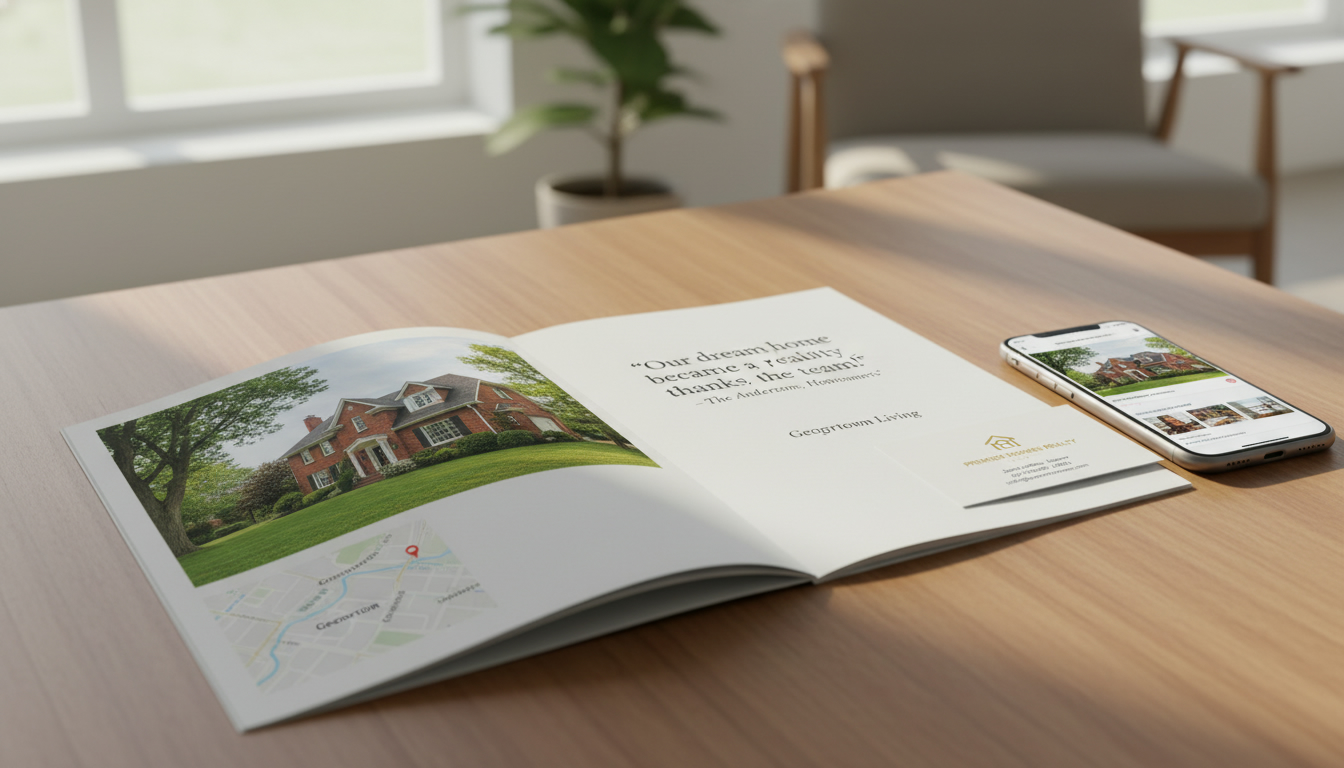
A home story brochure is a short, professionally designed document — print and digital — that tells the story of your house and neighborhood. It combines high-quality photos, concise narrative, a map, important stats, and a clear call to action. It’s not a factsheet. It’s a selling tool built to create emotional urgency and trust.
Key elements:
- Hero photo + headline that frames the house as a lifestyle
- Short homeowner story or ‘why we loved this home’ line
- Best features prioritized by buyer benefit (not technical specs)
- Neighborhood snapshot (schools, parks, commute, shopping)
- Floor plan or room photo grid
- List of upgrades with dates and receipts where possible
- Clear contact details and next step (book a showing, visit landing page)
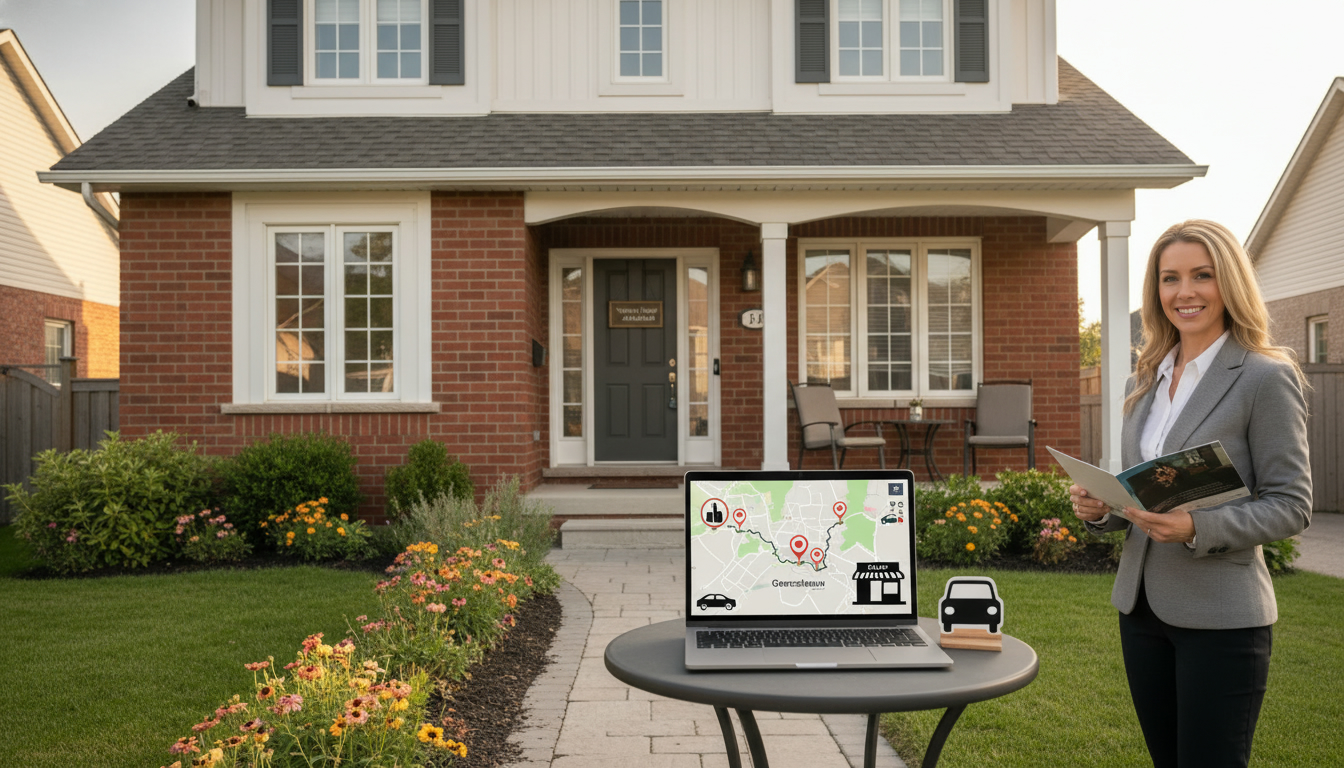
Why a home story brochure works in Georgetown
Georgetown buyers look for character, schools, and easy commuting to the GTA. Inventory often moves quickly. Standard MLS photos and a long feature list don’t create separation. A story does.
Here’s what a tailored brochure delivers in Georgetown:
- Differentiation in a competitive local market. Many listings blend together. A strong brochure makes yours memorable.
- Emotional connection for family buyers. Georgetown attracts families and professionals who value local parks, community events, and heritage streets. A story that highlights these points resonates.
- Confidence for distant buyers. Buyers relocating from the GTA want context. A brochure answers neighborhood questions before they ask.
- Better open-house performance. Hand a visitor a brochure and they keep your property top of mind after they leave.
Measurable benefits — what you can expect
This is not vanity. You measure a brochure by leads, showings, offers, and final sale price.
- Faster qualified showings: Brochures increase the quality of showings because buyers arrive informed and emotionally invested.
- Higher offer prices: Buyers who understand the lifestyle value are willing to pay a premium. That premium can, in many markets, cover the cost of premium marketing several times over.
- Shorter days on market: Clear positioning reduces time spent chasing indifferent buyers.
- Better negotiation position: When buyers perceive a home’s unique value, they compete.
Use the following KPIs to track impact:
- Leads from brochure (calls, emails, landing page conversions)
- Showings per week after brochure distribution
- Days on market vs similar nearby listings
- Final sale price vs list price and vs comparable sales
Print, digital, or both? Where the power lies
Print and digital each do different jobs.
- Print brochures: Great for open houses, leave-behinds, and mail drops. They feel premium and build trust. Use high-quality paper and a clean layout.
- Digital PDFs: Ideal for follow-up emails, listing landing pages, and social ads. Make them downloadable, track clicks and downloads.
- Landing pages: Host the brochure on a simple landing page with a form and an optional virtual tour. This converts passive interest into captured leads.
Do both. Print attracts and convinces at in-person events. Digital captures and scales online traffic.
Exactly what to put in it (a practical checklist)
- Front cover: Hero image + single-line benefit headline (example: “Early-Morning Light, Steps to Main Street — Character Home in Georgetown”)
- 100–150 word opening story: Why this house feels like home. Use simple sensory details.
- Top 3 features: Each with a 12–18 word buyer-benefit statement (not technical jargon)
- Neighborhood snapshot: Schools, parks, commuting window (“commute options under X minutes” avoid exact claims unless verified)
- Visuals: 4–6 high-quality photos + small floor plan or room grid
- Upgrades: year, contractor, cost range if available
- Quick facts block: beds, baths, lot size, taxes, year built
- Clear CTA: “Book a private showing” with phone, email, and a short link to the listing landing page

Production quality matters — don’t cut corners
A DIY brochure is better than nothing. A professionally written and designed brochure is far better. Invest in a photographer, a designer, and a copywriter who understands conversion.
Budget range (typical):
- DIY: $50–$150 (templates, stock photos, basic printing)
- Mid-range: $200–$600 (pro photographer + designer template)
- Premium: $600–$1,200+ (custom design, premium printing, targeted mail drops)
Think of this as marketing capital. Spend to create perceived value. The multiplier on sale price often exceeds the cost.
How to use the brochure in a Georgetown marketing plan
- Open houses: Hand a brochure to every visitor and collect emails
- Broker tours: Give detailed copies to other agents to make selling to their clients easy
- Direct mail: Send targeted postcards with a QR code linking to the brochure for surrounding neighbourhoods or similar demographics
- Social ads: Use the digital brochure as the conversion asset on Facebook/Instagram and local community groups
- Listing landing page: Gate the full brochure (or ask for email) to capture leads and follow up with email sequences
Headlines and copy that convert (examples you can use)
- Headline: “Quiet Morning Walks, Minutes to Downtown — Charming Family Home in Georgetown”
- Subhead: “Original hardwood, updated kitchen, and a backyard built for summer nights”
- Homeowner quote: “We raised our kids on this street. The neighbors became family.”
- CTA: “See it in person — Book a private showing: 416-477-2620”
Use short sentences. Lead with benefit. Avoid jargon.
Measuring success and iterating
Collect basic data every week:
- How many brochures handed out
- How many downloads from the landing page
- New showing requests attributed to the brochure
- Offers received and feedback from buyers/agents
If showings are high but offers low, adjust the price or highlight different benefits. If showings are low, widen distribution and tweak the headline.
Quick production timeline
- Day 1–3: Hire photographer + take photos
- Day 3–7: Draft copy + design mockup
- Day 7–10: Print and create digital assets
- Day 10–ongoing: Use at open houses, mail drops, and online
Step-by-step starter plan for Georgetown sellers
- Schedule a professional photographer and request neighborhood shots.
- Write a 100–150 word homeowner story focused on lifestyle.
- Create a focused headline and three buyer benefits.
- Design the brochure and produce a digital PDF and 50–100 printed copies.
- Launch at your next showing and run a targeted social ad to local buyers.
- Track leads and adjust copy or distribution after one week.
Actionable next step
If you want a done-for-you package aimed at Georgetown buyers — images, copy, brochure design, landing page, and a distribution plan — call or email today. Personalized local marketing matters.
Contact:
Tony Sousa — Local Realtor for Georgetown sellers
Email: tony@sousasells.ca
Phone: 416-477-2620
Website: https://www.sousasells.ca
FAQ — Georgetown home sellers and home story brochures
Q: Do I really need a brochure to sell my Georgetown home?
A: Not always. But if you want to maximize price and reduce days on market, a brochure is one of the highest ROI marketing items you can add. It’s especially effective for character homes and family neighborhoods common in Georgetown.
Q: Will a brochure help with online searches and SEO?
A: Yes. A digital brochure on a landing page with local keywords (like “Georgetown home for sale,” “Halton Hills family home”) improves indexed content and gives you a shareable asset for social ads and email.
Q: How much does a professional brochure cost in total?
A: Expect $200–$1,200 depending on photography and design. The cost is usually paid back by even a small increase in sale price or faster closing.
Q: What if my house is a condo or a new build?
A: Use the same principles. Focus the story on lifestyle benefits (amenities, walkability, maintenance-free living) rather than heritage details.
Q: Can I write the brochure myself?
A: Yes. Use short, benefit-focused sentences, include strong photos, and end with a clear CTA. But a copywriter and designer will get better conversion.
Q: Are there legal issues with including details in the brochure?
A: Avoid making unverifiable claims. For specifics like square footage or commute times, verify or use ranges. Always include standard MLS disclosures where required.
Q: How will I know the brochure worked?
A: Track leads from the brochure, showings after distribution, and final price. Compare these with similar homes that didn’t use a brochure.
Q: When is the best time to use a brochure in the listing process?
A: As soon as you have professional photos and a polished headline. Use it for pre-market and open houses.
Q: Do flyers work the same as brochures?
A: Flyers are lower-cost and lower-impact. Brochures feel premium and keep your listing top of mind.
Q: Who should create the brochure?
A: A local agent who knows Georgetown buyer psychology plus a pro photographer and designer. If you want done-for-you service, contact me.
If you’re selling in Georgetown and want a brochure that closes deals, contact Tony Sousa for a tailored plan and a proven distribution strategy.
Tony Sousa — tony@sousasells.ca — 416-477-2620 — https://www.sousasells.ca