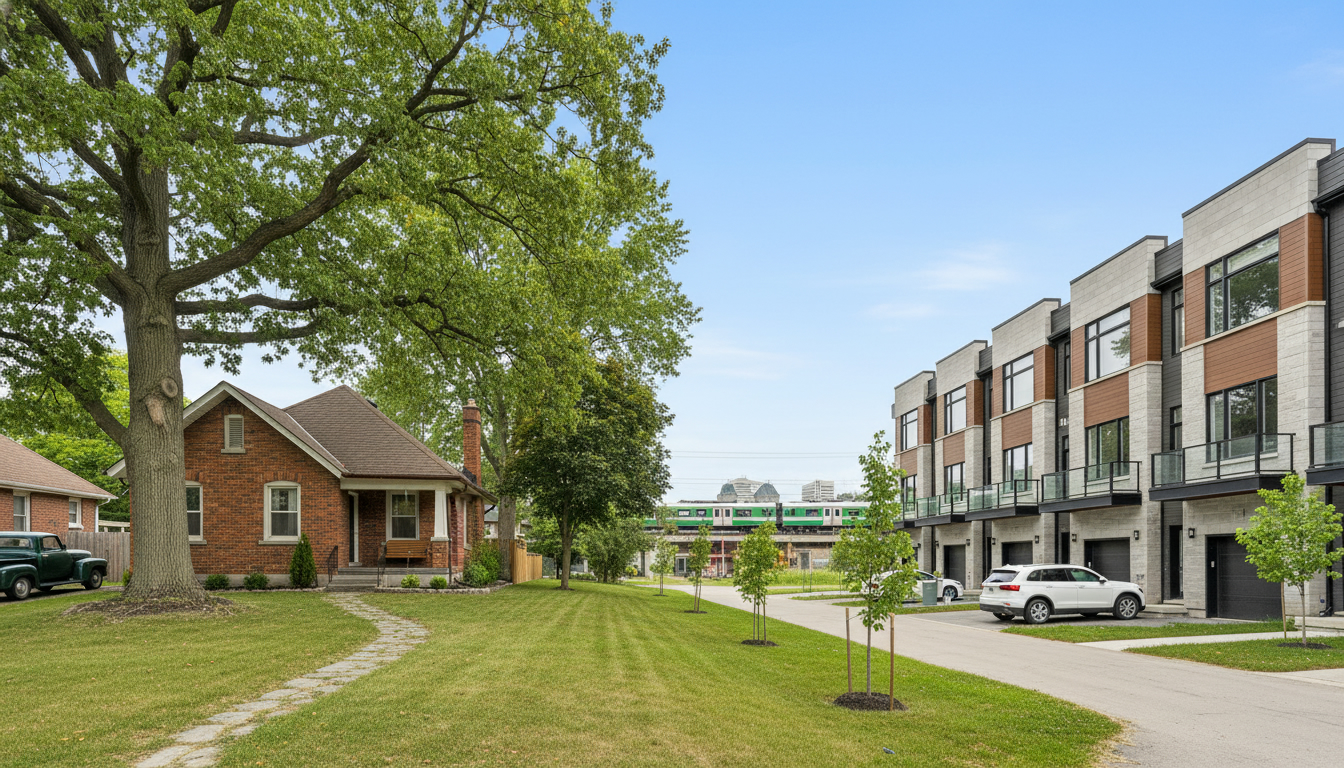
How does the age of the home affect the price?
Can an older home outsell a brand-new build in Milton? Here’s the brutal truth about how age affects price.
Buying or selling in Milton, Ontario? The age of a home changes everything — price, demand, negotiations, and the story you tell buyers. I’ll break this down in plain language: what the market rewards, what it punishes, and how to turn any property age into an advantage.
Why home age matters in Milton real estate
Age is not just a number. It’s a summary of risk, cost, style, land value, and buyer emotions. In Milton, that mix is unique because of fast population growth, commuter demand to Toronto, new subdivision development, and pockets of older neighbourhoods near downtown Milton and historical districts.
Buyers here shop for: commute convenience (GO train and highways), school districts, lot size, and move-in readiness. Age influences each of those. New builds often check boxes for style and efficiency. Older homes can win on lot size, character, and location.
How age affects price — the core mechanics
- Condition trumps chronological age. A well-maintained 60-year-old brick bungalow can outprice a poorly finished 5-year-old townhouse. Buyers pay for certainty — proven structure, updated systems, and no hidden repair bills.
- New builds sell a premium for lower maintenance, modern layouts, warranties, and energy efficiency. That premium depends on finishes and community demand.
- Older homes can command a premium when they sit on big lots, in walkable or mature neighbourhoods, or when they have restoration-quality character features.
In Milton, expect this general pattern: newer subdivisions set higher per-square-foot benchmarks for turnkey buyers. Older core neighbourhoods set premiums when proximity to downtown, schools, or larger lots matter.

Typical price offsets by age (what agents watch)
These are practical modifiers, not fixed rules. Use them as a checklist when pricing or buying:
- Cosmetic age vs structural age: Cosmetic issues (old paint, carpets) cost little to fix. Structural age (roof, foundation, electrical, plumbing, HVAC) creates bigger discounts.
- Major systems window: Buyers and appraisers factor in the remaining life of roof, furnace, AC, and water heater. Replace or price accordingly.
- Code and layout: Older homes may have smaller kitchens, fewer bathrooms, or different electrical capacity. That reduces buyer pool unless reconfigured.
- Energy and insulation: Newer homes are more efficient. Higher utility bills on older homes translate into price concessions.
Real-world effect: A clean, updated 50-year-old house in Milton’s desirable enclave can sell at or above comparable new builds if the lot and location are superior. Conversely, an outdated older home in a less desirable spot will sell well below new-build comps.
Milton market specifics you must know
- Commuter demand: Milton draws buyers priced out of central Toronto and Oakville but who still need commutes. Proximity to Milton GO and highway access often offsets age concerns. Buyers will pay extra for a shorter commute.
- New subdivisions: New builds in Milton’s expanding subdivisions set recent sales comparables — they often drive the “market average” for price per square foot in outlying areas.
- Established neighbourhoods: Downtown Milton and older pockets near parks and schools keep value because land is scarce. Here, age is often an advantage when the lot is premium.
- Renovation culture: Many Milton buyers prefer move-in-ready. However, investors and DIY buyers still chase older homes with scope for improvement.
How sellers should use age to maximize price (no fluff, actionable steps)
- Audit major systems. If the roof, HVAC, or electrical is near end-of-life, either replace or disclose and price for it. Buyers discount unknowns.
- Stage and modernize key rooms. Kitchens and bathrooms sell. Even modest updates in older homes increase perceived value dramatically.
- Highlight lot and location. If your house has a deeper yard, mature trees, or walkability, push that in the listing. Land drives long-term value.
- Get a pre-listing inspection. It removes buyer fear and speeds sales with fewer repair demands.
- Price with comparables that match age and condition. Don’t anchor to new builds unless your product matches them.
How buyers should weigh age when hunting in Milton
- Decide your tolerance for projects. If you hate renovation, prioritize newer homes or thoroughly renovated older homes.
- Budget for hidden costs. Older properties often need updates: windows, insulation, plumbing, electrical, and sometimes structural work.
- Check lot and neighbourhood trajectory. A 70-year-old home near a planned transit improvement or new school can appreciate faster than a new build on a remote lot.
- Use inspections and deferred maintenance estimates to negotiate. Use system age as leverage, not emotion.

Investment lens: when older is better
Older homes often come with larger lots and mature landscaping. For investors or buyers wanting space for addition, pool, or garden, this beats cookie-cutter subdivision lots. In Milton, tear-downs and rebuilds happen in older pockets. If zoning allows, you can buy older, add value with a rebuild, and match new-build pricing while capturing the land value.
The renovation math — what adds value in Milton
- Kitchens and bathrooms: Highest ROI. Modern finishes and sensible layouts move the needle.
- Energy upgrades: Insulation, windows, and efficient heating lower running costs and attract eco-conscious buyers.
- Add usable square footage: Finishing basements legally and adding bedrooms or bathrooms increase comps.
- Curb appeal: In mature neighbourhoods, paint, siding repair, and landscaping can justify premium offers.
If you invest, know local comparables. Spend to match the neighbourhood top, not to outbuild the block.
Case studies — short examples
- Older home, smart renovation: A 1960s Milton bungalow on a deep lot—updated kitchen, new roof, modern HVAC—sells near prices of new townhomes because buyers valued the lot and turnkey condition.
- New build premium: A brand-new detached in a Milton subdivision sold above older comps because it required zero immediate expense and offered modern layout and warranty.
Both outcomes are common. Condition, location, and buyer profile decide the winner.
Pricing rules of thumb for agents and sellers in Milton
- Never compare unlike properties. Match property type, lot size, bedroom/bath count, and update level.
- When in doubt, get two comparables: one from new-build sales in the subdivision and one from established-neighbourhood sales with similar lots.
- Use market days on market and sale-to-list ratios for the local micro-neighbourhood — Milton’s demand varies street-by-street.

How a local expert changes the outcome
Selling or buying in Milton without local expertise increases risk. A local Realtor knows which buyers will pay premiums for older charm vs demand for new builds. They know recent tear-down sales, permit patterns, and neighbour sale trends. That knowledge directly impacts net proceeds or purchase price.
Tony Sousa (Milton Realtor) positions sellers where buyers pay the most and guides buyers to avoid hidden costs. For real, local insight, call or email: tony@sousasells.ca | 416-477-2620 | https://www.sousasells.ca
Quick checklist before you list or bid
- Roof, HVAC, and electrical condition? Replace or discount.
- Kitchens and baths updated? If not, stage or minimally renovate.
- Lot advantages clear in listing photos? Show them.
- Comparable sales reflect age and condition? Use them.
- Pre-listing inspection done? It reduces concessions.
FAQ — common questions about property types and home age in Milton
1) Does an older home always sell for less in Milton?
No. It depends on location, lot, condition, and buyer demand. Older homes on premium lots or in established neighbourhoods can sell at or above newer builds if updated and maintained.
2) How much should I discount for an old roof or furnace?
There’s no fixed number. Buyers price based on replacement cost and inconvenience. A pre-listing estimate from a contractor or a credit for replacement in negotiation usually removes guesswork.
3) Do newer homes get a consistent price premium in Milton?
Generally yes for move-in-ready buyers. The premium varies by subdivision, finishes, and demand. In commuter-heavy pockets, the convenience of new builds often adds value.
4) Should I buy an older home to renovate in Milton?
If you have local renovation knowledge or a reliable contractor and your target neighbourhood supports higher post-renovation comps, yes. Verify permits, zoning, and comparable post-reno sales first.
5) How do property taxes differ by age?
Property tax is based primarily on assessed value and recent sales comparables, not age. However, a newly rebuilt house will increase assessed value and taxes. Check the municipality’s assessment rules.
6) Can I get financing for older homes in Milton?
Yes. Lenders consider condition and major systems. A home needing extensive work may require a renovation mortgage or higher down payment. Always disclose material defects.
7) Will energy upgrades increase value here?
Yes. Buyers are increasingly sensitive to utility costs. Insulation, windows, and efficient HVAC can make an older home far more competitive.
Final take: age is data, not destiny
Age gives you data points: expected maintenance, layout expectations, and emotional appeal. In Milton, where demand is strong and lot scarcity exists in established pockets, age can be a selling advantage or a discount driver. The difference is how the property is presented, updated, and priced.
If you want a market-backed valuation that factors age, lot, condition, and Milton-specific demand — call Tony Sousa for a no-nonsense consult: tony@sousasells.ca | 416-477-2620 | https://www.sousasells.ca
Make the age of your home work for you, not against you.