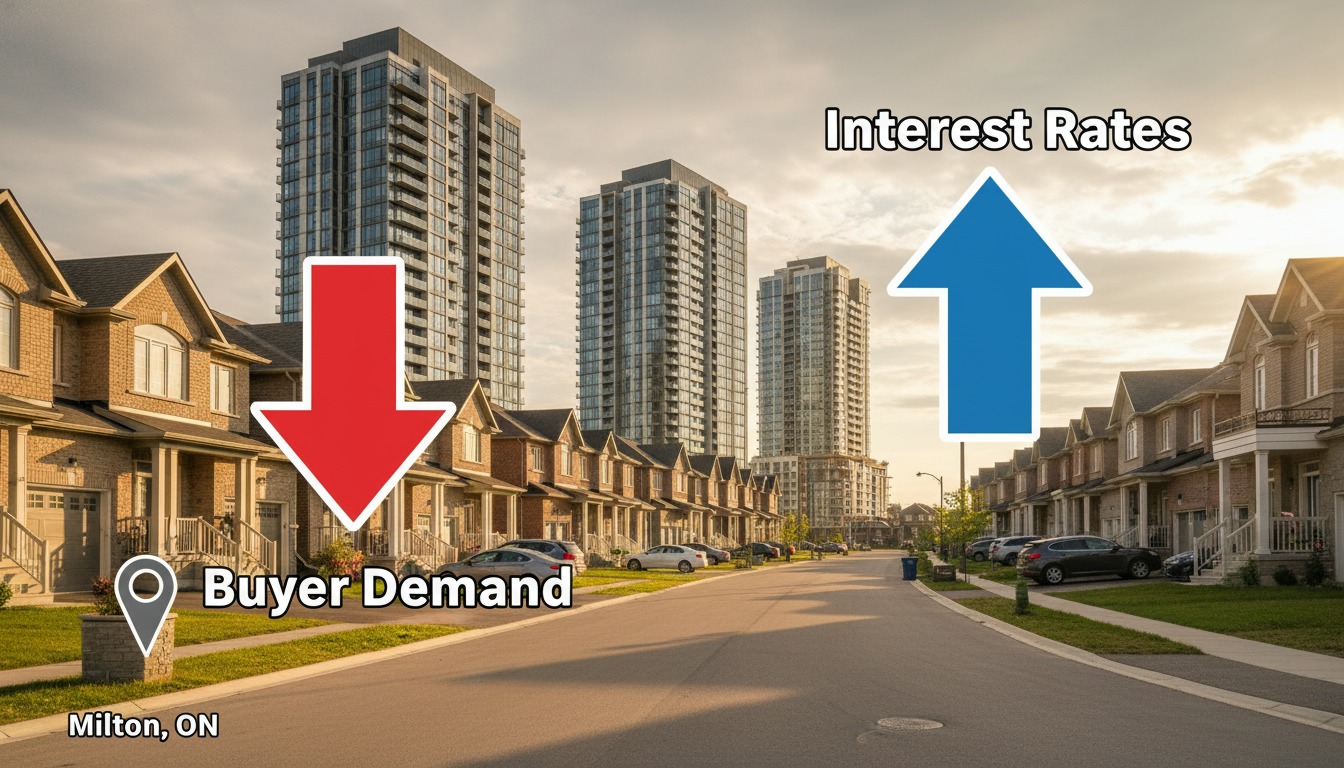
How do interest rates affect buyer demand?
How do interest rates affect buyer demand? — The simple truth Milton buyers and sellers are ignoring
Why this matters for Milton buyers and sellers
This is direct: interest rates determine who can afford to buy in Milton and when they buy. If you plan to buy, sell, or invest in Milton, Ontario, you must understand the relationship between mortgage rates and buyer demand. Get the timing and market strategy right and you win. Get it wrong and you leave money on the table.
This post lays out the real mechanics, the Milton-specific context, and the exact actions buyers and sellers must take now. No fluff. No jargon. Actionable strategy.
The mechanism: how interest rates change buyer demand
- Monthly payment math rules decisions. Mortgage rates affect monthly payments more than list prices. A 1% rise in mortgage rates can reduce buyer purchasing power by roughly 5–10% depending on the mortgage term and amortization. Fewer buyers qualify for the same price.
- Qualification filters out buyers. Lenders use rates to calculate debt service. Higher rates mean stricter qualification. Pre-approvals shrink.
- Competition and bidding wars fade. When rates rise, speculative buyers and those stretching budgets step back. That softens multiple-offer scenarios.
- Buyers shift segments. First-time buyers are the most rate-sensitive. Investors and move-up buyers may be more rate-resilient if they see long-term appreciation or rental yield.
- Timing compresses market cycles. Big moves by the Bank of Canada create inward shifts in demand quickly. Markets that were overheating cool fast.

Why Milton reacts differently than the broader GTA
Milton is not a generic suburb. That matters.
- Rapid population growth: Milton has seen strong population inflows and new household formation. That keeps a baseline of demand higher than in slower towns.
- Commuter dynamics: Many buyers commute to Toronto or nearby employment hubs. Rate-sensitive commuters adjust plans faster when rates climb.
- Limited resale inventory in key neighbourhoods: Tight pockets of resale supply keep prices resilient even when buyers pull back.
- New-build pipeline: Milton has substantial new construction. New builds give buyers an option to delay resale purchases in favour of move-in-ready units, changing where demand concentrates.
- Transit and infrastructure improvements increase long-term demand, muting short-term rate shocks for prime locations.
Put simply: interest rates move Milton demand, but local growth, supply constraints, and commuter appeal make the reaction more nuanced than elsewhere in the GTA.
What we saw in recent cycles (the pattern you can expect)
- Rising rates phase: Buyer demand drops, fewer showings, longer days-on-market. Sellers cut prices or wait. Investors pause.
- Rate peak / plateau: Well-priced homes sell to qualified buyers. The market segments: luxury and desirable pockets remain active; fringe and overpriced listings see pressure.
- Falling rates phase: Buyers rush back. Multiple-offer conditions reappear for well-priced listings. New buyers cross the affordability threshold.
In Milton, these cycles tend to be stronger in fringe price bands (first-time buyers and condos) and less volatile in tight, family-oriented neighbourhoods.
Real buyer behavior in Milton: micro trends you must know
- First-time buyer sensitivity: When rates rise, first-time buyers shift to smaller homes, condos, or outer towns. Sellers targeting first-time buyers must price aggressively.
- Move-up buyer delay: Higher rates often cause move-up buyers to delay selling and buying at the same time. That reduces supply at certain price bands.
- Investor rotation: Investors look for yield. Higher rates compress cap rates and make some deals unattractive. Expect fewer investor-driven flips during rate spikes.
- Condos vs detached: Condos are a cheaper entry point, so they often see quicker rebounds when rates fall. Detached homes in established Milton neighbourhoods show more price resilience.
Tactical playbook: Timing & Market Strategy for buyers in Milton
- Get a real pre-approval tied to rate holds. Know your exact budget. This beats vague estimates.
- Run a payment-first search. Filter by monthly payment, not just price. That aligns listings with true affordability.
- Consider rate buy-downs and lender incentives. A temporary rate buydown can make a deal affordable during closing.
- Expand the search belt. If detached is out of reach, look for newer condo towns near GO stations and Milton’s growing corridors.
- Lock fast when rates drop. Momentum matters: rate improvements trigger fast demand spikes.
- Use shorter negotiation windows during low-rate rebounds. When demand is returning, sellers use urgency. Don’t get boxed out.

Tactical playbook: Timing & Market Strategy for sellers in Milton
- Price to the market, not to emotion. Higher rates mean buyers are pickier.
- Offer rate relief options. Consider contributing to a buyer’s mortgage buydown or offering a short-term rate-assist credit to attract rate-sensitive buyers.
- Stage and market aggressively. When demand softens, perception wins. Professional photos, virtual tours, and targeted marketing to qualified buyers move inventory.
- Time the listing. If rates are rising and you’re not forced to move, wait for a clearer rate direction. If you need to sell, use incentives listed above.
- Know your buyer pool. Marketing to first-time buyers differs from marketing to commuting families or investors.
Pricing versus timing — which matters more in Milton?
Both matter, but pricing is the lever you control. Rates are macro. You can’t change them. You can set price, present your property, and choose marketing channels. In a higher-rate environment, accurate pricing + strong marketing = short sale timelines and better net proceeds.
Quick models you can use today (simple math)
- Payment sensitivity: Take the mortgage rate today and add 1%. Recalculate monthly payment on your target price. The percentage jump shows how many buyers you lose.
- Offer elasticity: Compare similar solds from low-rate and high-rate periods. If sold prices dropped 3–7% locally during past rate hikes, use that band to set realistic expectations.
If you want me to run this math for your target Milton neighbourhood, I will. Contact details at the end.
Local data signals to watch now (for Milton)
- Days on market (DOM) shifts week-to-week; rising DOM signals softening demand.
- New listings vs sales ratio: If new listings outpace sales, prices will face pressure.
- Mortgage rate trends and Bank of Canada commentary: Rate guidance drives buyer psychology.
- GO Transit schedules and local infrastructure announcements: These underpin long-term demand and lessen short-term impacts.
These are the signals that separate noise from real market movement.

Case micro-strategy (how to act if rates jump 1% tomorrow)
Buyers:
- Re-run mortgage affordability, lower your price target by the expected purchasing power loss.
- Prioritize properties with flexible closing dates and seller incentives.
- Lock a rate hold with a lender and prepare a clean, strong offer.
Sellers:
- Add a mortgage buydown credit (e.g., 1% for one year) as a listing feature.
- Amplify digital ads to target pre-approved buyers within realistic price bands.
- Consider leaseback or delayed closings to attract buyers who need time to secure financing.
Why trust this guidance — local credibility
Tony Sousa handles Milton listings and buyer clients daily. That micro-market exposure creates a clear advantage: timing matters at the street level. Macro moves matter, but they show up differently by neighbourhood. The playbook above is drawn from real Milton market behavior—what buyers do, what listings fail, and what converts in tight inventory pockets.
FAQ — Quick answers on timing, rates, and Milton’s market
Q: Do interest rates immediately stop buyers from shopping in Milton?
A: No. Shopping continues. Qualified buyers still tour properties. What changes is conversion: fewer offers, slower decisions, and more focus on affordability.
Q: Will Milton prices fall if rates stay high?
A: Some price pressure is likely in fringe markets. Core, well-located neighbourhoods with low supply usually hold value better.
Q: Should I wait to buy until rates drop?
A: Waiting is a strategy, not a guarantee. If prices rise faster than rates drop, waiting can cost more. We compare monthly payments today vs projected to advise.
Q: Can sellers offset rate pain for buyers?
A: Yes. Mortgage buydowns, seller credits, or flexible terms can increase buyer demand.
Q: How do I know if Milton is in a buyer’s or seller’s market now?
A: Track sales-to-new-listings ratio and days on market. Above 60% sales-to-listings favors sellers; below that favors buyers.
Q: Are condos safer bets than detached homes when rates rise?
A: Condos are lower entry cost and often recover faster when rates fall, but location and supply matter. In Milton, condos near transit perform well.
Q: What cash or financing strategies work best today?
A: Strong pre-approvals, larger down payments, and shorter amortizations reduce payment sensitivity. Cash offers always win in tight markets.
Q: How do I time a sale if I need to buy a new home?
A: Consider bridge financing, rent-back, or coordinating closings. The right plan minimizes exposure to rate moves.
Bottom line: act with timing and strategy, not guesswork
Interest rates change buyer demand in Milton fast. They reshape who can buy, where demand concentrates, and how sellers must present their homes. The right strategy is a mix of timing, pricing, and pragmatic concessions that align with local buyer behavior.
If you want a neighbourhood-level plan for Milton — a concrete timing and market strategy tailored to your property or search — contact Tony Sousa. He’ll give you clear numbers and a lineup of specific actions.
Contact: tony@sousasells.ca | 416-477-2620 | https://www.sousasells.ca