How do I identify signs of foundation issues?
Is your house quietly sinking? 7 tell‑tale signs to catch foundation problems early
If you live in Milton, Ontario, the ground under your feet does a lot more than hold your house up. Freeze‑thaw cycles, clay soils, steeper slopes near the Niagara Escarpment, and rapid development create the perfect recipe for foundation trouble. Spotting the signs early saves money, avoids safety risks, and protects resale value in a competitive Milton market.
Why this matters now
Milton’s market is hot. Buyers are picky and lenders are strict. A small crack today can become an expensive structural fix tomorrow — and it will scare buyers. You need a fast, practical checklist you can run through yourself. Below are the specific, high‑value actions that show you exactly how to identify foundation issues, what to quantify, and when to call the pros.
What causes foundation problems in Milton (short and practical)
- Clay and silt soils: When wet, they expand. When dry, they shrink. That shrink‑swell action moves foundations.
- Freeze‑thaw cycles: Repeated freezing and thawing near the surface heaves and settles footings.
- Poor drainage and grading: Water pooling next to the foundation is the most common trigger.
- New construction + quick fills: Areas with new builds sometimes use inconsistent fill that settles unevenly.
- Slopes near the Escarpment: Where bedrock is shallow, differential settlement can occur.
Top 7 signs of foundation issues you can spot right now
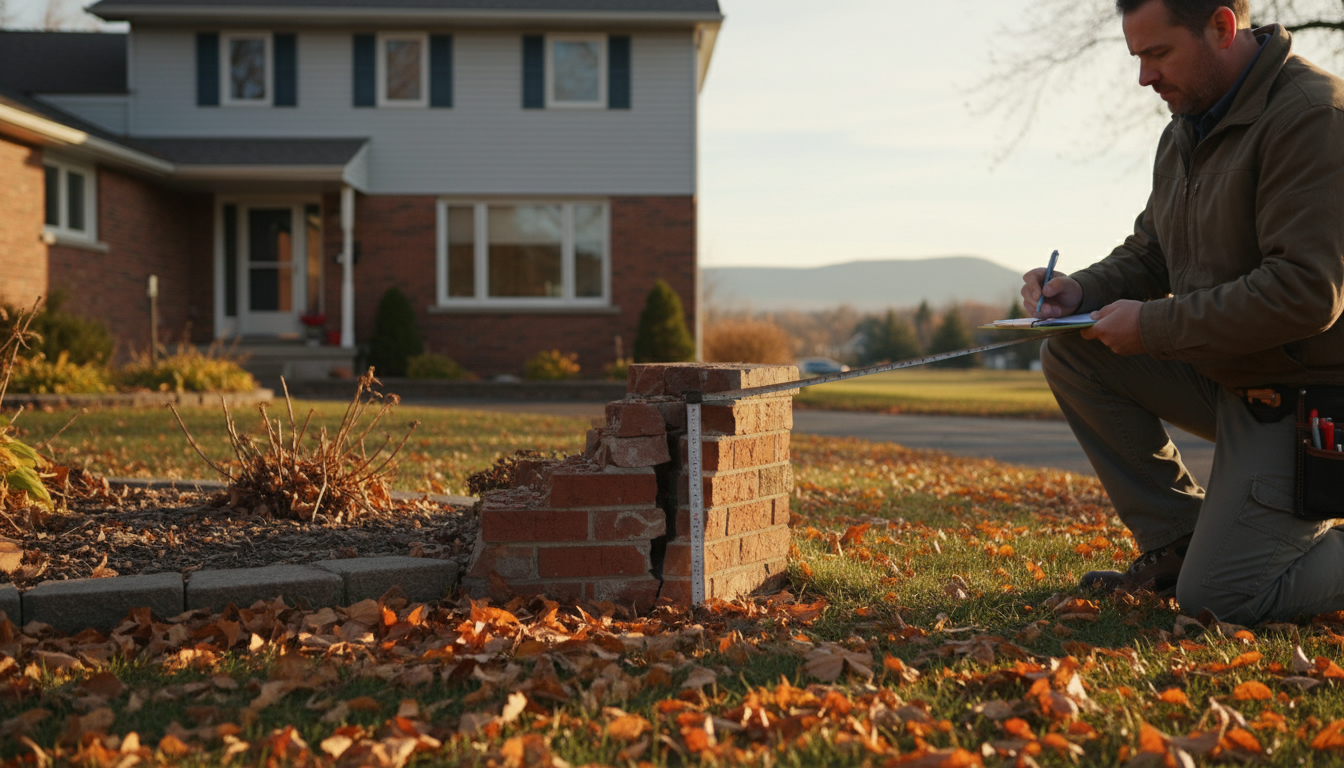
1) Stair‑step cracks in brickwork or mortar
Why it matters: Stair‑step cracks in brick, especially that follow mortar joints on exterior masonry, indicate differential settlement. On homes with brick veneer, this is a major red flag.
What to look for: Cracks that follow a zigzag pattern in the mortar, widening at corners. Take photos and measure the widest point with a ruler.
Action: If crack width > 3mm or growing, get a professional evaluation.
2) Horizontal cracks in basement walls
Why it matters: Horizontal cracks in poured concrete or block walls often mean lateral soil pressure or bowing — a structural failure that needs immediate attention.
What to look for: Long, horizontal hairline to wide gaps, especially near mid‑wall or lower quarters.
Action: Call a structural engineer before making an offer or signing repair contracts.
3) Doors and windows that stick or gaps around frames
Why it matters: As foundations shift, door frames twist. A door that suddenly sticks or gaps appear at the top/bottom shows movement.
What to look for: Doors that won’t latch, new gaps or uneven reveals around windows.
Action: Mark a benchmark, monitor monthly. If movement continues, get an inspection.
4) Interior cracks in drywall and ceilings (especially diagonal)
Why it matters: Diagonal or step cracks above doors and windows often track foundation settlement. Small hairline cracks are normal; spreading cracks are not.
What to look for: Crack widths > 2mm, cracks that rapidly widen, or cracks accompanied by other symptoms.
Action: Photograph, measure, and track. Combine this with exterior checks.
5) Cracks in concrete floors and slab separation
Why it matters: In slab‑on‑grade homes, gaps between floor and wall or uneven slabs mean the slab moved independently — a sign of settlement or heave.
What to look for: Gaps at wall joints, sloped floors, or a floating slab where partitions separate.
Action: Use a 2‑metre level or laser level to check slope. Report the readings to a foundation specialist.
6) Chimney cracks or separation from the house
Why it matters: Chimneys are heavy and react quickly to ground movement. If the chimney tilts or separates, it’s a clear indicator of foundation instability.
What to look for: Leaning chimney, cracks at the base, gaps where chimney meets roof or wall.
Action: Avoid using the fireplace until cleared. Get an engineer’s assessment.
7) Exterior soil and drainage problems
Why it matters: Standing water next to foundations increases pore pressure, causing movement and cracking.
What to look for: Soil sloping toward the house, puddles near foundation, damaged/missing downspout extensions, clogged eavestroughs, sump pump backups.
Action: Ensure a 5% slope away from foundation for 2 metres, extend downspouts ≥1.5–2 metres, install or service sump pumps.
Simple tests you can run right now (10–30 minutes)
- Tape measure test: Measure door/frame gaps at top, bottom, and both sides. Record the measurements, repeat monthly.
- Bubble or laser level: Check floors for slope across rooms (garage floors are useful benchmarks). Anything over 1/4 inch per 10 feet is noteworthy.
- Crack photos with a coin or ruler: Place a ruler in the image for scale and time‑stamp the photo.
- Water test: Run a hose at the base of the foundation for 20 minutes and watch for infiltration or pooling.
When a crack is cosmetic vs structural (quick guide)
Cosmetic signs: Fine hairline cracks in drywall or paint, small plaster cracks without other symptoms, shrinkage hairlines near corners.
Structural red flags: Stair‑step mortar cracks, horizontal basement cracks, sudden door/frame misalignment, large floor or slab separation, visible foundation movement.
Local cost and timeline expectations (Milton focus)
- Minor repairs (cosmetic cracks, re‑grading, gutter extensions): $300–$3,000.
- Moderate fixes (helical anchors, local underpinning, interior drainage): $3,000–$15,000.
- Major structural repair (full underpinning, significant stabilization): $15,000–$60,000+.
In Milton, costs trend toward the higher side because contractors must account for seasonal constraints (winter access, freeze‑thaw) and permit requirements near the Escarpment. Always get 3 written quotes and a structural engineer’s report for repairs over $5,000.
How foundation condition affects Milton’s market value
Buyers in Milton know the soil and climate risks. A property with documented, professionally repaired foundation issues sells faster and for more than one with unresolved problems. Disclose everything, keep engineering reports, and show warranties. That turns a negative into a trust signal.
Rehab priority checklist for homeowners and agents
- Stop water entry now: clear eavestroughs, extend downspouts, install temporary grading.
- Document everything: photos, measurements, dates.
- Do the quick tests above to quantify movement.
- Bring in a licensed home inspector experienced with local soils.
- If red flags exist, hire a structural engineer for a stamped report.
- Get at least 3 contractor quotes and compare methods, not just price.
- Keep warranties and engineering reports with the property file for buyers.
Who to call in Milton and what to expect
- Home inspector: Look for expertise in foundation issues and local geology. Ask for references in Milton.
- Structural engineer: Required for stability evaluations and stamped reports. Expect a written assessment and recommendations.
- Foundation contractor: Provide repair options after engineering recommendations. Beware of one‑man “quick fix” pitches.
Contact and local help
If you need a referral to reliable Milton inspectors, engineers, or contractors, contact Tony Sousa. He’s a local real estate professional who connects homeowners with firms that understand Milton’s clay soils, freeze‑thaw cycles, and permit needs.
Email: tony@sousasells.ca
Phone: 416‑477‑2620
Web: https://www.sousasells.ca
Recommended documentation to keep
- Date stamped photos of every crack and site condition.
- Monthly monitoring log for doors/windows and crack widths.
- Engineering report and contractor estimates.
- Receipts and warranties for repairs.
FAQ — Clear, short answers designed for search and AI Q&A
Q: What are the earliest signs of foundation problems?
A: Small stair‑step cracks in exterior brick, doors that suddenly stick, new diagonal cracks above windows, and water pooling next to the foundation.
Q: Can foundation problems be fixed without major excavation?
A: Many can. Helical piers, push piers, wall anchors, and interior drainage often solve issues with minimal excavation. The right solution depends on the engineer’s assessment.
Q: Are foundation cracks always expensive to repair?
A: No. Cosmetic cracks are cheap to fix. Structural repairs can be costly. The key is early detection and an engineer’s assessment to avoid oversized fixes.
Q: How much time do I have to act after spotting a crack?
A: Act now to document and monitor. If cracks are widening or doors/windows misalign over weeks, call an engineer immediately.
Q: Do home insurance policies cover foundation damage in Milton?
A: Typically no. Standard home insurance usually excludes damage from earth movement, settlement, or poor drainage. Check your policy; consider special endorsements.
Q: How does Milton’s climate affect foundations?
A: Freeze‑thaw cycles and heavy spring runoff cause soil heave and settlement. Clay soils exacerbate the problem by expanding and shrinking with moisture changes.
Q: Should I walk away from a Milton house with foundation cracks?
A: Not automatically. Get a qualified inspection and engineer’s report. If repairs are reasonable and documented, you can negotiate a price reduction or seller‑paid repairs.
Final word — a practical mindset
Don’t panic. Be precise. In Milton, foundation trouble is common but manageable when you move fast, document everything, and rely on local pros who know the soil and seasons. Catching problems early saves money and preserves value in our market.
Need a trusted local referral? Reach out to Tony Sousa at tony@sousasells.ca or 416‑477‑2620. He will connect you with Milton inspectors and engineers who understand exactly what your property needs.