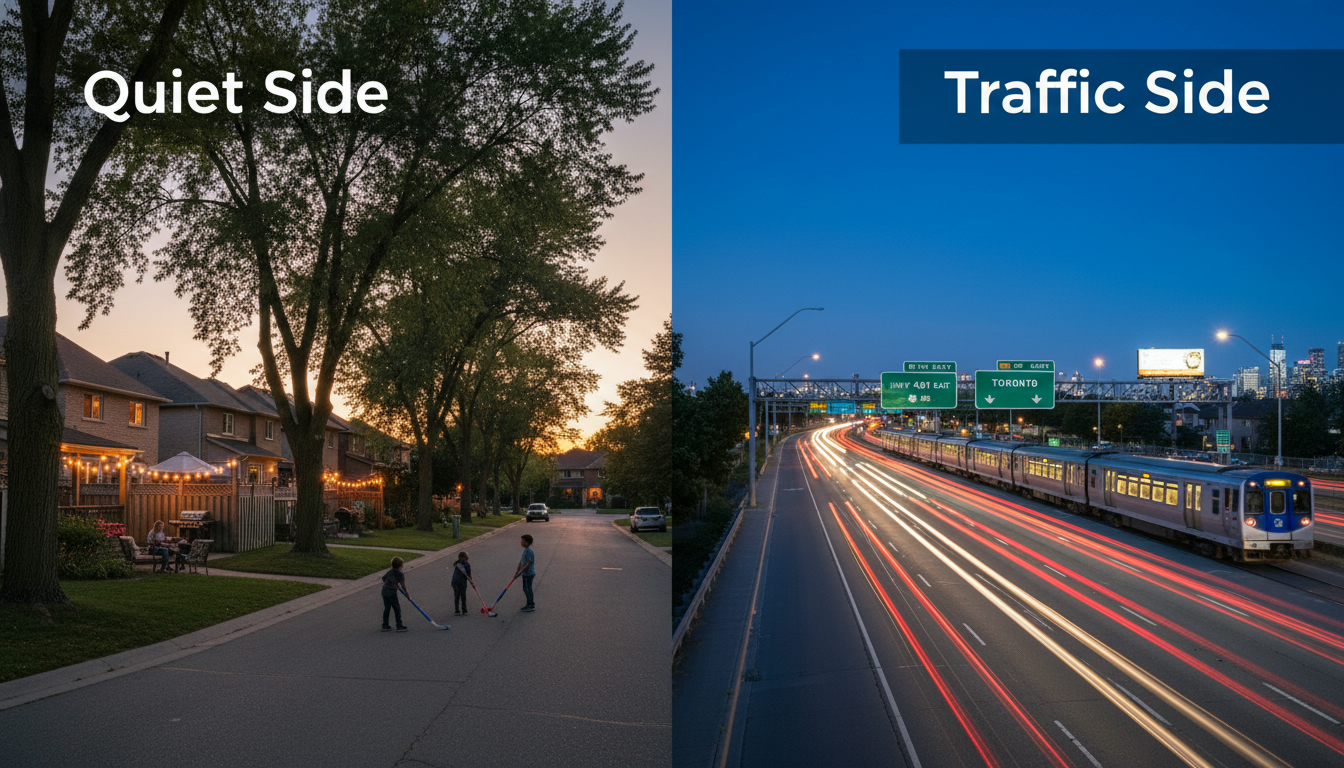
Are there noise or traffic concerns?
Shocking question: Is noise or traffic wrecking your Milton home sale?
Quick answer you can use today
Yes — noise and traffic matter. Not always fatal. But they shift buyer interest, trim offers, and extend days on market. If you sell in Milton without a plan to handle these concerns, you’ll leave money on the table.
Why this matters for Milton home sellers now
Milton, Ontario grew fast. The town added tens of thousands of residents in the last census cycle. Growth creates jobs, schools, and amenities — and it creates more cars, more construction, and more pressure on roads and transit. Buyers coming from Toronto, Oakville, or Burlington expect convenience. They also expect peace.
Buyers weigh both. A quiet street can boost perceived value. A noisy corridor or chronic choke point can shave tens of thousands off an asking price. As your local market expert, I guide sellers to present the truth and control the story.

Where the noise and traffic actually come from in Milton
- Highways and major corridors: Proximity to Highway 401 and the 407 corridor means some neighborhoods feel the benefit of fast access and the downside of traffic noise. Major arterials like Trafalgar Road and regional collectors carry rush-hour traffic and commercial vehicles.
- GO Transit and rail lines: Milton is served by GO Transit. Rail corridors and GO station activity generate periodic noise and commuter traffic around station areas.
- Construction and development: Growth means new subdivisions, road work, and multi-year municipal projects. Construction noise is a short-to-medium term issue near expanding communities.
- Local commercial hubs and schools: Busy intersections near plazas and schools create recurring congestion during peak hours and can increase local noise levels.
How buyers think — and how that affects offers
Buyers fall into two camps: commuters and lifestyle buyers. Commuters prioritize travel time and station access. Lifestyle buyers prioritize quiet, greenspace, and safe streets for kids. If your home sits near a busy corridor, you risk losing lifestyle buyers and attracting commuters who expect discounts.
Perception beats reality in real estate. Even moderate noise at the wrong time of day can be a red flag. Buyers making emotional decisions will attach a penalty. Your job as a seller is to minimize that penalty before listing.
Real, practical checks you must run before listing
- Drive the neighborhood at 7am, noon, 4pm, and 9pm. Record video or voice notes. Buyers will do this. If you’re surprised by what you hear, address it.
- Map noise sources: mark highways, rail lines, GO stations, busy intersections, and active construction. Put distances on paper. Buyers ask; be ready with facts.
- Check municipal plans: Halton Region and Town of Milton publish road and transit projects. Know planned road widenings, future commercial builds, and proposed transit expansions.
- Consult an appraiser or an experienced local agent to estimate any market adjustment for location-based noise or traffic.
Simple seller moves that protect price and speed a sale
- Highlight the upside access: If you’re within 10–20 minutes of Hwy 401, 407, or Milton GO, market that as commuter convenience. Frame it as choice, not compromise.
- Show buyers where noise is reduced: backyards, fenced areas, berms, or tree lines. Create photos and video showing quiet outdoor spaces at low-noise times.
- Invest strategically: soundproof windows for affected rooms, new fencing, or a privacy berm. These cost less than a price reduction and show buyers you solved a problem.
- Time your open houses: hold showings during quiet windows. Avoid peak rush hours for photos and tours.
- Provide disclosure and solutions: be upfront about known noise sources and present the steps you’ve taken to mitigate them. Honesty builds trust and reduces renegotiation.
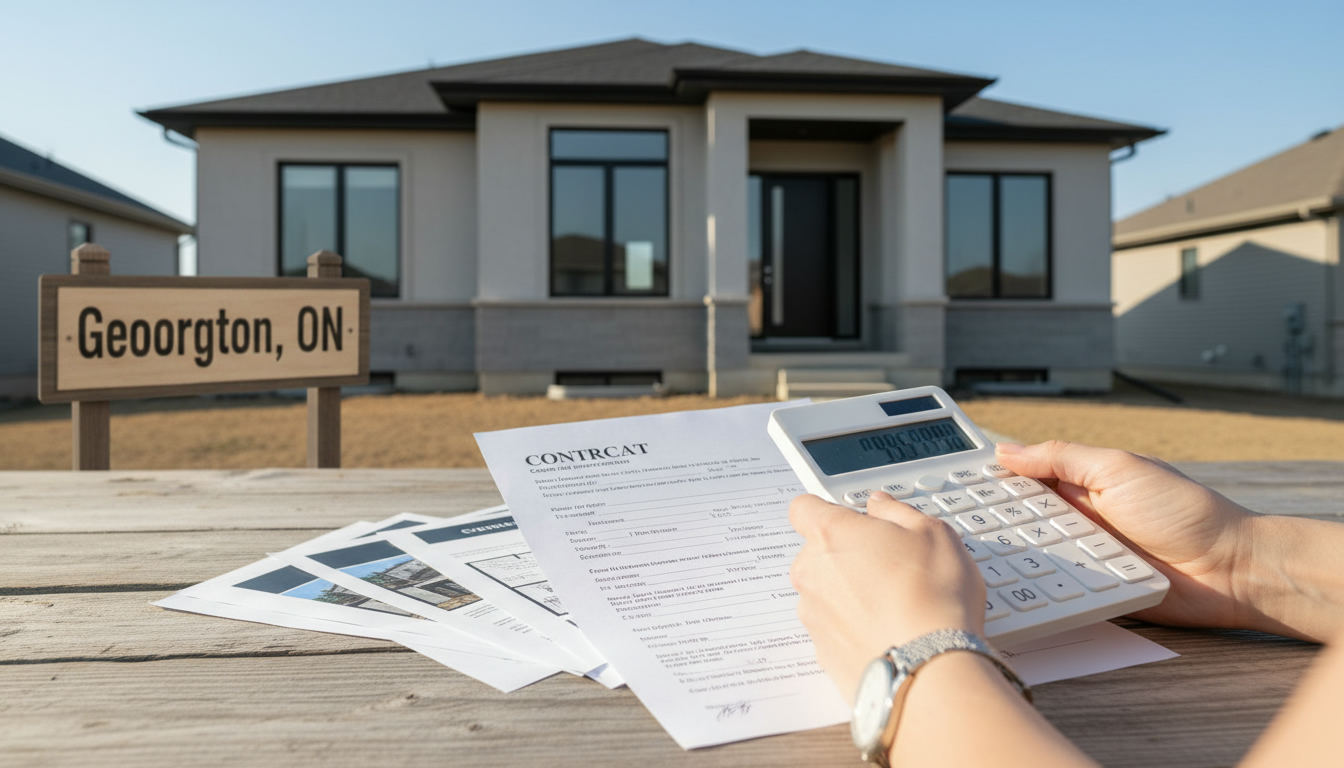
Pricing strategy when noise or traffic is a factor
Pricing is the lever you control. If your home is within sight or sound of a major corridor, price to reflect the market. Overpricing invites a long market stay and eventual reduced price. Price right and sell fast.
Work with a local expert to measure the market gap. Often the real adjustment is smaller than sellers fear — especially if you present mitigation and convenience clearly.
Tactical marketing that neutralizes noise objections
- Use video: show both the access benefits and the quiet interior spaces. Let buyers see how noise behaves at different times.
- Create a short one-page neighborhood sheet: distances to GO, highway on-ramps, school drop-off patterns, and recent municipal projects. Smart buyers want data.
- Sell the quiet rooms: market the bedrooms and backyard as quiet retreats. Use quotes from decibel measurements if you’ve installed a sound meter.
- Use comparative listings: show nearby sold comps with similar proximity to the same noise source that still sold well. Context reduces fear.
Costs, ROI and common upgrades
- Window upgrades: double- to triple-glazed windows can reduce exterior noise 20–40%. Cost varies by size but often returns value through lower perceived disturbance and higher offers.
- Fencing and landscaping: a solid fence, berm, and mature trees cut noise and improve privacy. Low cost. High visual return.
- Interior layout tweaks: locate primary bedrooms away from the noise side when staging. Move living through-traffic to quieter parts of the home.
These moves cost a fraction of what overpricing or months on market will cost you.
The disclosure and legal angle — don’t bury bad facts
Full disclosure is mandatory and smart. Tell buyers about recurring noise sources and give them the mitigation steps you took. If you hide known issues, you risk later legal headaches and renegotiation. Transparency speeds closings.
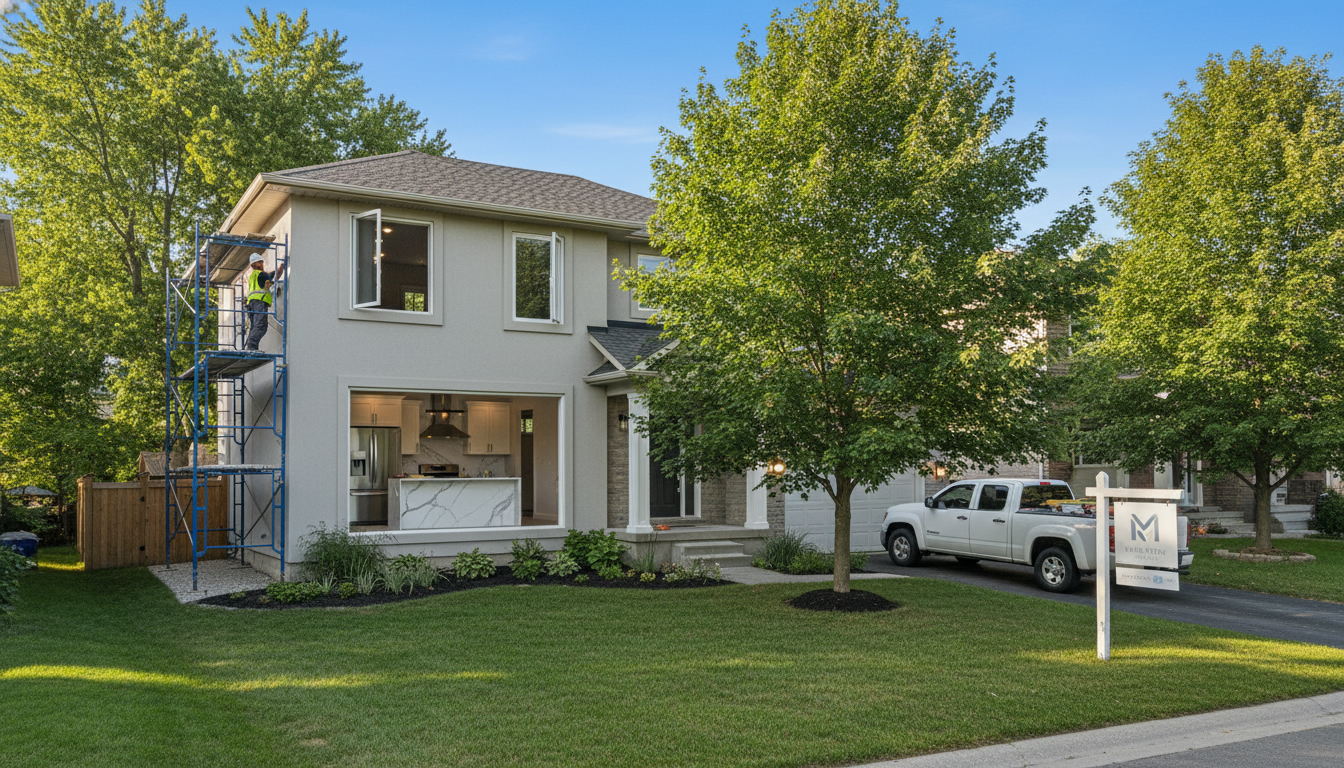
A seller checklist you can use right now
- Drive and record noise at multiple times of day.
- Create a one-page neighborhood factsheet for your listing.
- Install simple sound mitigation (fence, shrubs, or upgraded windows) where cost-effective.
- Schedule photos during quiet hours and video showing both access and quiet spaces.
- Price with a buffer informed by local comps and an expert valuation.
- Be transparent in disclosure and provide mitigation receipts.
What I do differently as your Milton market expert
I don’t just list homes. I position them. I map the noise and traffic story, then I sell the benefits and neutralize the negatives. My marketing gives buyers the facts they want and the peace of mind they need. I negotiate from strength because I control the narrative before offers arrive.
I work with local inspectors, appraisers, and contractors who know Milton’s patterns and municipal plans. We pick the right improvements for maximum buyer appeal and minimal investment.
If you want a data-driven, no-nonsense plan to protect your home’s value in Milton, contact me. I’ll show you the neighborhood map, traffic patterns, and the exact moves that will keep your sale on track.
Email: tony@sousasells.ca
Phone: 416-477-2620
Website: https://www.sousasells.ca
FAQ — Common questions sellers ask about noise, traffic, and neighborhood concerns in Milton, ON
Q: How much does a busy road near my house actually reduce the sale price?
A: It depends on distance, visibility, and buyer pool. Typically adjustments range from very small to significant. Many times a smart mitigation plan (windows, fencing, staging, pricing) reduces that penalty to a modest percentage rather than a wholesale loss.
Q: Are GO stations and rail lines always a negative?
A: No. For commuters, proximity to Milton GO is a positive. For lifestyle buyers seeking quiet, it’s a negative. Your market matters. If your target buyer commutes to Toronto, GO-access can increase demand.
Q: Should I reveal construction or planned road work nearby?
A: Yes. Disclose known short- and long-term projects. Show what the town’s plans mean for traffic and property value. Often short-term construction yields long-term value once projects finish.
Q: Can small upgrades like trees and fencing really change buyer perception?
A: Yes. Buyers judge by first impression and perceived privacy. Proper landscaping and fencing reduce perceived noise and increase emotional appeal.
Q: How do I set the right price if traffic is a concern?
A: Use a local agent who maps noise and traffic data, compares similar sold properties, and builds a pricing plan that balances speed and net proceeds.
Q: Do I need a professional noise study?
A: Rarely. Only consider a study if you expect legal or development issues, or if the property sits directly next to a major highway or industrial noise source. Most sales are won with good disclosure and common-sense mitigation.
Q: What about airport noise?
A: Milton is not directly under major Toronto airport flight paths, but planes can be heard depending on the route. If aircraft noise is noticeable, document it and disclose accordingly.
Q: How long will traffic trends affect my neighborhood?
A: Some impacts are temporary (construction). Others are long-term (new highway ramps or major commercial hubs). Check municipal plans and the Halton Region growth forecasts to understand timelines.
Sell smart. Sell fast. Protect your price.
If you want an exact neighborhood noise and traffic map for your property, I’ll prepare one at no cost and explain the seller moves that make the biggest difference.
Contact me: tony@sousasells.ca | 416-477-2620 | https://www.sousasells.ca