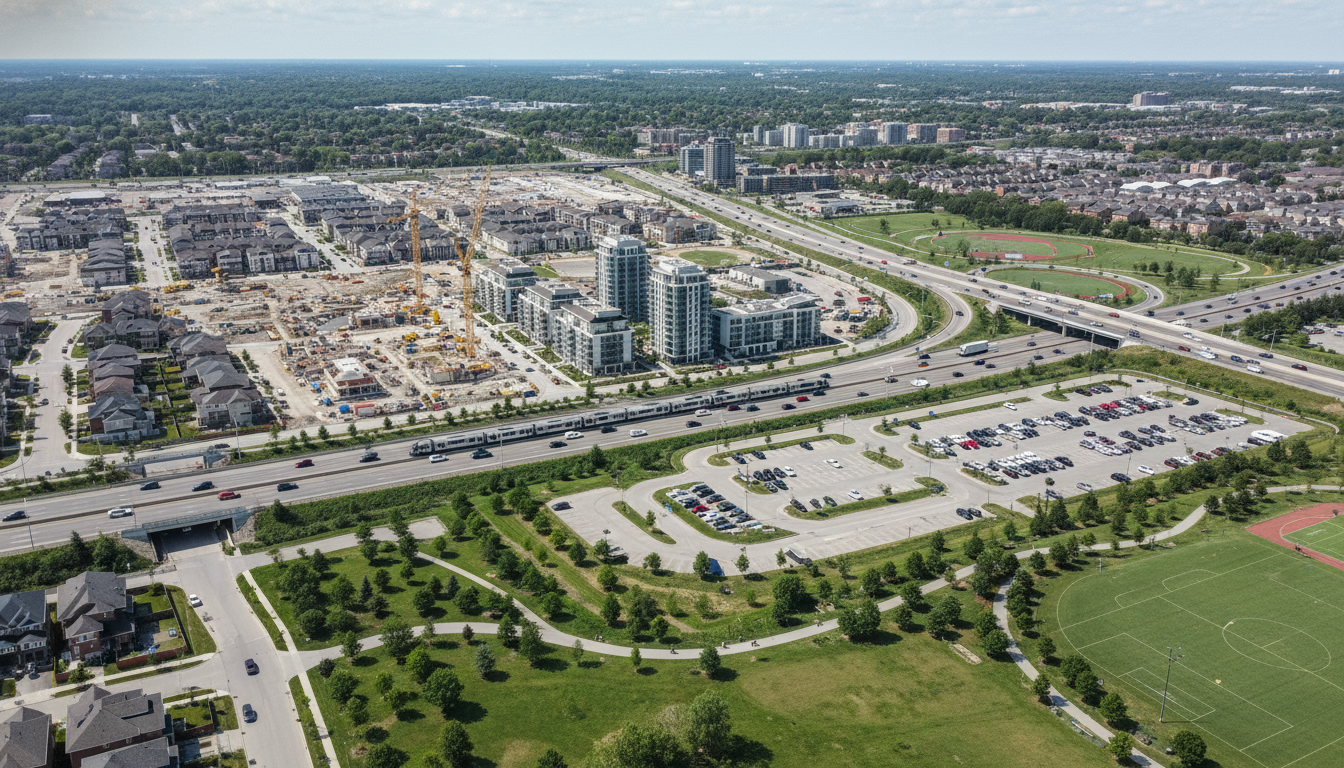
What are upcoming development plans in certain
Ontario areas?
Is Milton About to Explode? Upcoming development plans in Ontario areas — and what they mean for Milton homeowners and investors
Why this matters: planners, builders and transit projects moving into Ontario neighborhoods rewrite the map for real estate. If you live in Milton or want to invest here, you need precise, local facts — not hype. This guide lays out upcoming development plans across key Ontario areas, then drills deep into Milton: infrastructure, housing, commercial projects, schools, and how each change affects property values, commuting, and daily life.
Quick snapshot: Ontario areas with major upcoming development
- Toronto suburbs (GTA West, North York, Scarborough): transit expansions, infill condos, and mixed-use corridors.
- Halton Region (Milton, Oakville, Burlington): higher-density housing, transport upgrades, and employment lands.
- Peel Region (Mississauga, Brampton): megaproject industrial parks, transit LRT extensions, and downtown revitalization.
- Waterloo Region: tech campus growth, institutional expansions, and transit-oriented development.
- Durham Region: north-south connectivity, highway upgrades, and large residential subdivisions.
These are the hotspots where investment flows first. Milton sits inside Halton Region, and its planned projects are tightly linked to what happens across the GTA.
Why Milton matters now: the hard facts
Milton is not just another bedroom community. It is one of the fastest-growing municipalities in Ontario. Growth isn’t random — it’s planned. Milton’s Official Plan, settlement expansions, and provincial infrastructure investments create a predictable runway for value creation. Here’s what matters:
- Population growth: Milton’s population is expanding rapidly, driving demand for housing, schools, and services.
- Employment lands: new employment nodes planned right next to residential areas reduce commute churn.
- Transit intent: GO expansion plans and regional transit link Milton more solidly to the GTA job market.
If you want to predict where prices move, follow the infrastructure money. Where public dollars go, private capital follows.
Major Milton development plans — what to expect (and when)
1) Transit and highways
Milton benefits from provincial and regional commitments to improve transit. Key items:
- GO Rail service frequency increases and corridor improvements. Faster, more frequent trains change commuting math.
- Highway improvements and interchange upgrades along Highway 401 and 407 to ease freight and commuter flow.
- Local transit expansion to connect new neighborhoods with Milton GO and commercial areas.
Why it matters: commute time reductions expand the effective labour market. Shorter commutes increase demand for homes and support higher prices.
2) New residential communities and higher density
Milton’s plans allocate significant lands for residential growth. Expect:
- Mixed-use corridors with low-rise condos and stacked townhomes near transit hubs.
- Large master-planned communities with parks, schools, and retail.
- Gradual densification in the downtown core with mid-rise development.
Why it matters: new product variety brings new buyers — young families, professionals, and downsizers. Supply tied to demand from transit and jobs stabilizes long-term value.
3) Employment and commercial projects
Halton and Milton are designating more employment lands to attract light manufacturing, tech, and logistics:
- Business parks near major highways.
- Retail nodes planned for growing neighbourhood centers.
- Office and flex-space developments targeting SMEs and regional branches.
Why it matters: local job growth reduces outward commuting and increases daytime economy — restaurants, services, and local retail thrive.
4) Schools, parks, and community services
Municipal plans include new schools, upgraded community centres, and expanded parks. These aren’t cosmetic. They anchor neighborhoods and make them liveable.
Why it matters: families move where services exist. Good schools and parks sustain demand for family homes.

How these plans affect property values in Milton — plain and direct
1) Transit and highway upgrades = increased buyer pool. People tolerate longer commutes when transit improves. That creates competition for Milton homes.
2) Employment growth = more local jobs = higher daytime population = stronger local retail and services = more desirable neighborhoods.
3) New schools and parks = family demand rises = stable mid-term housing demand.
4) Mixed-use and density near transit = faster sales and lower days-on-market for condos and townhomes.
In real estate, certainty beats speculation. Publicly funded infrastructure projects create certainty.
Tactical moves: what buyers, sellers and investors should do now
- Buyers seeking value: target areas that are within walking distance of planned transit hubs or slated for mixed-use zoning. These will appreciate faster.
- Sellers with timing flexibility: list when a major infrastructure announcement is confirmed but before completions. Interest spikes after announcements and again upon completion.
- Investors: buy a mix — short-term rental-friendly townhomes near transit and long-term hold single-family homes in master-planned communities.
- Developers/Builders: prioritize sites with quick access to planned GO expansions or highway interchanges.
These are practical plays. Avoid chasing the hottest microtrend without checking official municipal plans and provincial commitments first.
Neighborhoods around Milton: who to watch and why
- Campbellville and Rural North: preserved greenbelt with selective growth — stability for long-term homeowners.
- Derry Road corridor and Trafalgar Road: slated for commercial and light industrial growth. Good for investors focused on rental demand and workforce housing.
- Downtown Milton: downtown revitalization and mid-rise opportunities. Ideal for condo and walkability-focused buyers.
- New residential quadrants south and east of Milton: master-planned communities with integrated services — best for young families.
Each pocket has a different risk-reward profile. Match your strategy to the neighborhood profile.
Risk checklist: what can derail these plans
- Funding shifts: provincial budget changes can delay projects.
- Policy changes: zoning appeals, environmental reviews, or legal challenges.
- Market cycles: rising interest rates slow buying and may postpone new construction.
Plan with contingencies. Assume timelines will stretch and price appreciation will be incremental, not instant.

Local intelligence: why working with a Milton expert matters
You need a realtor who reads municipal planning documents, watches council minutes, and tracks county-level funding. Tony Sousa monitors Milton’s planning applications, agenda packages, and provincial transit updates daily. That gives clients early access to listings near upcoming projects and data-backed advice on timing, pricing, and negotiation strategy.
Contact a Milton specialist: tony@sousasells.ca | 416-477-2620 | https://www.sousasells.ca
Action plan — three things to do this week
1) Check the town’s planning portal for active subdivision and zoning applications in Milton.
2) Visit two neighborhoods near planned transit or highway upgrades and compare prices per square foot.
3) Book a 15-minute strategy call with a local realtor to map opportunities by your timeline.
You don’t need to be first. You need to be informed and fast.
FAQ — common questions about Milton’s development plans and nearby neighborhoods
Q: What are the biggest infrastructure projects that will affect Milton soon?
A: Key projects include GO corridor improvements that aim to increase frequency, major interchange upgrades on Highway 401/407, and local transit connections to Milton GO Station. Provincial and regional funding schedules determine exact timelines.
Q: Will new development in Milton cause property taxes to rise?
A: Some increase is likely as new services and infrastructure require funding. However, increased assessment values often offset the tax burden. Municipal budgets try to balance service costs with growth-related revenues.
Q: Which Milton neighborhoods should investors watch for rental demand?
A: Areas close to Milton GO Station, major transit corridors, and upcoming employment nodes typically show strong rental demand. Townhomes and newer condos near transit will attract commuters and young professionals.
Q: How soon will transit upgrades change commute times?
A: Timelines vary. Announcements can take 1–5 years to reach completion depending on funding and approvals. Be cautious with exact timing but act on confirmed plans rather than rumors.
Q: Are there risks buying in a master-planned community?
A: Risks include construction timelines, builder insolvency, and temporary disruption. Benefits include modern infrastructure, integrated services, and consistent design standards that attract families.
Q: Does Milton have room for commercial job growth?
A: Yes. Milton’s planning maps show designated employment lands near highways. These are suitable for logistics, light manufacturing, and regional offices, creating local jobs and reducing out-commuting.
Q: How do school expansions affect neighbourhood demand?
A: Positively. New schools increase family demand and support long-term stability. School capacity and catchment areas are important for buyers with children.
Q: Should I wait for prices to drop before buying in Milton?
A: Timing markets is risky. If your plan is long-term (5+ years), buying near confirmed infrastructure or employment projects is typically a sound move. If you need short-term liquidity, focus on properties with strong rental demand.
Q: Where can I verify official Milton development plans?
A: Milton’s municipal website, Halton Region planning portal, Ontario provincial announcements, and Metrolinx or GO Transit project pages are primary sources.
Q: Who can help me turn this intel into a strategy?
A: A local realtor who tracks planning notices, council agendas, and provincial funding updates. For tailored guidance, contact: tony@sousasells.ca | 416-477-2620 | https://www.sousasells.ca
Final note: The single best edge in real estate isn’t luck — it’s information combined with speed. Milton’s development plans are not a rumor. They are a pipeline of infrastructure, housing, and jobs. Use the data. Move quickly. Talk to a local expert to convert that data into profit or the perfect home.