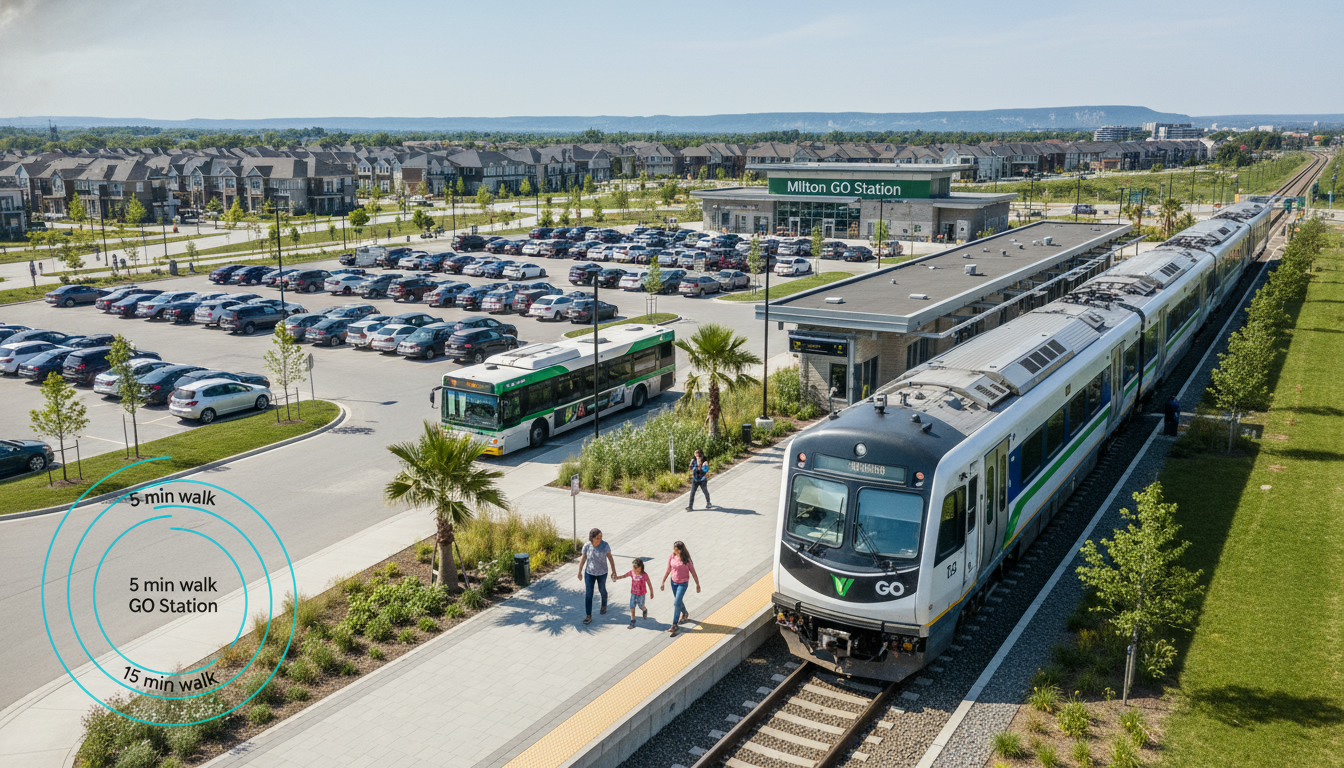
What is the local public transportation access like?
Want to know if Milton‘s public transit will sell your home faster? Read this first — it changes how buyers choose.
Why public transportation matters when selling a home in Milton
Buyers don’t just buy a house. They buy a commute, a lifestyle, and a connection to jobs, schools, and services. If you’re selling a home in Milton, public transportation access affects how many buyers see your listing, how fast it sells, and how much you can ask.
Here’s the clear fact: properties near reliable transit draw more buyers, stay on market shorter, and often sell at higher prices. That’s not hype. It’s buyer behavior.
What public transportation looks like in Milton, Ontario — the short version
Milton’s transit system is a commuter-first market. The main public options are:
- Milton Transit: local bus service that connects neighborhoods to shopping areas, schools, and the Milton GO Station.
- Milton GO Station (GO Transit): commuter rail and GO bus connections into the Greater Toronto Area (GTA).
- Regional connections by GO Bus and nearby services to Mississauga and Oakville.
Most buyers focused on Toronto and the GTA use the Milton GO Station to commute. That makes proximity to the GO station a top selling point for many Milton properties.
How buyers in Milton actually use public transit
Practical realities matter to buyers. Here’s what they look for:
- Walking distance to the GO station or a major bus stop (usually under 15–20 minutes).
- Reliable peak-direction service for work commutes (morning to Toronto, evening back).
- Park-and-ride availability at the GO station for those who drive part of the way.
- Clear connections to local services: schools, shopping, and health care.
If your home checks those boxes, you get more interest from commuters, young professionals, and families who want a predictable commute.
The Milton GO advantage — why it moves the needle
The Milton GO Station is the spine of commuter access. Here’s what to highlight when selling:
- Direct train access to Toronto (Union Station) during peak hours. That’s gold for buyers commuting daily.
- Large park-and-ride lots, which attract buyers who want a short drive plus a reliable train ride.
- Bus and local transit links that expand who can reach your property without a car.
In short: proximity to the GO station makes your home relevant to a bigger, higher-paying buyer pool.
What’s not great — and how to handle it
Don’t overpromise. The Milton Line historically has more limited off-peak service than some other GO lines. Freight traffic and infrastructure constraints have limited full two-way frequent service on this line.
What this means for sellers:
- Don’t advertise “frequent all-day service” unless it’s accurate. Buyers will check schedules.
- Instead, sell the reality: strong peak service for commuters, easy park-and-ride options, and improving regional connections.
Be honest. Buyers respect it. Misleading claims cost deals.
How transit access impacts price — real seller playbook
Buyers pay a premium for convenience. Here’s how to leverage transit to get more when selling:
-
Quantify commute times. Put exact door-to-door commute times to Toronto and major employment hubs in your listing and brochures. Numbers beat adjectives.
-
Use maps in your marketing. Show walking distance to the GO station, bus stops, and local amenities.
-
Highlight parking and drop-off points. Buyers who drive to the GO want to know where they park.
-
Target marketing. Run ads aimed at Toronto-based buyers who want cheaper homes with a reasonable commute. Use “30–45 minute commute to Union Station” or similar copy.
-
Stage for commuters. Put together a commuter kit in your home showing sample schedules, local bus routes, and ride-sharing options.
When you communicate transit clearly, you remove friction. Buyers make faster decisions.

Neighborhood examples that matter to Milton sellers
- Downtown Milton / Main Street area: walking proximity to GO and local amenities. Strong attraction for buyers who want to avoid driving.
- Beaty/Thomson/Lisgar-adjacent areas: good bus routes and easy GO access. Popular with families.
- Newer subdivisions (Steeles, Campbellville edge): great homes, but check bus routing; highlight park-and-ride options.
Different neighborhoods sell to different buyer types. Match your marketing to the buyer profile.
SEO-ready listing language that converts (use these phrases)
- “X-minute walk to Milton GO Station”
- “Direct GO commute to Toronto Union Station — peak service”
- “Easy park-and-ride access at Milton GO”
- “Local bus routes connect to schools and shopping”
Use precise minutes and route names. Avoid vague words like “close” or “nearby” without context.
Questions buyers will ask — and how to answer them in your listing
Buyers will ask:
- “How long is the commute to Toronto?” — Put a door-to-door estimate in the listing.
- “Is there parking at the GO station?” — State availability and approximate cost if applicable.
- “Are there buses to nearby towns?” — List routes or link to Milton Transit schedules.
Pre-empt these questions in your MLS remarks, brochures, and online listing to reduce friction.
The future: planned improvements and why they matter to sellers
Transit upgrades depend on provincial and regional plans. While some GO corridors get full two-way, all-day service under GO Expansion, the Milton Line’s upgrades have been slower due to shared freight lines.
Action for sellers:
- Check Metrolinx and Halton Region updates before listing.
- If improvements are planned near your home, include them — but be precise about timelines.
A planned improvement can be a selling point — but only if it’s real and verifiable.

Quick checklist for sellers in Milton (transit edition)
- Confirm walking time to the nearest GO/major bus stop.
- Add door-to-door commute times to marketing materials.
- Include maps with walking radiuses (5, 10, 15 minutes).
- Show photos of nearby transit nodes and parking.
- Target commuter audiences in paid ads.
- Be honest about service frequency and planned changes.
Follow the checklist and you make your listing easier to understand and faster to sell.
How I position Milton homes to buyers (what I do differently)
I don’t guess. I document. I pull exact schedules, drive-time estimates, and parking details. I build marketing that answers the commute question before buyers ask it.
I run target ads aimed at Toronto professionals looking for better value. I show them exact commute times, local transit photos, and the lifestyle they get in Milton. That clarity accelerates offers.
Call to action — get the transit advantage on your listing
If you’re selling a home in Milton, don’t leave transit out of your plan. It’s a buyer filter. Use it to get more showings and a faster sale.
I’ll prepare a transit-focused marketing kit for your listing: commute maps, schedule snapshots, targeted ad copy, and a buyer persona. No fluff. Just tools that get offers.
Contact: Tony Sousa — tony@sousasells.ca | 416-477-2620 | https://www.sousasells.ca
FAQ — Clear answers Milton home sellers need
Q: Does Milton have good public transit for commuters?
A: Yes — for peak commuters. Milton Transit and the Milton GO Station give solid peak-direction access to Toronto. Off-peak frequency on the Milton Line is limited compared to other GO corridors.
Q: Will proximity to the GO station increase my home’s sale price?
A: Typically yes. Homes within easy walking distance to the GO station attract more commuter buyers and often sell faster and at higher prices compared to homes with poor transit access.
Q: Should I advertise my home as “near public transit”?
A: Absolutely — but be specific. Use exact walking minutes, station names, and commute times rather than vague terms.
Q: Are there planned transit improvements that could affect my listing?
A: Possibly. Metrolinx and Halton Region publish updates. Check current plans before making claims. A verified planned upgrade can be a selling point, but don’t rely on unconfirmed timelines.
Q: How do I show transit benefits in photos and marketing?
A: Use maps, screenshots of schedules, photos of the GO station and bus stops, and commute time callouts. Add a commuter kit to viewings.
Q: What’s the best audience to target for a Milton home with good transit access?
A: Toronto-based professionals, young families who value a commute, and investors looking for rental demand from commuters.
Q: How far should a home be from the GO station to be attractive to buyers?
A: Under 15–20 minutes walking time is ideal. Homes within that range hit a bigger buyer pool.
Q: Can I claim my home has “frequent GO service”?
A: Only if the schedule supports that claim. The Milton Line has strong peak service but less frequent off-peak trains. Use exact schedule facts.
Q: Who can I contact for accurate transit details for my listing?
A: Contact me and I’ll compile verified schedule info, parking details, and commuter maps tailored for your property.
Contact: Tony Sousa — tony@sousasells.ca | 416-477-2620 | https://www.sousasells.ca