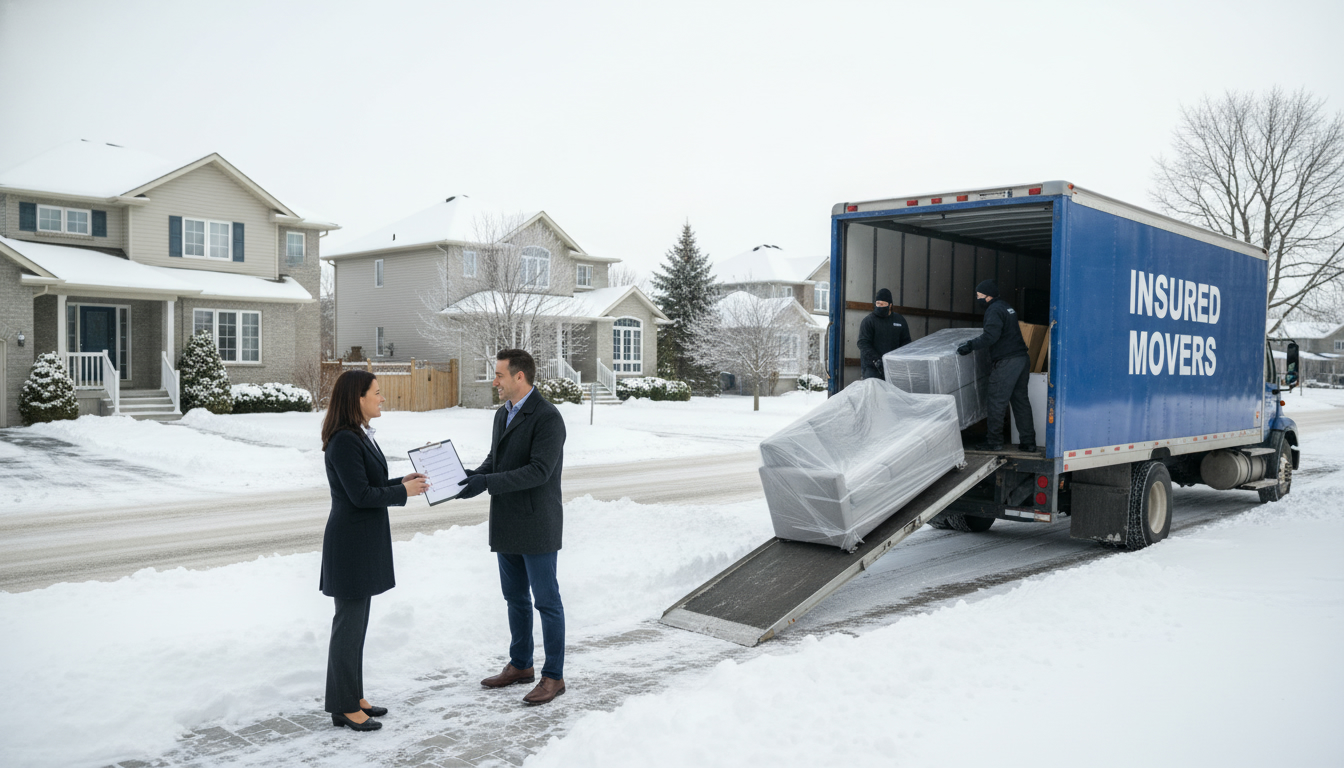
How do I handle moving insurance?
“Moving insurance? Here’s what most sellers miss — and how to lock down full protection before you hand over the keys.”
Why moving insurance matters more than your sale price
You just closed on your Georgetown home. The buyer’s paid. You think the risk ends when the keys change hands. It doesn’t. Most damage, loss, or theft happens during transit — the moment you think everything’s already done.
Moving insurance protects your stuff and your wallet. It also protects you from liability if a mover gets hurt on your property. For sellers in Georgetown, Halton Hills, and nearby markets, the right moving insurance stops a bad move from becoming an expensive disaster.
This guide tells you exactly what to check, what to demand, and how to file a claim if the worst happens — in plain language, with local notes specific to Georgetown, Ontario.
The three layers of protection you need to know
- Homeowner’s insurance: temporary coverage
- Many home insurance policies offer limited protection during a move. Call your insurer and ask: does my policy cover items in transit? For how long? What limits apply?
- If you’re moving within Ontario or to the GTA, coverage can change if the move is long distance. Get the limits in writing.
- Mover’s basic liability (released value protection)
- This is the default option most movers offer. It pays a tiny amount per pound for lost or damaged items. It’s cheap for them, worthless for you.
- Example: a damaged flat-screen could be valued at $0.60/lb. Not acceptable for anything of real value.
- Full value protection or third-party transit insurance
- Full value protection: the mover takes responsibility to repair or replace items at current value. This is better, but check exclusions.
- Third-party transit insurance: you buy an insurance policy from a broker/insurer that covers cargo in transit. This often gives the best coverage for high-value items.

Ontario-specific checks for Georgetown sellers
- Ask movers for a Certificate of Insurance (COI) that names you as an insured party for the move. This is common in Ontario and gives you documentation for claims.
- Verify the mover’s WSIB (Workers’ Safety and Insurance Board) coverage. If a mover gets injured on your property and the company lacks WSIB, you might face liability issues.
- Check mover membership in the Canadian Association of Movers (CAM) or local trade groups. Membership isn’t a guarantee, but it’s a solid indicator.
- Watch seasonal risks: Georgetown winters mean icy driveways and narrow streets. Document driveway condition and access challenges before movers arrive.
Step-by-step moving insurance checklist — do this before movers arrive
- Inventory and value: photograph every room and high-value item. Create a room-by-room inventory list with estimated values.
- Call your home insurer: get written confirmation of what’s covered during your move and for how long.
- Get mover insurance details: request a Certificate of Insurance and ask for policy limits and deductible amounts.
- Choose coverage: decline released value protection unless you have no option. Opt for full value protection or buy third-party transit insurance for high-value items.
- Add endorsements for antiques, jewelry, or electronics if needed. Standard policies often exclude jewelry and collectibles.
- Sign the contract only when coverages and limits are written in.
Questions to ask every mover — use this script
- What is your cargo liability limit per shipment and per item?
- Do you offer full value protection or only released value protection?
- Can you provide a Certificate of Insurance that names me as an additional insured?
- Are you covered under WSIB for your workers in Ontario?
- What is your deductible on claims and how do you process claims?
- Do you have experience moving in Georgetown and navigating winter or narrow streets?
Copy-paste this email to send before your moving day:
“Hi [Mover Name],
Please provide the following before we confirm the booking:
1) Certificate of Insurance listing me as an additional insured
2) Policy limits for cargo liability and any deductibles
3) Proof of WSIB coverage for your workers in Ontario
4) Confirmation if you offer full value protection and a copy of the contract language
I will not accept released value protection only. Please confirm in writing.
Thanks, [Your Name]”
High-value items: don’t gamble
If you’re selling in Georgetown and you own antiques, artwork, electronics, or jewellery, assume standard mover coverage excludes these items. Get a separate floater policy or upload an add-on to your homeowner’s policy for the moving day.
For collectors and high-end furnishings, a third-party transit policy purchased through an insurance broker is often cheaper and more complete than the mover’s upgrade.

If something goes wrong — exact steps to file a claim
- Stop the move. If items are visibly damaged, note it on the mover’s damage report before movers leave.
- Photograph every damaged item and the packaging. Use time-stamped photos if possible.
- Keep all receipts: repairs, temporary replacements, emergency purchases.
- Notify your mover in writing within 24–48 hours. Ask for their claims form and the policy number.
- File with your insurer and the mover’s insurer. Insurers will coordinate, but get everything in writing.
- If the mover resists, file a complaint with Consumer Protection Ontario and consider contacting the Canadian Association of Movers.
Local note: in winter months, weather can be used as a defense by movers. Document icy conditions and any special access issues to show damages weren’t due to negligence alone.
Cost: what you’ll pay for protection
- Released value protection: often free or minimal. Not recommended.
- Full value protection: usually 1–3% of declared value. Fees vary by mover.
- Third-party transit insurance: depends on declared value, typically cheaper for high-value lists.
Money spent on proper coverage is tiny compared to replacing heirloom furniture or fixing damage to the home during loading/unloading.
Moving day tips — protect yourself and the house
- Clear a walk path and any tripping hazards. Salt icy steps in winter and provide clear parking.
- Document property condition with photos and a short video walkthrough before movers arrive.
- Stay nearby during loading and unloading to answer questions about special items.
- Keep original receipts and warranties for high-value items; they speed up claims.
Why realtors care: closing day liability and timing
As a seller, you want a clean closing and a clean move. Delays from damage or claims can stall possession timelines and cost you. A real estate agent who knows local movers and common insurance pitfalls keeps the sale on track. If you want a recommendation for trusted local movers who understand Georgetown’s roads and winter weather, contact Tony Sousa — he helps sellers protect their moves and their closings.
Contact: tony@sousasells.ca | 416-477-2620 | https://www.sousasells.ca

FAQ — Moving insurance and closing/moving questions for Georgetown, ON sellers
Q: Does my homeowner’s insurance cover items during a move?
A: Sometimes. Coverage varies. Call your insurer and get written confirmation. Ask about limits, exclusions (jewellery, fine art), and the period of coverage during transit.
Q: Is the mover’s basic insurance enough?
A: No. Released value protection pays pennies per pound. For real value, choose full value protection or buy third-party transit insurance.
Q: What if a mover gets injured on my property?
A: Ask for proof of WSIB coverage. If the company lacks WSIB, you could face liability. Get this in writing.
Q: Who do I name on the Certificate of Insurance?
A: Name yourself as an additional insured and, if required, the buyer for the brief period between closing and possession. Your mover should provide this.
Q: How long do I have to file a claim?
A: Time limits vary. Report visible damage immediately to the mover and your insurer. Follow up in writing within 24–48 hours and submit required forms ASAP.
Q: What items are commonly excluded?
A: Jewelry, money, antiques, artwork, and electronics often have special limits or exclusions. Get floaters or endorsements for these.
Q: Can I buy a separate policy for moving day?
A: Yes. Third-party transit insurance or a short-term mover’s insurance policy from a broker is often the best option for high-value moves.
Q: How do I pick a mover in Georgetown?
A: Verify insurance, WSIB, references, and membership in industry associations. Ask about experience with Georgetown streets and winter moves. Get everything in writing.
Q: Who do I call if the mover refuses to pay?
A: File a claim with the mover and their insurer, then your insurer. If unresolved, file a complaint with Consumer Protection Ontario and consider legal advice.
Q: How does winter in Georgetown affect the move?
A: Snow, ice, and narrow lanes increase risk of slips, falls, and property damage. Plan for extra time, salt driveways, and document conditions.
If you’re selling in Georgetown and want to protect the closing day and your possessions, talk to a local agent who knows the movers, the insurance traps, and how to get the right documents in place. Contact Tony Sousa for trusted referrals and guidance: tony@sousasells.ca | 416-477-2620 | https://www.sousasells.ca
Get it locked down before movers arrive. One call now saves thousands later.