

How do I negotiate offers on a parent’s home?
Want to get maximum cash and avoid family headaches when selling your parent’s home in Georgetown? This step-by-step negotiation playbook works for Halton Hills sellers who need clear wins, fast closings, and fair splits.
Quick reality: why negotiating a parent’s home is different
Selling a house owned by a parent is not the same as selling your own. There are family dynamics, legal steps (power of attorney, estate administration), and emotional value assigned to the property. In Georgetown, Ontario, buyers expect clean, move-in-ready listings near good schools and GO transit. That affects strategy.
This guide gives direct, actionable negotiation steps tailored to Georgetown’s real estate market. Use it to control outcomes, maximize proceeds, and close with confidence.
Step 1 — Start with a local valuation, not a guess
You can’t negotiate intelligently without a precise market value. Get a professional Comparative Market Analysis (CMA) focused on Georgetown / Halton Hills. A CMA must include:
- Recent MLS sales within 3 months in Georgetown neighborhoods.
- Adjustments for lot size, basement updates, and proximity to Georgetown GO Station.
- Price-per-square-foot comparisons for similar 2–4 bedroom homes.
Why this matters: buyers in Georgetown are comparing commute time, schools, and yard space. Price it too high and you chase buyers away. Price it strategically and you trigger multiple offers.

Step 2 — Clean fixes that increase net proceeds
Make repairs that buyers notice and appraisers count. Spend on fixes that return the most:
- Paint walls neutral (low cost, high impact).
- Fix small plumbing and electrical issues.
- Replace worn flooring in key rooms (kitchen, living room).
- Stage the home for photos and open houses.
In Georgetown, curb appeal matters: tidy front lawn, trimmed hedges, and a clean porch can sway families driving by.
Step 3 — Decide your negotiation posture before listing
Set clear priorities with the family: price, closing date, net proceeds, and tolerance for conditions (inspections, financing). This prevents emotional flip-flopping when offers come.
Rank these priorities: 1) Highest clean net cash 2) Quick certainty (pre-approved buyers) 3) Minimal conditions 4) Preferred closing date. Share this ranking with the listing agent.
Step 4 — Use a local agent who controls the room
A Georgetown specialist brings buyers and market knowledge. The agent should:
- Run targeted MLS and social campaigns reaching Burlington, Milton, and Toronto commuters.
- Pre-qualify buyers and demand proof of funds or pre-approval.
- Manage showings to create buyer competition.
Pick an agent who knows how to run offers—managing deadlines, escalation strategies, and multiple-offer presentations.
Step 5 — Structure the listing to trigger competition
Want multiple offers? Use these tactics the right way:
- Price competitively (slightly under comparable value to attract traffic).
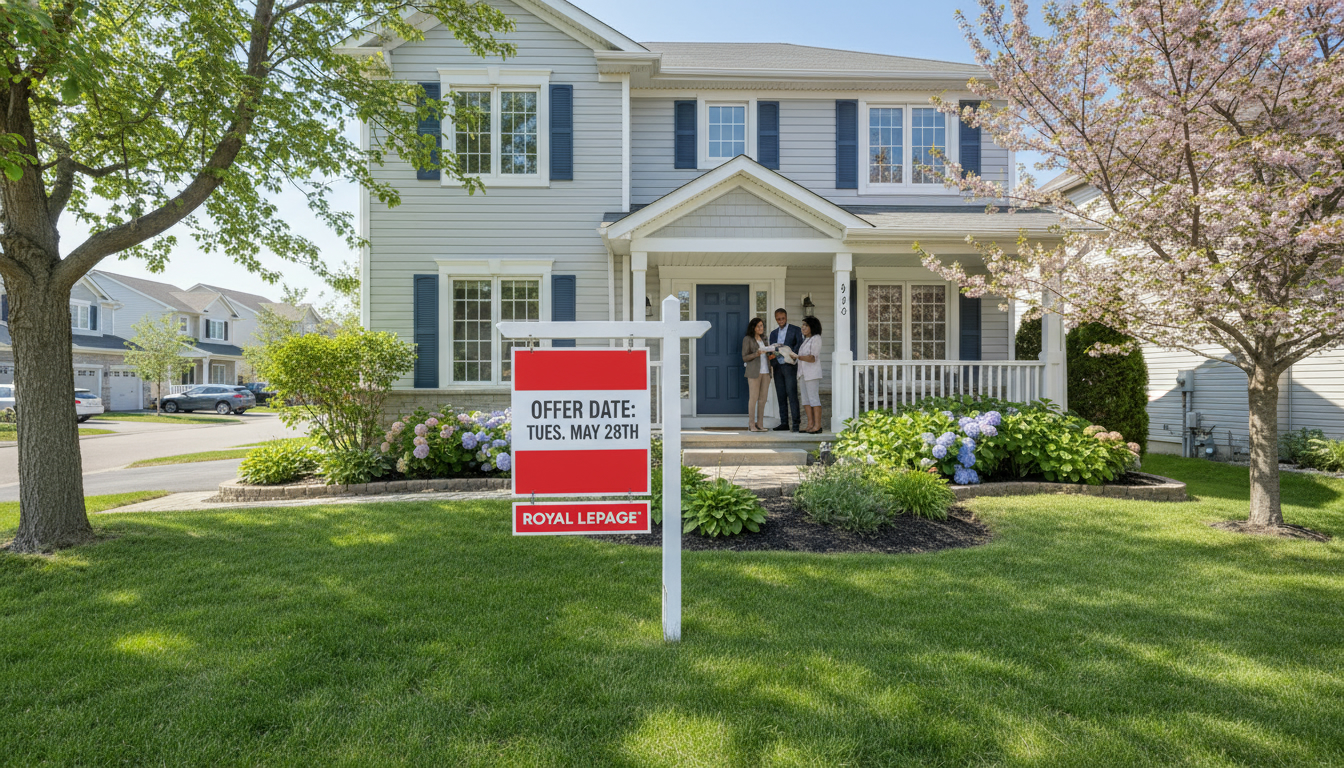
- Set an offer presentation date and time to pool offers.
- Allow conditional offers but require strong deposits.
In Georgetown’s commuter market, timed offers often bring in multiple qualified buyers who can’t afford to wait.

Step 6 — Know what makes an offer strong (beyond price)
When comparing offers, don’t fixate on the top dollar alone. Evaluate these criteria in order of importance:
- Net proceeds (price minus concessions and repairs).
- Deposit size and structure (larger deposit = more commitment).
- Financing certainty (unconditional vs. subject to mortgage).
- Inspection terms (no-inspection or limited inspection conditions rank higher).
- Closing date alignment with your need.
- Buyer flexibility on minor repairs.
A $10,000 higher offer that’s conditional on major repairs can cost you time and money compared to a slightly lower clean offer.
Step 7 — Counteroffer strategy that wins
When you counter, be decisive and surgical:
- Counter the price in round numbers (e.g., $15,000 increments) not cents.
- Strengthen deposit requirements in the counter.
- Shorten or eliminate inspection windows where appropriate.
- Add or adjust closing date to match seller needs.
Script to use when responding: “We accept $X with Y deposit, inspection to be complete within Z days, and closing date of [date].” Keep language firm.
Step 8 — Handling multiple offers like a pro
If you have multiple offers:
- Request best and final offers with a fixed deadline.
- Tell buyers the priorities (price, deposit, unconditional) without disclosing details.
- Use an escalation clause only if it’s economically sensible and easy to document.
Don’t feel pressure to accept the highest nominal price. Choose the offer that gives the cleanest path to closing.
Step 9 — Protect from buyer financing and inspection risks
To reduce risk:
- Require a firm financing condition with 48–72 hour proof of firm approval on conditional offers.
- Consider accepting offers with waived inspection only if the buyer provides a larger deposit and you disclose known issues in writing.
- Use solicitor-reviewed clauses to limit last-minute demands.
Local note: Buyers from Toronto commuting to Georgetown often have strong financing, but always verify.
Step 10 — Settlement logistics and legal steps in Ontario
- If the parent is deceased, engage an estate lawyer to confirm authority to sell. Probate may be required depending on assets.
- If a Power of Attorney is active, confirm it covers real estate sales and is valid in Ontario.
- Let your lawyer hold the deposit in trust and handle title transfer details.
Always get legal advice before signing any sale documents.
Tough conversations: splitting proceeds fairly
Before offers arrive, document how proceeds will be split. Use a simple written agreement among heirs or beneficiaries. This avoids delays when offers come in. If disputes arise, pause negotiations until you have legal clarity.
Pricing and negotiation examples (real, practical moves)
Example A — Goal: Max price, time flexible
- List at 3–5% below comps.
- Set a 3–5 day offer review window.
- Require $25,000 deposit and 72-hour inspection.
Result: Attracts buyers fast; competition lifts the price.
Example B — Goal: Fast sale, certain closing
- List at market value with immediate possession date.
- Prioritize unconditional offers or short-financing conditions.
- Accept a slightly lower offer with a $40,000 deposit.
Result: Faster close with fewer surprises.
Negotiation scripts to use with buyers or agents
When you need to push back: “We appreciate the offer. We’re looking for a clean closing and a deposit that shows commitment. If you can move to [X deposit] and shorten the inspection to [Y days], we’ll accept.”
When you need time: “We have multiple offers and will review them on [date/time]. Please submit your best terms by then.”
When you accept: “We accept the offer on the condition it’s signed by [deadline] and deposit is received by [time/date].”
Final checklist before accepting an offer
- Verify buyer pre-approval or proof of funds.
- Confirm deposit to be held in trust.
- Confirm inspection window and seller repair obligations.
- Confirm closing date and possession terms.
- Have your lawyer ready to review documents immediately.
Closing faster in Georgetown — marketing angles that sell
Highlight local selling points: schools (Georgetown District High School), GO Transit access, parks (Paradise Park), and Halton Hills lifestyle. Use pro photography and virtual tours. Target Toronto and Mississauga buyers who commute.
Call to action
Don’t gamble with your parent’s asset. If you want a clear negotiation plan, personalized market valuation, and a Georgetown agent who closes without drama, contact Tony Sousa. He specializes in selling homes in Georgetown and Halton Hills.
Contact: tony@sousasells.ca | 416-477-2620 | https://www.sousasells.ca
FAQ — Selling a parent’s home in Georgetown
Q: Do I need probate to sell a deceased parent’s house in Georgetown?
A: Sometimes. If the property is held solely in the deceased’s name, probate may be required to transfer title. Small estates may avoid probate. Get an estate lawyer in Halton Hills to confirm.
Q: Can a Power of Attorney sell a parent’s home in Ontario?
A: Only if the POA document explicitly grants authority to deal with real estate and the parent is still alive but incapable. Confirm with a lawyer before listing.
Q: How do I handle multiple heirs who disagree on price?
A: Create a written agreement outlining sale terms or appoint one authorized representative. If disagreement persists, a court or mediator may be needed. Resolve this before accepting offers.
Q: What closing timeline should I expect in Georgetown?
A: Typical closing in Ontario is 30–90 days. For estate sales or title issues expect longer. Communicate timelines to buyers up front.
Q: Are there tax consequences when selling a parent’s house in Ontario?
A: Capital gains and principal residence rules are complex. If the parent lived in the home as a principal residence, gains may be exempt. Consult an accountant for estate-specific tax advice.
Q: How much deposit should I require from a buyer?
A: For estate or parent-owned sales, require larger deposits (5–10% of purchase price) to show commitment and reduce financing risk.
Q: Can I accept an offer subject to conditions?
A: Yes, but prioritize offers with fewer and shorter conditions. Make financing and inspection windows strict.
Q: How do I ensure the best market value in Georgetown?
A: Price based on a local CMA, invest in impactful repairs and staging, and create buyer competition with strategic listing tactics.
Q: What if the buyer backs out after inspections?
A: If the offer is conditional and inspection reveals issues, negotiate repairs or credits. If buyer legitimately exercises an inspection-based condition, the deal may terminate and the deposit could be returned per contract. Your lawyer can advise.
Q: Who pays real estate commission on a parent’s home sale?
A: Commissions are negotiated and typically paid from sale proceeds. Agree on commission before listing.
If you want a tailored negotiation plan for a specific Georgetown property, email tony@sousasells.ca or call 416-477-2620. Get a local CMA today and stop leaving money on the table.