What do I do with pets during showings?
What to do with pets during showings? Here’s a blunt, actionable plan that keeps your listing moving and your pet safe.
Sell Faster in Georgetown: What to Do With Pets During Showings (No Drama, No Delays)
Selling while living in the home is hard. Add pets and it gets harder. Buyers notice pet hair, smells, and the stress of a barking dog. Those little friction points cost you showings, offers, and dollars off your asking price.
If you’re selling a home in Georgetown, Ontario—where buyers are often families, commuters, and buyers who value clean, move-in ready homes—you can’t wing this. You need a plan. Below is a practical, local-ready, step-by-step playbook you can use today.
Why this matters now
- Georgetown buyers expect turnkey homes. Pet issues create emotional resistance.
- Commuter buyers from Toronto using Georgetown GO want neat, efficient showings—no delays.
- Last-minute showings happen. You need a fast, repeatable routine that keeps your life moving.
This isn’t about being cruel to pets. It’s about making your house sellable, faster, for more money, while keeping your animal calm and safe.
Quick checklist before you list
- Deep clean and neutralize odors. Hire a professional upholstery and carpet cleaner if needed. Focus on carpets, rugs, and couches.
- Remove obvious pet signs. Replace or clean scratched furniture covers, stash toys, and hide food bowls.
- Schedule a vet check if your pet is anxious. Ask for a calming plan or short-term calming aids if recommended.
- Build a pet plan: off-site options, local sitters, crate plan, and a “showing go-bag.”
- Line up local pet care resources. As your agent, I’ll provide vetted sitters and boarding options in Georgetown, Halton Hills and surrounding areas.

The pet-showing playbook (day-to-day)
Make this routine non-negotiable while your home is active on market.
- Morning reset (10–15 minutes): Sweep or vacuum main rooms, wipe counters, clear pet hair from visible surfaces, take out the trash, and put food away.
- Quick odor check: sniff at nose level and at entry points. Spray a pet-safe neutralizer—avoid heavy scents that can turn buyers off.
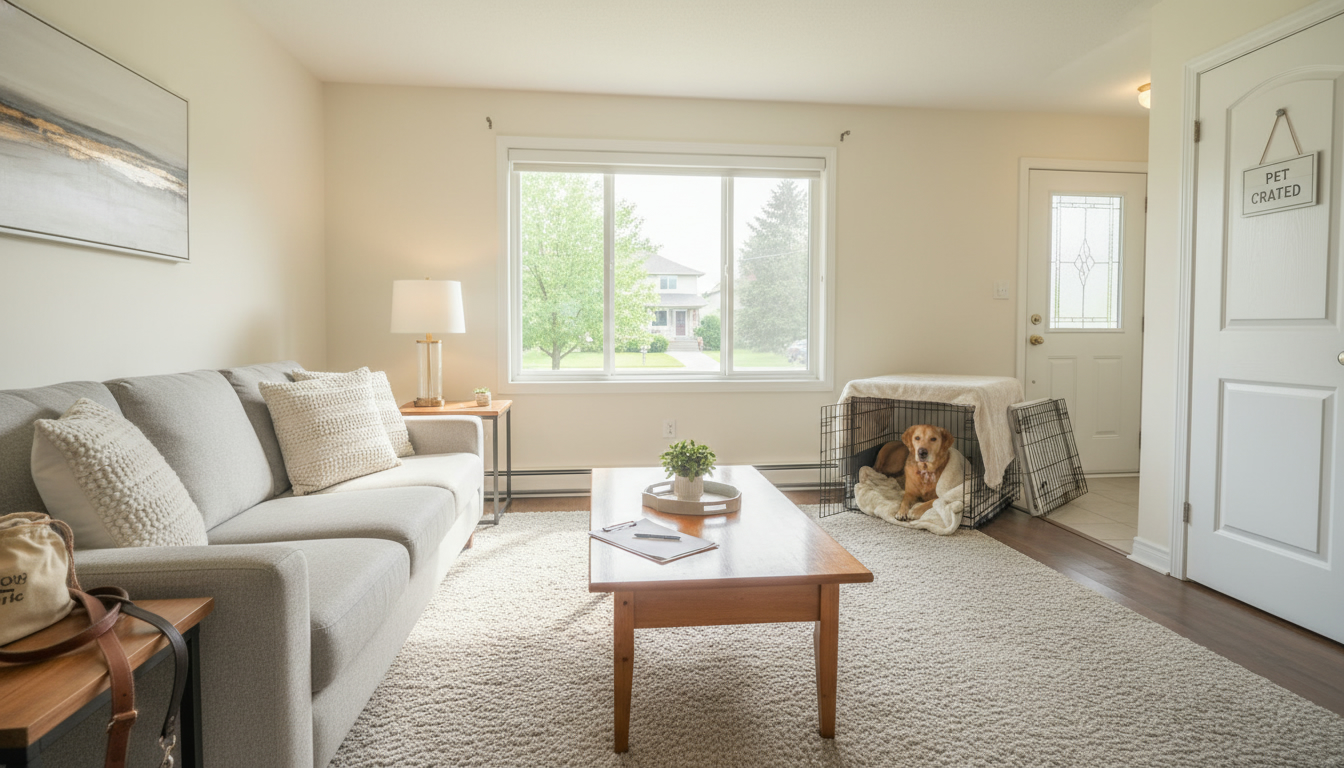
- Crate-ready: Keep a clean crate, blanket, leash, and treats near the exit. Train your pet to go in calmly with a couple of treats so they’re ready to leave in a minute.
- Open-window air: If weather permits, open windows or turn on fans 10–15 minutes before a showing to clear the air.
What to do the moment a showing is booked
You’ll get a showing notification. Move fast.
- If you have 2+ hours: take the pet off-site. Go for a walk in one of Georgetown’s parks, drop them with a trusted sitter, or book a short boarding. Buyers prefer homes empty of pets.
- If you have 30–90 minutes: use a local sitter or neighbor. Quick drop-off to a neighbor or family member is the least disruptive choice.
- If you have 15–30 minutes: crate and secure the pet in a prepared room with water, a toy, and a blanket. Put a sign on the bedroom door telling buyers not to enter with pets inside. Tuck litter boxes out of sight.
- If you have less than 15 minutes: postpone if possible. If not, crate, secure, and leave for the showing. Communicate with your agent about any risks.
Pro tip: Keep a ‘showing bag’ by the door with leash, treats, crate blanket, poop bags, and a small towel. You’ll save minutes and anxiety.
Best off-site options in Georgetown
- Local sitters and dog walkers — Faster and cheaper than boarding for day shows.
- Short-term boarding/daycare — Good for all-day or weekend showings.
- Friends or family — Most dependable and often free, if it’s an option.
Tip: Ask your agent for verified local sitters. As your listing agent, I maintain a vetted list of pet sitters and boarding facilities that understand showings and can be flexible for last-minute requests.
Handling open houses
Open houses are a different animal.
- Remove the pet entirely for the event. Open houses are longer and busier; dogs can get stressed and kids might scare or get scared.
- If you can’t remove the pet, keep them crated in a back bedroom with a sign and a happy toy.
- Put away any pet food, bowls, and litter boxes well in advance. The cleaner the space, the higher the perceived value.

Safety and legal considerations
- Service animals: Buyers with disabilities who rely on service animals have legal rights. Do not ask a service animal to leave during showings. Instead, make adjustments to accommodate them.
- Local bylaws: Confirm leash and licensing rules if you’ll be walking pets during showings. Check the Town of Halton Hills website for the latest info.
- Insurance: If someone is injured by your pet during a showing, homeowner liability insurance typically covers incidents. Still, minimizing contact reduces risk.
Staging tips to hide pet evidence
- Remove pet beds and blankets from main areas. Store them out of sight.
- Replace visibly worn cushions and covers, or use neutral slipcovers for showings.
- Keep litter boxes, cages, and aquariums out of sight or closed off.
- Use a HEPA vacuum and lint rollers daily on visible surfaces.
- Invest in an ozone-free odor neutralizer or professional deodorizer between showings.
What to say to buyers and agents
Be honest but brief. “Our pet is crated in the side bedroom for the showing” or “We remove our dog off-site during showings.” Honesty builds trust but don’t over-explain. Buyers are evaluating the house, not your pet.
If a buyer is allergic or nervous, offer a future private showing at a time the pet can be removed. Flexibility wins offers.
Quick scripts
- For agents: “We’ll have the home cleared of pets for your buyer. If we need an alternate appointment, please let me know.”
- For neighbors/sitters: “Can you take [pet name] for a 30–90 minute showing today? I’ll leave the crate and a treat.”
Costs vs. benefit — think like a seller
Paying a sitter or a short boarding fee for a week of showings often nets a higher sale price and faster sale. Every hour a house sits because buyers skip showing due to pets can cost thousands. Treat pet care as an investment, not an expense.
Georgetown-specific notes
- Buyers here often commute to Toronto and prioritize move-in-ready homes. Keep your showing routine tight around early-morning and evening showing windows.
- Georgetown homes with clean yards and well-kept interiors sell faster—this includes pet-free impression.
- Local dog parks and trails make off-site walks easy between showings. Use them as a short-term solution when sitter options are limited.
Final checklist for a showing day
- 1 hour before: Quick vacuum and odor check.
- 30 minutes before: Crate or remove pet off-site.
- 10 minutes before: Open windows, turn on lights, and hide pet items.
- After showing: Air out, reset the pet area, and treat your pet for calm behavior.
Contact for local help
I’ll save you time. I keep a local list of vetted pet sitters, short-term boarding, and last-minute options in Georgetown and Halton Hills. If you’re selling while living in the home and want that list, email me at tony@sousasells.ca or call 416-477-2620. I’ll personally share options that work for 30-minute showings to full open-house days.
FAQ — Selling While Living in the Home: Pets During Showings
Q: What if I can’t remove my pet for every showing?
A: Prioritize. Remove pets for high-traffic times and open houses. For short showings, use a crate in a calm room with a sign. The cleaner and quieter the presentation, the better the offers.
Q: Are buyers allowed to bring service animals during showings?
A: Yes. Service animals are protected and must be accommodated. Do not demand documentation. Communicate calmly and make minor adjustments if needed.
Q: Will pet odor kill my sale?
A: It can. Odors create negative emotional reactions. Invest in professional cleaning and odor neutralization. Small cost; big ROI.
Q: My dog is aggressive. What should I do?
A: Safety first. Never keep an aggressive dog free during a showing. Crate them securely off-site or in a locked room with clear signage. Notify your agent of any risk so they can keep buyers safe.
Q: How do I handle last-minute showings when I have no sitter?
A: Have a protocol: crate and secure, put a sign on the door, and step out if possible. Build relationships with neighbors who can step in. If last-minute showings are frequent, hire a part-time sitter.
Q: Should I disclose I have pets?
A: You don’t have to make it a headline, but be honest if buyers ask. It’s better to be upfront about pets and show that you control them during showings.
Q: How much should I budget for pet-care while selling?
A: Budget for occasional boarding or a sitter. Expect to pay $15–$50 per short visit or $30–$70 for day boarding in many markets. The faster sale and stronger offers usually justify the cost.
Q: Can pet damage reduce my sale price?
A: Visible pet damage can reduce perceived value. Invest in small repairs, deep cleaning, and staging to restore perceived value.
Q: Where can I find trusted pet sitters in Georgetown?
A: Ask your listing agent. As your agent, I curate a list of vetted sitters and boarding facilities that understand showings and can handle short-notice requests.
Selling a home while living in it is a logistical challenge. Pets make it a little harder—but solvable. Follow a tight routine, plan for last-minute moves, and treat pet care as a selling expense. Do that and your home will show better, sell faster, and likely earn more.
Need help with a pet-care resource list for Georgetown or advice tailored to your house? Email tony@sousasells.ca or call 416-477-2620. I’ll connect you with local sitters and boarding options and help schedule showings that minimise stress for you and your pet.