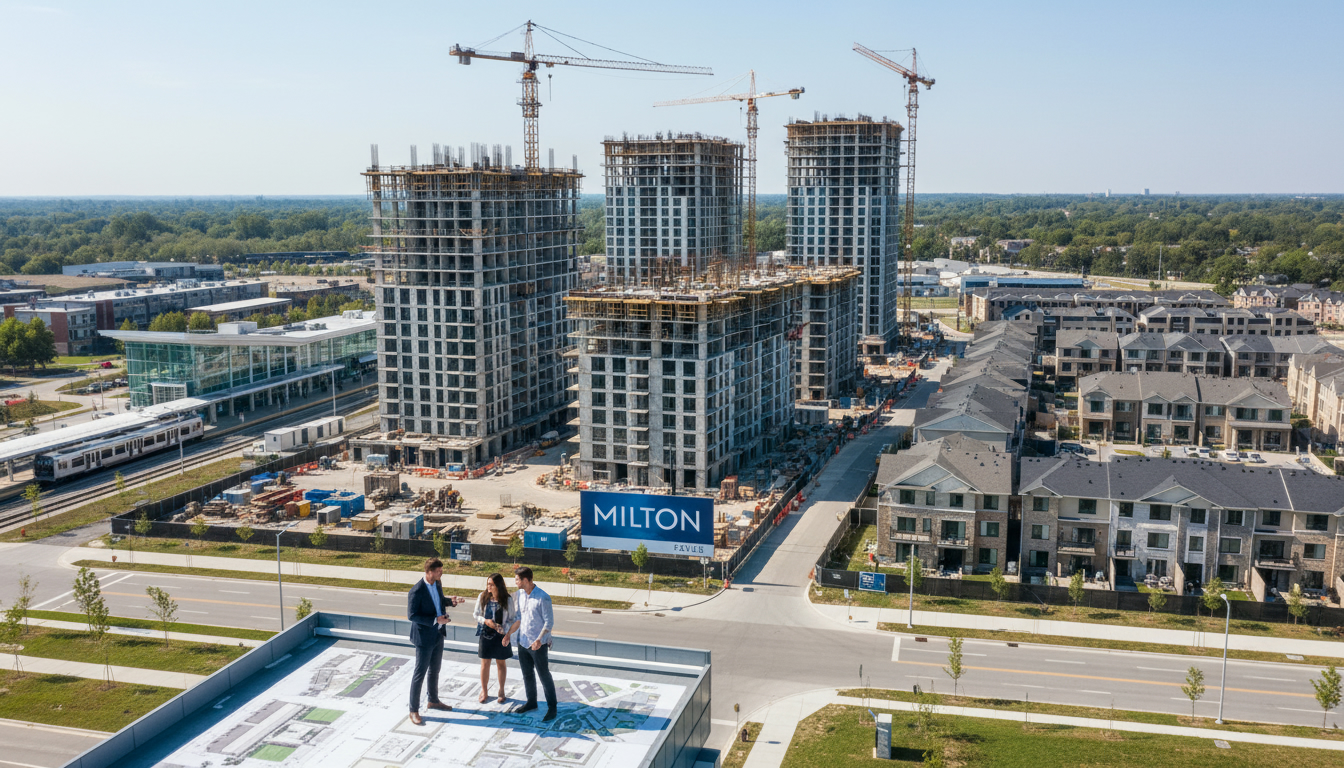
Are pre-construction properties good for investment?
Are pre-construction properties the best way to make real money in Milton, Ontario — or a recipe for slow losses?
If you want a straight answer: pre-construction can be extremely profitable in Milton — when you do the math, control risk, and follow a proven process. It can also blow up if you buy blind. This post tells you exactly how to win — not theory, but practical, local steps that a Milton home seller or investor can use today.
Why Milton matters for pre-construction investment
Milton is not just another suburb. It’s one of the fastest-growing communities in the Greater Toronto Area. That growth drives demand for housing, schools, retail, and transit. Buyers who understand Milton’s development pipeline, commuter patterns, and local pricing get a real edge.
Why that matters: pre-construction is a bet on future demand. In a fast-growing market, that bet has better odds. But a good market won’t rescue a bad buy.
Keywords: pre-construction Milton, Milton investment, resale value Milton, pre-construction investment Ontario.
The upside — why investors buy pre-construction
- Price control and staged deposits: You lock a price today and pay a series of deposits over the build period. That can let you benefit if market values rise before completion.
- Builder incentives and upgrades: Developers frequently throw in upgrades, parking, or reduced deposits to move inventory. Those improve resale appeal and margins.
- Assignment sales: If the market runs hot, assignment sales (selling your contract before closing) can generate profit before you even take possession.
- New-build premium at resale: Buyers pay for new finishes, warranties, and energy efficiency. New units often sell at a premium compared to older stock.
- Attractive for buyers leaving Toronto: Milton offers relative affordability compared to central Toronto while keeping commuter access. That fuels resale demand.

The downside — why pre-construction can fail
- Market risk at closing: If the market cools between signing and occupancy, your built-in gain can vanish.
- Carrying costs: If you can’t assign the contract and you bought to rent or flip, you might carry mortgage, taxes, condo fees, and utilities during occupancy delays.
- Developer risk and quality: Not every builder delivers on time or on quality. Construction issues can hurt resale and add stress.
- HST, closing costs, and charges: New builds have HST rules and development charges. These affect your effective cost and need planning.
- Limited comps: For brand-new communities, there are fewer comparable sales to set market value.
How resale value behaves in Milton — the truth you need
Resale value isn’t random. It’s driven by location, connectivity, supply/demand balance, product mix, and quality. In Milton:
- Location wins: Units near GO stations, schools, major roads, and retail command higher resale value.
- Supply matters: A cluster of new condo towers in one pocket can temporarily flood the market. Single-family home supply and lot scarcity increase prices in adjacent neighborhoods.
- Product mix: 2-bedroom units and family-friendly townhouse units in Milton tend to have stronger resale demand than small studio condos for long-term appreciation.
If you buy pre-construction with the right location and product mix, resale value in Milton often outperforms the wider GTA. If you pick the wrong micro-location or product that floods supply, you’ll lag the market.
A practical, step-by-step checklist for Milton pre-construction buyers
- Verify the builder’s track record: Check completed projects in the GTA and Milton. Walk the developments if possible.
- Confirm transit and amenity plans: Is the project within walking distance of Milton GO, bus routes, schools, or planned retail? Proximity equals resale power.
- Study the unit mix: Avoid a condo project with 70% micro-studios if your exit strategy depends on families or long-term resale.
- Model all costs: Purchase price + HST (if applicable) + development charges + estimated closing costs + expected condo fees + mortgage carrying costs during occupancy = true cost.
- Check assignment rules: Some agreements limit or tax assignments. Know your exit path before you buy.
- Get a realistic timeline: Add a buffer to the builder’s estimated occupancy date. Market conditions change.
- Work with a local agent who knows Milton resale comps and the assignment market.
- Run rental math (if renting): Net rental income after condo fees and taxes should meet your cashflow targets if you need to hold.
A real investor decision framework — simple and ruthless
Ask three questions and act only if all are yes:
- Will this location be more desirable in 3–5 years? (Transit, schools, retail, employment nearby)
- Is the unit type in tight long-term demand (townhouse, 2-bed+)?
- Does the all-in cost leave a margin after worst-case downside (10–15%)? If not, pass.
If you can’t quantify downside and still be comfortable, don’t buy.

Milton-specific scenarios and what to watch
- Near Milton GO: These finish faster in resale and attract commuters. Good for both rentals and flips.
- Peripheral subdivisions: Expect slower resale; these buyers are typically local first-time owners or families.
- Townhouse vs. Low-rise vs. High-rise: Townhouses and low-rise family units generally hold value better for resale in suburban markets like Milton.
Assignment strategy — use it wisely
Assignment is a powerful tool to capture market appreciation before closing. But: assignments can be taxed and restricted by the purchase agreement. If you plan to flip the contract, get legal advice up front and ensure builder clauses allow it. Work with a real estate agent who handles assignments in Milton regularly.
Tax, financing, and HST considerations (practical points)
- HST: New homes often have HST or rebates depending on use. Factor tax into cost modeling.
- Financing: Mortgage rules and stress tests can change between signing and closing. Plan for financing risk.
- Principal residence vs. investment: If you claim principal residence exemption later, understand rules for capital gains and rental periods.
Why home sellers in Milton should care
If you’re selling a resale home in Milton, pre-construction trends change buyer behavior. New builds can shift price expectations, but they also expand the buyer pool: millennials upsizing from condos, commuters seeking new options, and investors chasing rental demand. Use that to your advantage:
- Price your home competitively against comparable new builds.
- Emphasize established-neighborhood advantages: mature landscaping, schools, completed infrastructure.
- If multiple new builds are nearby, highlight immediate occupancy — buyers who need to move now will still pay a premium for certainty.

Case study (hypothetical, realistic)
Investor A buys a 2-bed pre-construction townhouse in Milton with 5% deposits over 18 months. Market is stable. Assignment market was limited, so Investor A holds to closing. Over two years, demand from commuters rose, and the finished unit sold for a 12% higher price than the purchase contract, after fees. The keys: right location, family-friendly unit, and proper cost modeling.
Investor B buys a micro-condo in a tower where many similar units were released within the same year. Market softens at occupancy. Investor B faces longer time to resell and lower bids. Lesson: product mix and local supply matter.
How I help local Milton buyers and sellers
I provide boots-on-the-ground analysis: builder reputations, local comparable sales, assignment market insight, and cashflow modeling tailored to Milton. I will run the full all-in cost, negotiate deposit schedules, and match exit strategies to the product mix.
Contact me: Tony Sousa — tony@sousasells.ca | 416-477-2620 | https://www.sousasells.ca
FAQ — Pre-construction investment and resale value in Milton
Q: Are pre-construction properties a good investment in Milton?
A: Yes — when you pick the right location, unit type, and run the numbers including HST, fees, and carrying costs. Milton’s growth and commuter demand improve your odds, but selection and risk management matter.
Q: Will a new build always resell for more than I paid?
A: No. If market conditions worsen by completion, or the project floods the market with the same unit type, resale can lag. Don’t assume automatic profit.
Q: What unit types have the best resale in Milton?
A: Townhouses and 2-bedroom (or larger) units aimed at families have stronger long-term resale than micro-studios in suburban Milton.
Q: How do assignment sales work in Milton?
A: Assignment lets you sell your purchase contract before closing. Some builders allow it; some restrict it or require fees. Factor taxes and legal costs. Work with a local agent and lawyer.
Q: What are common hidden costs?
A: HST implications, development charges, interim occupancy fees, closing adjustments, higher-than-expected condo fees, and carrying costs if occupancy is delayed.
Q: Should I buy pre-construction to rent out or flip?
A: Both can work. If renting, model cashflow conservatively. If flipping, ensure assignment is allowed or you’re prepared to hold to closing. Your exit plan must be clearly defined before you sign.
Q: How do I evaluate a builder?
A: Check past projects for delivery timelines, finishes, and warranty claims. Speak with recent buyers in their completed developments.
Q: How can a Milton home seller use this knowledge?
A: Price your home with new builds in mind. Market the advantages of immediate possession, mature landscaping, and established services. Leverage inventory differences to get buyers who need to move now.
Final, direct advice
Pre-construction in Milton is a tool — powerful when used intentionally, deadly when used blindly. Don’t buy hype. Do the math. Check builder track records. Pick the right unit mix and location. Always plan your exit.
If you want a no-BS, numbers-first analysis for a specific project in Milton, email me at tony@sousasells.ca or call 416-477-2620. I’ll run your all-in costs, resale scenarios, and risk assessment free of charge. No fluff. Just an actionable plan.