How do I protect floors and walls during a move?
Want to move out of your Milton home without handing the buyer a repair bill? Here’s the exact, no-nonsense plan to protect floors and walls during a move.
Why protecting floors and walls matters more for Milton home sellers
If you’re selling a home in Milton, ON, a scratched hardwood floor or dented hallway can cost you more than a repair — it can kill buyer confidence. Buyers in Milton expect well-maintained listings, especially in neighbourhoods like Old Milton, Timberlea, and Dempsey. Small damage shows up in listing photos and during inspections. That reduces offers and slows closings.
This guide gives you a tactical, step-by-step system you can implement the day before movers arrive. It’s written for sellers, easy to follow, and uses materials you can get locally in Milton or online.
Quick checklist before movers arrive
- Clear walkways and remove rugs or runners. Hidden corners and throw rugs cause trips and scrapes.
- Measure doorways, stairs, and narrow halls to plan furniture routes.
- Book protective materials (see what to buy below) 48 hours before move day.
- Schedule a weather plan — Milton winters mean salt and mud; summer rain brings dirt.

What to buy (local shops or big box)
- Ram Board or heavy-duty floor protection rolls (temporary board protection)
- Rosin paper (cheaper for short distances)
- Moving blankets and furniture pads
- Corner guards (foam or cardboard) for doorways and cabinet corners
- Masking/painter’s tape (low-tack) and gaffer’s tape
- Carpet runners and adhesive stair treads
- Plastic sheeting and shrink film for walls and banisters
- Door jamb protectors and threshold guards
- Boot covers and shoe mats for wet weather
- Cardboard sheets for custom floor shields
You can find these at Canadian Tire, Home Depot Milton, local hardware stores, or moving-supply shops in town. If you can’t get Ram Board, rosin paper + cardboard + tape will work.
Step-by-step protection plan (exact order to follow)
- Start outside
- Lay heavy-duty entrance mats and a 2–3 metre plastic runner from the porch or garage to the front door.
- Put sand-free shoe covers by the door during wet weather. If movers will be inside and out a lot, require boot covers.
- Protect thresholds with adhesive threshold guards.
- Protect stairs first
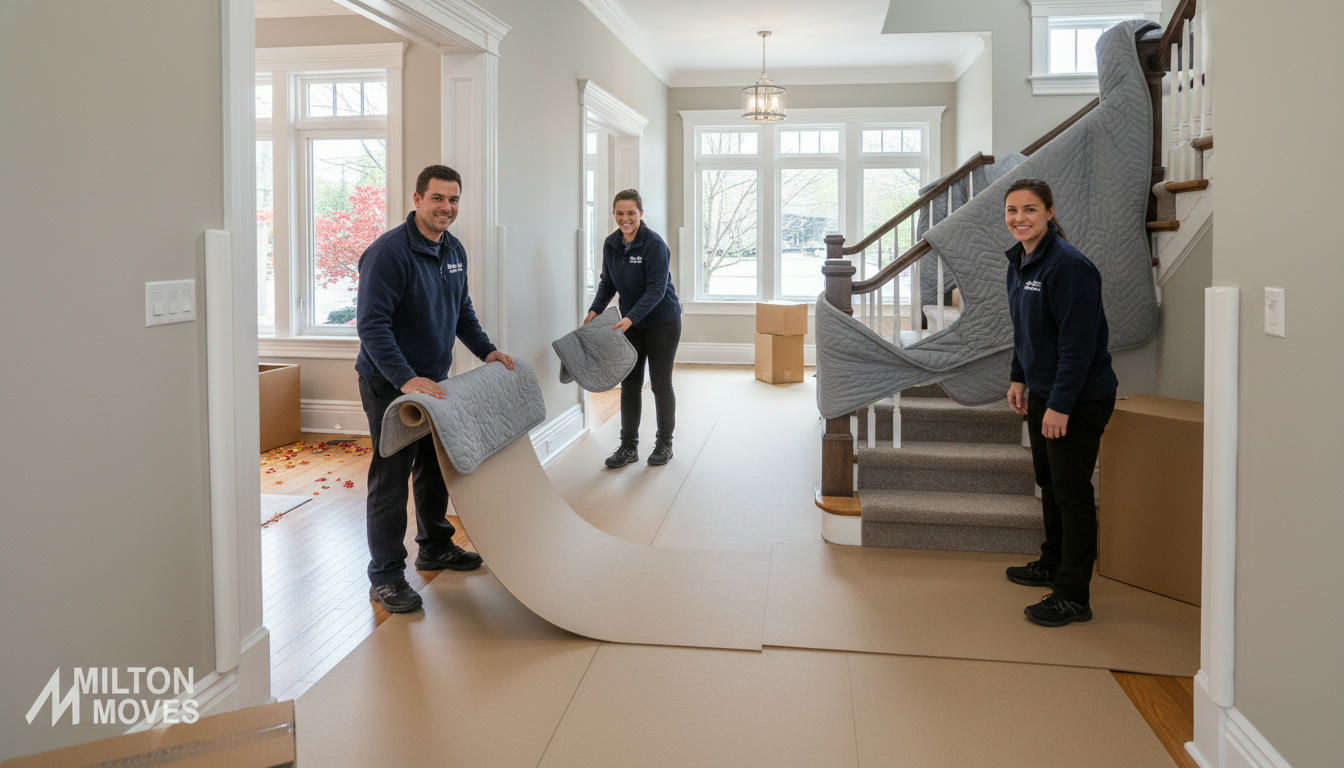
- Wrap banisters with moving blankets and secure with tape.
- Cover stair treads with carpet runners or adhesive stair treads. For hardwood stairs, use Ram Board or cardboard cut to fit treads then tape edges.
- Protect high-traffic floors
- Roll out floor protection along the planned moving path immediately after stairs. Use Ram Board where possible for hardwood and tile.
- For laminate, use rosin paper plus cardboard strips over seams. Avoid plastic sheeting directly on laminate — it can trap moisture.
- Protect walls and corners
- Apply foam corner guards to wall corners and doorframes near the moving path.
- Use shrink film or plastic sheeting on walls in tight hallways where furniture will slide by. Secure with painter’s tape — it won’t peel paint.
- Place cardboard sheets vertically between furniture and walls when moving tight pieces.
- Protect doors and doorframes
- Remove doors that will interfere with large furniture for easier maneuvering.
- If removing doors isn’t practical, wrap edges and frames with moving blankets and reinforce with elastic straps or tape.
- Protect built-ins and trim
- For built-in cabinets and wainscoting, apply adhesive-backed felt or cardboard strips where movers might bump items.
- Final checks before loading
- Walk the route with the moving team. Point out protected areas and high-risk spots (thin trim, soft plaster walls, Victorian moulding in older Milton homes).
- Keep a toolbox with extra tape, blankets, and corner guards on site.
Weather and season-specific tips for Milton
- Winter (Dec–Mar): Salt and grit are the real damage agents. Keep a boot-clean station at every entry. Avoid dragging heavy items over salt-dusted floors; salt scratches finish. Wipe shoes at every entrance.
- Spring/Autumn: Mud and rain mean more floor changing. Use absorbent mats inside each entrance and change them frequently.
- Summer: Humidity can swell hardwood. Avoid taping protectors directly to delicate varnish; use low-tack painter’s tape.
How to work with movers so protection actually happens
- Communicate your plan before move day. Send photos of doorways, halls, stairs.
- Hire movers who agree to follow protection standards. Ask for references from Milton sellers.
- Offer to supply protective materials — many movers will use what you provide if you’ve bought Ram Board, blankets, and tape.
- Be present on move day to supervise critical maneuvers around fragile trim or stairs.
If a mover resists reasonable protection or shortcuts the plan, stop and insist. It’s easier to enforce protection than to fix a scratched floor after the fact.

DIY vs. professional protection: what to expect
- DIY: Cheaper. Good for small moves and careful handling. Requires time, planning, and the right materials.
- Professional protection (added by full-service movers): Faster. Often includes Ram Board, stair runners, and shrink-wrap. It costs more but reduces risk on high-value finishes.
For sellers in Milton aiming for a smooth closing, I recommend professional protection for high-end finishes and DIY protection for less valuable areas.
Repair checklist — quick fixes for minor damage buyers notice
- Minor hardwood scratches: Use a tinted wax or wood marker matched to stain.
- Scuff marks on painted walls: Clean with a melamine sponge then touch up with matched paint.
- Dented baseboards: Sand, wood filler, and a paint touch-up.
- Tile chips: Professional repair or replace an affected tile.
Document any pre-existing wear and tear before movers arrive — take dated photos. This protects you from false claims and supports full disclosure to buyers.
Staging and showing while protecting finishes
If your house is on the market and showing during a transitional move:
- Keep a clear, protected path for showings.
- Store packed boxes away from high-visibility rooms. Buyers notice clutter.
- Use removable floor and wall protection during showings, but remove them for photography if they look ugly. Consider temporary staging mats that look clean.
Cost vs. risk — the math Milton sellers should know
A sheet of Ram Board costs more upfront than rosin paper, but it saves money if your hardwood is high-value. Ask yourself:
- What’s the repair cost for a scratched floor in my neighbourhood? In Milton, a hardwood refinish can run from $1,000 to $5,000 depending on size and finish.
- How much will protection cost? Often $100–$400 in materials for a typical detached home.
Spending a few hundred dollars to avoid a multi-thousand-dollar repair or a stalled sale is a clear return on investment.

Local resources in Milton
- Hardware: Home Depot Milton, Canadian Tire — for Ram Board, tape, and runners.
- Local moving supply stores: Call ahead — many will pre-cut protective materials to your measurements.
- Handyman services: For quick door removals, trim repairs, and last-minute touch-ups.
Why this matters to your sale price and closing timeline
Buyers expect a move-in ready home. Visible damage during a final walk-through often triggers demands for repair credits or delayed closings. Protecting floors and walls prevents surprises and protects your sale price.
If you want the job done right without drama, use this checklist, buy the right materials, and supervise move day.
About the Milton moving expert you can call
Tony Sousa is a Milton-based real estate professional who helps sellers avoid deal-killing damage during moves. He coordinates with local movers, recommends trusted vendors for protection materials, and makes sure your home looks perfect for buyers. For help planning a damage-free move or a last-minute assessment, contact tony@sousasells.ca or call 416-477-2620. Learn more at https://www.sousasells.ca
FAQ — Common questions Milton sellers ask about protecting floors and walls during a move
Q: What is the fastest way to protect hardwood floors?
A: Roll Ram Board along the traffic path, taping seams with gaffer’s tape. For stairs, use adhesive stair treads plus blankets on banisters.
Q: Can I use plastic sheeting on hardwood?
A: Avoid placing plastic directly on hardwood for long periods; it can trap moisture and dull finish. Use Ram Board, rosin paper, or cardboard instead.
Q: How do I protect plaster or older trim in historic Milton homes?
A: Use foam corner guards, blanket-wrap fragile trim, and require movers to use straps instead of dragging. Remove doors if the trim is very narrow.
Q: Do movers provide protection materials?
A: Some do as an add-on. Confirm before hiring. If they don’t, supply your own and brief the crew.
Q: What should I do in muddy or snowy weather?
A: Set up a boot-clean station and demand boot covers. Place absorbent mats at each entry and replace them often.
Q: How much does professional protection cost?
A: Expect a range: $100–$600 depending on house size and materials (Ram Board is pricier). Consider it an insurance policy.
Q: Can I still host showings while protecting floors?
A: Yes. Keep a clear protected path for buyers and remove protection for listing photography if needed.
Q: What’s the single biggest mistake sellers make?
A: Assuming movers will protect without clear instructions. Don’t assume — plan and supervise.
Q: How do I document the condition of floors before moving?
A: Take high-resolution photos with timestamps of high-risk areas: stairs, hallways, entryways, and kitchen floors. Keep these for disclosure and inspection.
Q: Who pays if damage happens during the move?
A: If the movers are at fault, their insurance may cover repairs. Keep signed inventories, photos, and written notes of instructions. If you hired the movers, dispute through their insurance and your home sale paperwork.
If you want a move plan that fits your Milton property and budget, send photos of your main routes and I’ll give a quick protection checklist you can use on move day. Email tony@sousasells.ca or call 416-477-2620.