Should I remodel my kitchen before listing?
Want to know if you should remodel your kitchen before listing? Here’s the blunt truth for Georgetown home sellers.
Quick answer — Sell faster and for more: often, but not always
If your kitchen is dated but functional, skip a full gut remodel. Do targeted upgrades that buyers notice: paint, counters, hardware, lighting, staging. If the kitchen is a hazard, has major layout issues, or is mismatched with the neighbourhood, invest strategically. In Georgetown, small to mid-level updates almost always beat a long, expensive renovation that delays listing.
Why this matters in Georgetown, ON
Georgetown sits inside Halton Hills, feeding buyers from the GTA who want space, good schools, and commuter access. Buyers here value move-in-ready homes. That means they pay premiums for homes that don’t need immediate work. A dated kitchen becomes the single biggest emotional blocker for offers.
Local realities that change the math:
- Buyer profile: young families and professionals commuting to Toronto want ready-to-use kitchens. They favor modern kitchens with durable finishes.
- Competition: inventory in Georgetown can swing fast. In tighter markets, cosmetic fixes let you capture quick offers. In slow markets, a superior, updated kitchen helps your listing stand out.
- Age of housing stock: many Georgetown homes were built between the 1970s and 2000s. That means a lot of kitchens are tired but structurally sound — ideal candidates for focused upgrades rather than full rebuilds.

The decision framework — 3 questions to ask before you spend
- What will buyers in Georgetown pay for? If your home is in a neighbourhood of mid-priced, well-kept homes, buyers expect updated kitchens. If you’re in a high-end pocket, buyers will expect higher-end finishes.
- What’s the timeline? A remodel that delays listing by months costs carrying costs and can miss peak selling windows. A quick refresh can be done in weeks and often drives faster offers.
- What’s the return on investment? Lower-cost updates typically recoup a larger share of their cost. Big, custom remodels often deliver joy to the next owner, not higher profit to you.
Answer these, and you’ll know whether to remodel, refresh, or sell as-is.
Remodel vs. Refresh vs. List As-Is — practical rules for Georgetown sellers
-
List As-Is: If your price is aggressively below market and buyer demand is high, list as-is and price to move. As-is works when buyers plan flips or investors are active.
-
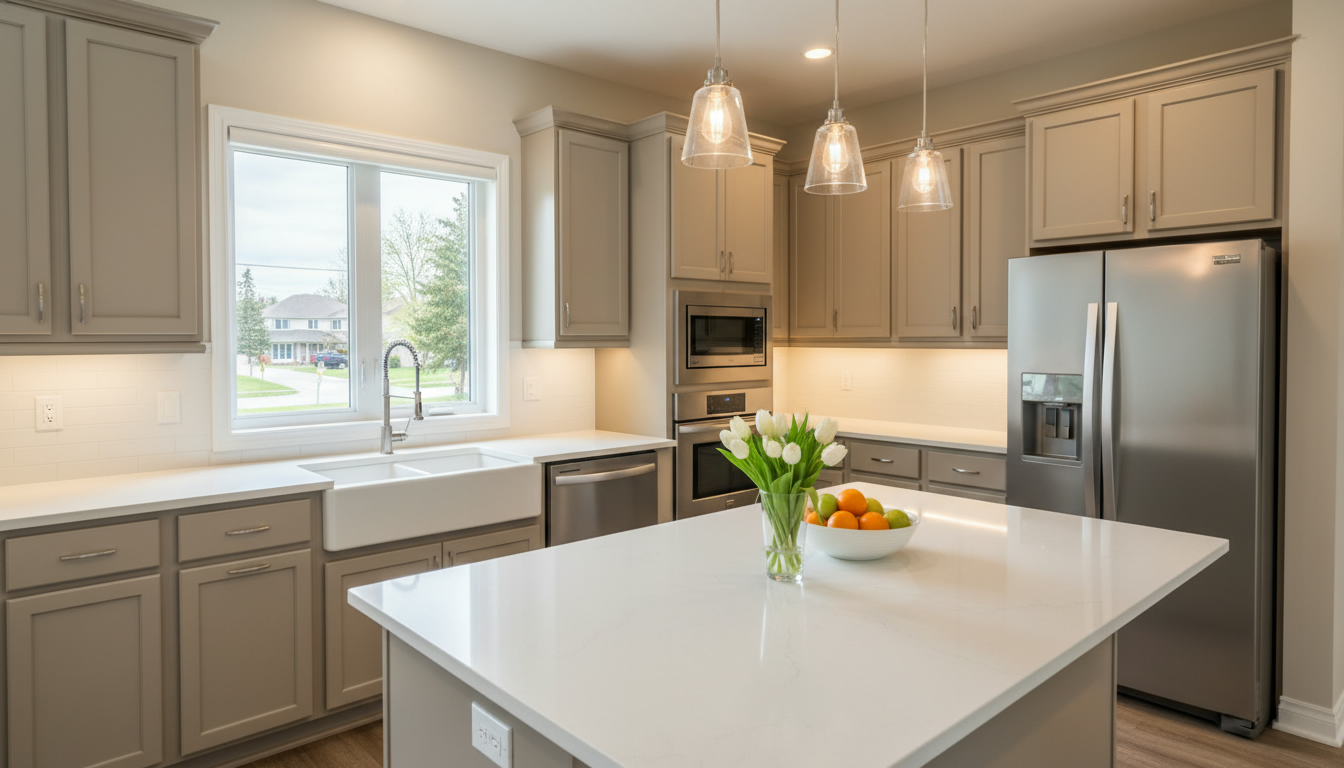
Refresh (best starting point): Paint cabinets, replace hardware, add modern lighting, refinish or replace countertops (quartz or engineered stone are popular), update backsplash, deep-clean, and stage. Cost range: roughly $5,000–$25,000 depending on scope. Why this wins: fast, cheaper, and buyers see immediate value.
-
Mid-range Remodel: Replace cabinets or reface them, new counters, new floors, mid-tier appliances. Cost range: $25,000–$60,000. Use this if your home price is above neighborhood median and buyers expect upgraded finishes.
-
Full Gut Remodel: Structural changes, layout redesign, custom cabinetry, high-end appliances. Cost: $60,000+. Consider only if you plan to stay long-term or you’re in a top-tier neighbourhood where buyers expect luxury kitchens.
ROI reality — what sells in Georgetown
Be straight: cosmetic and functional upgrades get the biggest bang for your buck in Georgetown. Typical returns:
- Cosmetic refreshes (paint, hardware, counters): high recoupment — often 80–120% of cost in terms of increased sale price or faster sale.
- Mid-range remodels: reasonable recoupment — 60–80% depending on finishes and neighbourhood fit.
- Full gut remodels: lower recoupment — sometimes <60% unless the house is in a premium location.
These are guidelines. The exact return depends on neighborhood comparables, quality of work, timing, and buyer demand.
Specific upgrades that move the needle in Georgetown
Focus on items buyers notice first and care about long-term:
- Cabinets: Reface or paint + new hardware if solid boxes. Replace if water-damaged or falling apart.
- Countertops: Replace laminate with quartz or high-quality engineered stone. That upgrade signals quality.
- Lighting: Add layered lighting — task, ambient, accent. Undercabinet lights show countertops.
- Appliances: Replace old, mismatched appliances with stainless or integrated units. Buyers notice energy-efficient models.
- Flooring: Continuous flooring from the main living area into the kitchen sells. Avoid cheap, dated tiles.
- Sink and faucet: A modern single-bowl sink and pull-down faucet are inexpensive and visible upgrades.
- Storage solutions: Pull-out drawers, pantry organization, and soft-close hinges add perceived value.

Pricing strategy — don’t over-improve for the street
Match the kitchen quality to your neighbourhood. If most homes on your block sell in a specific price band, pushing your kitchen above that band won’t always increase the top sale price. You’ll get buyer expectations mismatch: higher list price, fewer showings, and longer days on market.
Use comps. A proven approach: hire a local agent to run a comps analysis and show what similar renovated kitchens sold for in your Georgetown neighbourhood.
Timing and permits — practical Georgetown tips
- Permits: Structural or electrical/plumbing changes often require permits from Halton Hills. Factor permit pull time and inspections into your schedule.
- Trades: Plan trades early. Local contractors fill up quickly in spring and fall. Book a trusted crew or use a trusted local general contractor recommended by an experienced Georgetown realtor.
- Listing window: If you can finish upgrades before the spring buying season, you’ll likely get better buyer turnout. If you miss that window, re-evaluate listing as-is with a refresh.
Staging, photos, and marketing — finish strong
A renovated kitchen without pro photos and staging wastes value. In Georgetown, buyers often search online first. High-quality photos, a virtual tour, and staging that highlights the kitchen flow deliver measurable uplift. Use daytime photos, declutter counters, and show the kitchen functioning with minimal props.
When you should absolutely not remodel before listing
- You plan to sell quickly within 30 days and the market is hot.
- Your house prices are already below neighborhood median and buyers are investors.
- Renovation costs will push you above the neighborhood comparable range.
- You don’t have reliable contractors or permits in place.
If any of those apply, focus on targeted refreshes and excellent marketing.

Local market realities: Georgetown specifics to keep in mind
- Commuter demand: Many buyers come from Toronto and Mississauga. They value practicality and modern finishes over bespoke luxury.
- School districts: Homes near strong schools sell faster. If your home is in those zones, a modest refresh can extract more value because families will pay for move-in-ready condition.
- Renovation costs: Local labor and permit costs vary. Get 3 local quotes. Contractors familiar with Halton Hills know permit timelines and inspection schedules.
Actionable checklist — what to do next (48–72 hour plan)
- Call a local realtor for a quick valuation and comps. Ask specifically: “What do similar homes with updated kitchens sell for in my neighbourhood?”
- Get 3 local contractor quotes for a refresh and a mid-range remodel. Include permit timelines.
- Decide: refresh if cost <5–8% of expected sale price; mid-remodel if cost <10% and comps support it.
- If you refresh: schedule work, stage, book professional photos, and list.
Why work with a local expert
Local market knowledge matters. A realtor who knows Georgetown’s neighborhoods, buyer profiles, and recent sale prices will tell you when a remodel adds value and when it doesn’t. They’ll also connect you with vetted contractors and staging teams who deliver predictable timelines.
Tony Sousa is a Georgetown-based realtor who helps sellers decide whether to remodel, refresh, or list as-is. He provides local comps, contractor referrals, and a clear plan to maximize sale price while minimizing days on market.
Contact: tony@sousasells.ca | 416-477-2620 | https://www.sousasells.ca
FAQ — Kitchen remodeling and selling in Georgetown
Q: How much should I spend on a kitchen refresh before listing in Georgetown?
A: Aim for 1–5% of expected sale price for a refresh that yields strong impact (paint, counters, hardware, lighting). If you plan a mid-range makeover, budget 5–10% but confirm with comps.
Q: Will a new kitchen increase my home value enough to cover costs?
A: Cosmetic and functional updates usually increase buyer interest and can speed up sale. They often recover most costs. Full gut remodels rarely recoup 100% in resale unless the home is in a premium pocket.
Q: How long does a refresh take vs. a full remodel?
A: A focused refresh can be done in 1–4 weeks. A mid-range remodel takes 4–10 weeks. Full renovations can take 3+ months, plus permit and inspection time.
Q: Do I need permits for kitchen work in Halton Hills?
A: Yes for structural, major electrical, or plumbing changes. Cosmetic updates usually don’t need permits. Confirm with the Town of Halton Hills and your contractor.
Q: Should I replace appliances before listing?
A: Replace if appliances are visibly old, mismatched, or non-functioning. Energy-efficient, stainless models appeal to buyers and photograph well.
Q: Will staging matter in Georgetown?
A: Absolutely. Staging and pro photos convert online views to showings. Buyers in Georgetown often shop listings online first. Staged kitchens get more interest.
Q: How do I know if my renovation will over-improve my home?
A: Compare with recently sold comps in your immediate neighbourhood. If your planned upgrade pushes finishes above the comparable range, reconsider or scale back.
Q: Who should I call for local advice?
A: Call a local realtor who knows Georgetown. For a free consultation and tailored plan, contact Tony Sousa: tony@sousasells.ca | 416-477-2620 | https://www.sousasells.ca
If you want a quick, data-driven recommendation for your exact address in Georgetown, send the property details and photos to Tony and get a no-nonsense plan that maximizes sale price and minimizes time on market.