
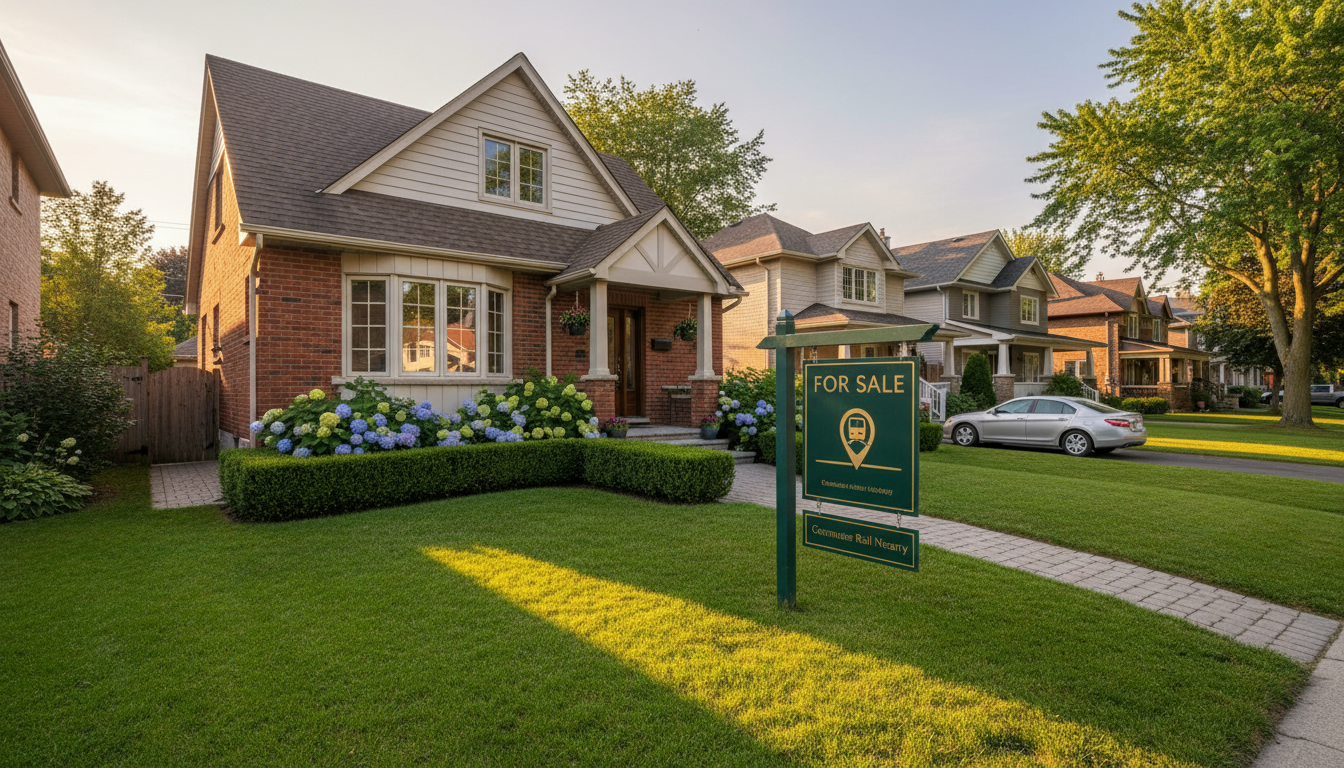
How do I determine the right asking price?
Want to stop leaving money on the table? Here’s the exact way to pick the right asking price in Georgetown, ON.
Why the asking price is everything in Georgetown
Your asking price sets the game. It controls who sees your home, how many buyers tour it, and the type of offers you get. In Georgetown — a commuter hub in Halton Hills with GO access, mix of heritage downtown homes and new subdivisions — pricing mistakes cost sellers tens of thousands and weeks on market.
This is not theory. I help sellers in Georgetown price to win. I use hard data, local nuance, and a clear pricing process so you sell for market value — not a hopeful number you dreamed up.
Contact: tony@sousasells.ca | 416-477-2620 | https://www.sousasells.ca
Start with a market snapshot — facts, not feelings
Before you pick a number, get the market facts for Georgetown (last 30–90 days):
- Active inventory (how many homes listed)
- Sales volume (how many homes sold)
- Average days on market (DOM)
- Price trends and median sale price
- Buyer traffic (open house turnout, online clicks, showing requests)
Why these matter: low inventory + steady demand = higher leverage for sellers. High inventory = need for more competitive pricing. Georgetown often swings by micro-neighbourhood: downtown historic pockets behave differently than new estates off Guelph St.
If you want the precise snapshot for your street, get a free CMA — I’ll run it for you and show the numbers that matter.

The step-by-step pricing method I use for every Georgetown home
This is the exact playbook I use. Follow it or call me to execute it.
1) Gather the right comparables (not just any sold houses)
- Use sold properties in the last 90 days when possible.
- Limit comps to 1–2 km radius, same neighbourhood, same home type (detached, semi, townhouse, condo).
- Match lot size, bedroom/bath count, age, and major upgrades. Adjust for differences.
2) Convert comps into price-per-square-foot baseline
- Calculate price per finished square foot for each comp.
- Use the median of those numbers, not the average (median resists outliers).
Example:
- Comp A: $900,000 / 1,500 sqft = $600/sqft
- Comp B: $950,000 / 1,700 sqft = $559/sqft
- Comp C: $875,000 / 1,450 sqft = $603/sqft
Median = $600/sqft. Multiply by your home’s finished sqft to get a baseline.
3) Adjust the baseline up or down for real differences
- Add value for premium lot, finished basement, major renovations, garage, or extra parking.
- Subtract value for small lot, dated systems, missing upgrades, or structural issues.
Use hard-dollar adjustments. Example: a finished basement that adds true livable space might add $30k–$60k depending on finish and ceiling height. A major kitchen renovation can add $20k–$60k depending on scope.
4) Check price bands and search filters
Buyers use price filters on MLS. Listing at $799,900 vs $800,000 can matter. Listings under a round number often hit more buyer searches and show in more price brackets. Use this to your advantage, but don’t underprice to manipulate views unless your goal is a bidding war.
5) Decide your strategy: Market vs Aggressive vs Exposure
- Market price: target current market value. Expect steady showings and fair offers.
- Aggressive (slightly under market): Create bidding interest, more showings, higher chance of multiple offers. Works best in low inventory, high demand pockets of Georgetown.
- Exposure (slightly above market): Aims for buyers who sacrifice speed for price. Risk: longer DOM, price reductions, perception of stale listing.
I pick a strategy based on micro-data: recent sales on your street, upcoming similar listings, and buyer demand this week. That’s how you pick the right lever.
6) Build contingencies for feedback and early performance
Plan a 7–14 day review window. If showings are strong and offers follow, you’re priced correctly. If showings are weak, adjust quickly. Don’t wait 30–60 days to react — that kills momentum.
Local variables that change the math in Georgetown
- Commute value: proximity to Georgetown GO Station increases buyer pool. Homes within walking distance typically command premiums.
- Lot and backyard: larger lots and private yards sell strong for families — especially in downtown and west Georgetown.
- School zones and amenities: desirability of certain public schools or private options shifts buyer demand.
- New builds vs heritage: heritage homes in downtown have unique buyer lists and may need tailored comps. New subdivisions are compared mostly to recent builds.
- Seasonal shifts: spring and early fall attract more buyers. Winter can work if inventory is low.
All these factors change how you adjust comps.
A concrete pricing example
You own a 1,700 sqft detached house near downtown Georgetown. You run comps and find median $/sqft = $600.
Baseline = 1,700 x $600 = $1,020,000
Adjustments:
- Finished basement + $40,000
- Larger lot + $30,000
- Dated kitchen – $20,000
Target asking price = $1,070,000
Next step: choose strategy. If there are two similar active listings and low inventory, list at $1,049,900 to attract early multiple offers. If inventory is high, list at $1,070,000 and be ready to negotiate.
Pricing psychology and buyer behavior
- Price bands: buyers set filters and rarely move them. A listing at $699,900 gets more views than $700,000.
- First-week effect: most homes get the bulk of interest in the first 7–10 days. That’s the window where price matters most.
- Perception of value: an overpriced when stale listing loses credibility. Buyers mentally anchor to the asking price.
Use pricing to influence perception, not to trick buyers. Honesty plus smart math wins every time.
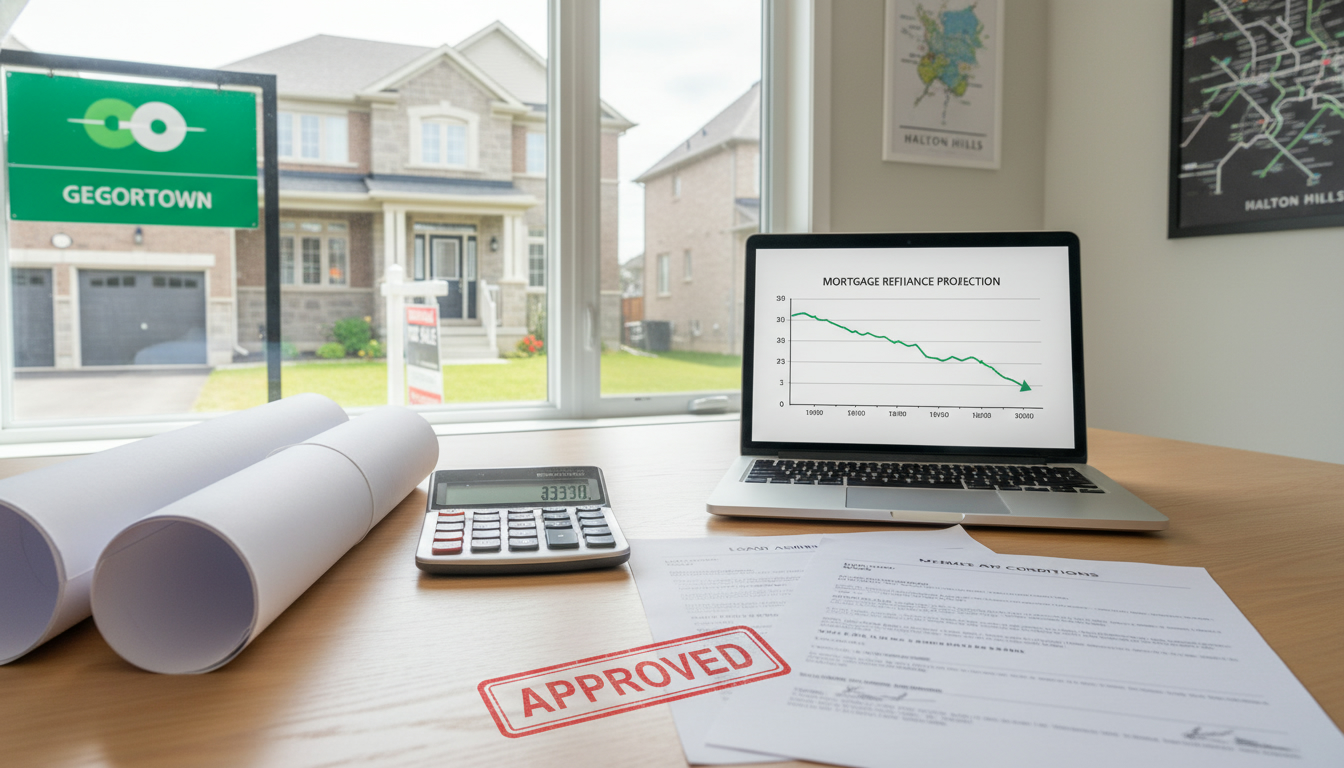
Protect against appraisal and financing gaps
Bank appraisals can come in lower than sale price. If you price aggressively, factor in the risk of appraisal shortfalls. Solutions:
- Have backup comps and a professional CMA to support your price.
- Negotiate appraisal gap clauses carefully (use with experienced guidance).
- Consider seller concessions if needed to close a buyer whose financing requires it.
Marketing and staging multiply the asking price
The right price without proper marketing reduces results. Invest in:
- Professional photos and floor plans
- Virtual tours and targeted digital ads to buyers in Toronto-Halton area
- Clean, decluttered home and strategic staging
In Georgetown, buyers often come from Toronto and Milton. Targeted ads that highlight commute time, school zones, and lifestyle move buyers faster.
When to be flexible and when to stand firm
Stand firm when you have data: multiple offers, rising showings, and strong comps. Be flexible when showings are low, offers are weak, or feedback points to price as the issue. Change quickly; pricing inertia costs money.
How I prove market value to skeptical buyers and appraisers
I deliver a folder with:
- Recent sold comps with line-by-line adjustments
- Local market snapshot and DOM trends
- Photos and scope comparisons
- Repair and upgrade receipts
Show the math. Buyers and appraisers respect clear evidence.

Final checklist before you list
- Run a 90-day CMA
- Confirm finished square feet and measure twice
- Fix small mechanical issues and touch up paint
- Stage high-impact rooms (kitchen, living, master)
- Decide your pricing strategy and review a 7–14 day plan
If you want this checklist executed and the CMA delivered in 48 hours, email tony@sousasells.ca or call 416-477-2620.
FAQ — Answers Georgetown sellers need now
Q: How long should I wait before I lower the price?
A: Monitor the first 7–14 days. If showings are low and offers absent, reduce in clear steps (not tiny tweaks). Quick, decisive changes keep momentum.
Q: Should I price slightly under the market to trigger multiple offers?
A: Only in low-inventory, high-demand pockets. In balanced or high-inventory markets, this can net a lower sale price. Use neighborhood-specific data.
Q: How do townhomes and condos differ from detached homes in pricing?
A: Townhomes and condos rely more on maintenance fees, building amenities, and condo comparables. Detached homes lean on lot, yard, and basement adjustments. Use comps from the same product type.
Q: Will proximity to Georgetown GO Station really raise my price?
A: Yes. Commuter proximity expands buyer pool and often commands premiums, especially for buyers working in Toronto.
Q: What if the appraisal comes in low?
A: Present a detailed CMA, negotiate for an appraisal review, or ask the buyer to bridge the gap. Avoid overreliance on aggressive pricing strategies that ignore appraisal risk.
Q: What’s the best time of year to list in Georgetown?
A: Spring and early fall typically have more active buyers. But market conditions and inventory matter more than the calendar. A well-priced, well-marketed home can sell any month.
Q: How much does staging and marketing actually add to sale price?
A: It varies, but professional staging and high-quality marketing regularly increase offers and reduce time on market. In tight markets, the right presentation leads to bidding activity.
Q: Can I get a free CMA for my Georgetown home?
A: Yes. Email tony@sousasells.ca or call 416-477-2620 and ask for a free, no-obligation 48-hour CMA with neighborhood breakdown and recommended pricing strategy.
If you want the one-page pricing plan tailored to your address, I’ll build the numbers and the strategy in 48 hours. No guesswork. No fluff. Just the exact asking price that works in Georgetown, ON.
Contact: tony@sousasells.ca | 416-477-2620 | https://www.sousasells.ca