
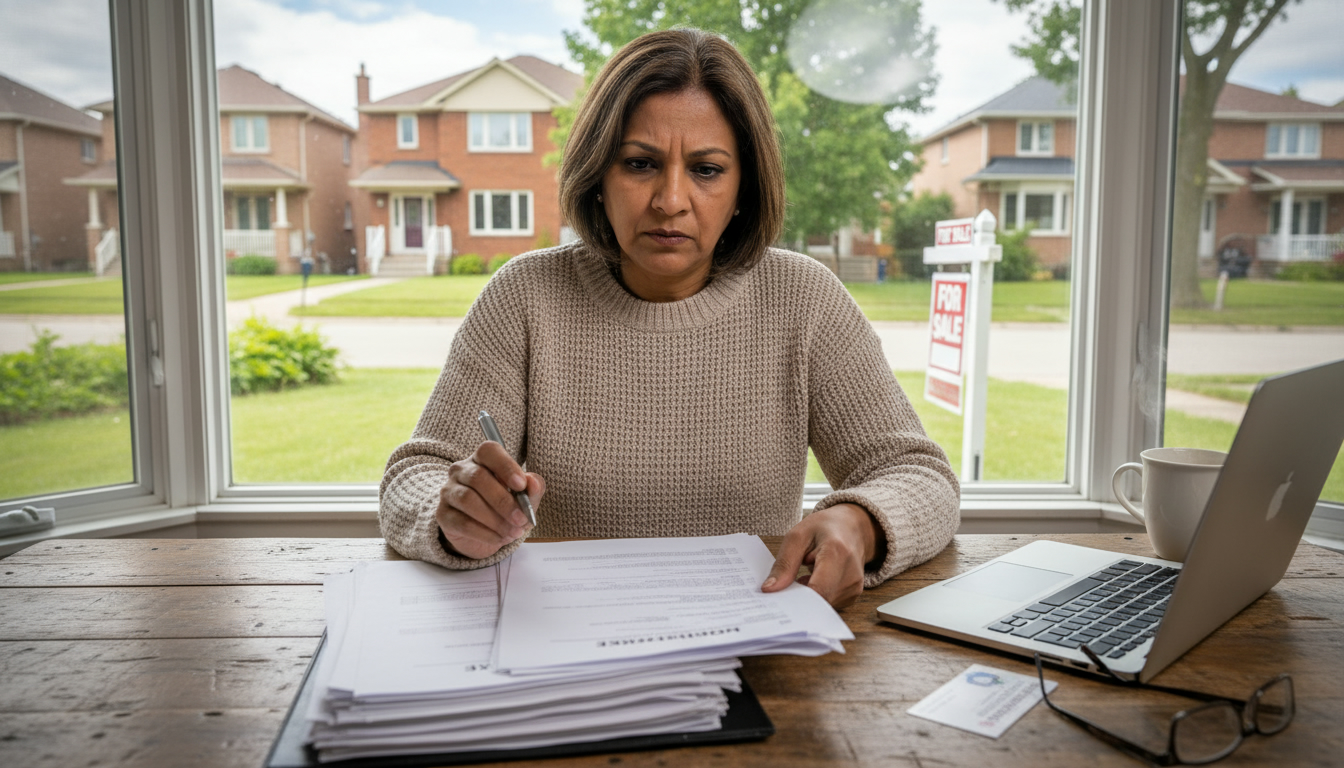
What if the sale price doesn’t cover the mortgage?
What if the sale price doesn’t cover the mortgage? This exact scenario can wreck your finances — unless you know the steps that protect you in Georgetown, ON.
Why this matters in Georgetown, ON
Georgetown sits inside Halton Hills and feeds into the Greater Toronto Area market. Homes here move fast, but prices and mortgage balances can still mismatch. A short sale, mortgage deficiency, or a registered lien can create real legal and financial exposure for sellers.
If your sale price doesn’t cover the mortgage, you don’t get to walk away automatically. Lenders, second charge holders, and lien claimants have tools to recover what they’re owed. You need a plan that’s immediate, legal, and tactical.
The core problem: mortgage shortfall (mortgage deficiency)
Shortfall = mortgage balance + fees + legal costs – sale proceeds.
When the number is positive, that’s the amount the lender or other secured creditors may try to collect from you. In Ontario, lenders commonly use a power of sale under the Mortgages Act or pursue a court judgment to recover the deficiency. That means you could face a demand for the remaining balance after closing.

Legal realities in Ontario every seller must know
- Power of sale vs. foreclosure: Most Ontario lenders use power of sale. They sell the home and keep the proceeds. If the sale doesn’t pay the full secured debt, lenders can sue you for the balance.
- Priority matters: Registered liens (second mortgages, HELOCs, builders’ liens, municipal tax arrears) are handled by registration date and by special priority rules. Municipal tax arrears and some liens can leap ahead of mortgages.
- Deficiency judgments: Lenders can apply to court for a personal judgment for any shortfall. That judgment becomes an enforceable debt and can lead to garnishment or seizure of assets unless handled quickly.
- Time limits and enforcement: Collection can continue for years. Bankruptcy or a negotiated settlement may stop enforcement, but each option has consequences.
Always consult a local real estate lawyer. This post explains options and tactics, not legal advice.
Immediate steps to take if the sale price won’t cover the mortgage
- Stop. Get the exact numbers now.
- Request a mortgage statement and exact payoff figure from your lender. Ask for an itemized breakdown: principal, interest, default fees, legal costs, and discharge fees.
- Pull the status of title: check for second mortgages, HELOCs, tax arrears, and any construction liens. Your real estate lawyer or title company can do this instantly.
- Don’t sign anything without transparency.
- If a buyer offers to “assume” the mortgage or wants creative terms, get everything in writing and run it by your lawyer.
- Negotiate with the lender — before closing.
- Lenders prefer certainty. They may accept less than the mortgage balance if it avoids long legal enforcement and extra costs. This is often called a settlement or compromise.
- Be direct: present the sale contract, the net proceeds, and a clear proposal. Offer a lump-sum shortfall payment if you can, or a formal payment plan.
- Consider a deed-in-lieu or formal short-pay arrangement.
- Deed-in-lieu of foreclosure means you give title to the lender in exchange for release from the mortgage. Not all lenders accept it.
- A negotiated short-pay (sometimes thought of as a ‘short sale’) requires lender approval and a binding agreement that releases you from further liability.
- Explore closing funds or bridge financing.
- If the shortfall is small, a short-term loan or personal funds to top up the sale proceeds may be the cheapest route to avoid a deficiency claim.
- If negotiation fails, prepare for potential judgment.
- Your lawyer can negotiate payment terms, or explore insolvency options.
Lien-specific rules sellers must respect
- Second mortgages and HELOCs: These remain on title and must be paid or arranged with the second-charge holder.
- Construction liens (Builders’ Liens): Can be registered even after work is complete if a proper claim was filed. These can complicate closings and require removal or payment.
- Municipal tax arrears: Municipal claims often take priority. They must be cleared or dealt with before title transfers.
- Title insurance: Protects buyers, but sellers need clear title. Title problems slow sales and increase costs.
Negotiation tactics that work — direct, no-BS scripts you can use
When you call the lender:
- “I have an executed sale agreement for [address]. The sale proceeds will be $X and the mortgage payoff is $Y. Will your institution accept a short payoff of $Z to release its charge and avoid further enforcement costs?”
- If they push back, ask: “What documentation and approvals do you need to consider a settlement today?”
When you email a second-charge holder or lien claimant:
- “Subject: Settlement proposal — [property address]
We plan to close a sale for $X on [closing date]. The registered claim against title is $Y. We propose a lump-sum settlement of $Z. If you accept, buyer will close and we’ll provide a lawyer’s undertaking for payment. Please confirm by [48 hours].“
These scripts push for a yes/no answer and force the creditor to quantify requirements.

Tactical options sellers can choose — what’s realistic in Georgetown
- Full payoff at closing: Ideal. Seller brings funds or the buyer pays off liens and mortgages as part of closing.
- Lender-approved short-pay (settlement): Common if lender sees no benefit in litigation.
- Deed-in-lieu (rare): Lender takes title; seller avoids a deficiency judgment if agreement includes release.
- Post-closing deficiency claim: Risky for seller. Lender may sue for the balance.
- Bankruptcy or consumer proposal: Last resort. It stops creditor action but affects credit long-term and has other consequences.
When to use each: If you have the cash or can get bridge financing, full payoff is best. If not, push hard for a lender settlement or deed-in-lieu. If negotiations break down, accept that litigation or insolvency may be next steps.
Local market insights that change strategy in Georgetown
- Buyer demand: Georgetown buyers often come from the GTA looking for space with commuting access. That gives sellers leverage when properties are properly priced and marketed.
- Timing matters: Spring and early summer listings get more buyer traffic. If you’re facing a shortfall, timing your sale for peak demand improves your odds of a full payoff.
- Buyer mix: Many buyers are financed buyers; strong pre-approvals help. Listings that attract cash or investor buyers can close faster and reduce the chance of last-minute financing failures.
- Local courthouse and legal process: Enforcement actions and judgments come through Halton Region processes. Local lawyers and realtors are familiar with timelines and likely lender behavior in our market.
How a local Realtor and mortgage-savvy advisor makes the difference
You need someone who speaks both lender language and market language. An experienced local Realtor will:
- Price and market the property to attract qualified buyers who close fast.
- Coordinate with your real estate lawyer to surface liens and negotiate payoffs early.
- Communicate directly with lenders and lienholders to present settlement options that make financial sense.
If you’re in Georgetown and facing a shortfall, don’t guess. Use a local pro who handles these cases daily.
Real examples of outcomes (what usually happens)
- Best case: Proper pricing + strong buyer = sale covers mortgage + closing costs. Lender releases charge, seller walks away clean.
- Middle case: Sale comes short. Lender accepts a negotiated settlement for less than the full balance. Seller signs a release and avoids litigation.
- Worst case: Lender sells by power of sale, pursues deficiency judgment, or you file bankruptcy. Long-term credit damage and legal costs follow.
The difference between those outcomes is speed, transparency, and negotiation.

Call to action — what to do right now
If you suspect your sale price won’t cover the mortgage:
- Get your mortgage payoff and title status within 24 hours.
- Contact a local real estate lawyer for immediate advice.
- Call a mortgage-savvy Georgetown Realtor for pricing and lender negotiation help.
Need hands-on help? Email tony@sousasells.ca or call 416-477-2620. Visit https://www.sousasells.ca for a free property review and an action plan to protect your credit and close your sale.
FAQ — quick answers for homeowners and sellers in Georgetown, ON
Q: Can a lender come after me personally if the sale doesn’t cover the mortgage?
A: Yes. In Ontario, lenders can seek a deficiency judgment for the unpaid balance after a power of sale or sale shortfall. That judgment can be enforced against other assets.
Q: What’s a short sale in Canada?
A: Sellers and lenders may negotiate a settlement where the lender accepts less than the mortgage balance. It’s less common than in the U.S., but lenders do approve settlements to avoid legal costs.
Q: Does title insurance protect me from liens?
A: Title insurance protects buyers and lenders against certain defects but doesn’t automatically clear existing registered liens. Sellers must clear encumbrances or negotiate payoffs.
Q: What if there’s a construction lien registered against my property?
A: A construction lien must be dealt with before closing. That usually means payment, a holdback arrangement, or a court challenge. Speak to your lawyer immediately.
Q: Will municipal tax arrears block a sale?
A: Yes. Municipal claims often have priority. They must be paid or otherwise remedied before title can transfer cleanly.
Q: Can I negotiate with the lender myself?
A: Yes, but lenders respond better to documented proposals and lawyer involvement. If a settlement is possible, a lawyer will formalize the release terms.
Q: Is bankruptcy a good option to avoid deficiency claims?
A: Bankruptcy halts collection actions but has major credit and legal consequences. Consider it only after professional legal and financial advice.
Q: Who pays legal and enforcement fees?
A: Payoff statements include legal and enforcement fees the lender incurred. These are typically added to the debt and may increase the shortfall.
Q: How can a local Realtor help reduce the chance of a shortfall?
A: A skilled local Realtor prices correctly, markets broadly, secures qualified buyers, coordinates payoffs, and negotiates directly with lienholders to streamline closing.
Q: Who should I call first if the sale price won’t cover the mortgage?
A: Get the mortgage payoff and title search, then contact a real estate lawyer and a local Realtor experienced in lender negotiations.
Need a fast review and a real plan? Reach out at tony@sousasells.ca or call 416-477-2620. I’ll give you a clear action plan you can use in 48 hours.