How do schools and amenities influence value?
How do schools and amenities influence value? Turn local schools and nearby amenities into thousands more when you sell in Milton — here’s exactly how.
Why this matters now
Milton is growing fast. Buyers here are not just buying a house — they’re buying a lifestyle, commute, and a school for their kids. That combination makes schools and local amenities the single most predictable lever that increases sale price and shortens time on market. Use this lever the right way and you’ll command higher offers. Ignore it and you’ll leave money on the table.
What buyers pay for (and why schools and amenities matter)
- Predictability: Families pay premiums to avoid surprises in school quality and commute time.
- Scarcity: Good school catchments and walkable amenities are fixed. You can’t move a school. Demand rises; supply doesn’t.
- Convenience economy: Proximity to transit, shopping, and parks saves time. Time is money.
In Milton, that matters even more because many buyers commute to Toronto or nearby employment hubs and put a premium on family-friendly neighbourhoods. When a home sits in a desirable school zone and close to transit or major amenities, multiple buyer segments compete: families, professionals, and investors.
How much value do schools add? Realistic ranges
Numbers matter. Don’t promise magic. Use realistic expectations:
- Small uplift (1–3%): If a neighbourhood has average public schools and few amenities nearby.
- Moderate uplift (3–7%): If a home is in a consistently-rated above-average school catchment or steps from basic amenities (grocery, cafes, parks).
- Significant uplift (5–12% or more): For homes inside top-rated school zones, walking distance to transit or major amenities, or in neighbourhoods with elite private or specialized schools.
Why the broad range? Local context, buyer demand, and the number of comparable sales inside the same school boundary all change the premium. Milton’s market dynamics — fast population growth and commuter demand — push those numbers toward the higher end for good school zones.
Specific Milton triggers that move price
1) School boundary lines
- Sales inside the same school boundary act like separate comparables. If your home is in a popular catchment, expect stronger competition.
2) Short walk or short drive to schools
- Walkability and safe routes to schools matter to families. A 5–10 minute walk to a good elementary school can push value.
3) Access to high-performing high schools and specialized programs
- Specialized programs (French immersion, IB, STEM streams) create demand beyond the neighbourhood.
4) Transit and commute (GO station, highways)
- Easy access to Milton GO, Highway 401/407 increases demand from Toronto workers. Shorter commute = bigger pool of buyers.
5) Amenities that sell: parks, trails, shopping, healthcare
- Milton’s green spaces, the escarpment trails, shopping centres, and medical clinics all add to perceived lifestyle value.
6) New developments and community plans
- Planned schools, new plazas, and infrastructure upgrades often raise nearby property values before completion.
How sellers should use this to set price — step-by-step
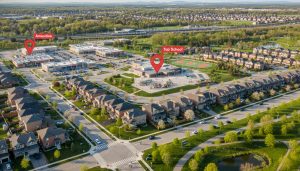
1) Map your school catchment first
- Get the official school boundary and find recent comps inside the same boundary. Comps outside the boundary are weaker evidence.
2) Build a targeted comparable set
- Use only recent sales (last 6 months ideally) inside the same school zone and similar distance to amenities. Adjust for upgrades and lot size.
3) Quantify the premium for amenities
- When comparing, assign value for walkability: 1–3% per major amenity within 10 minutes (elementary school, grocery, transit). Stack carefully.
4) Price for competition, not fear
- If your house sits in a top catchment, price to invite multiple offers. A slightly aggressive list price in a high-demand school zone forces buyers to compete.
5) Market with precision
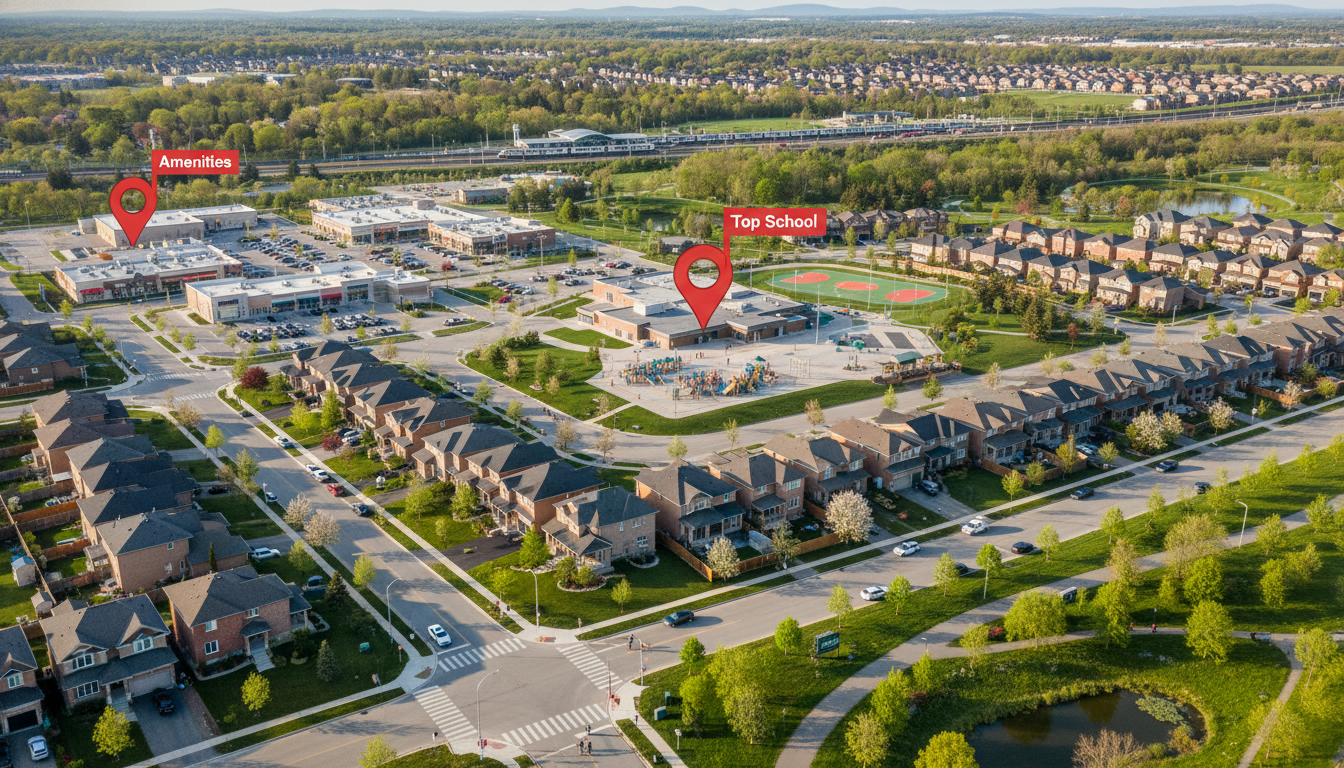
- Use school names, programs, commute times, and map pins in your listing. Don’t be subtle. Parents search for schools; include them in your MLS headline and photos.
6) Time the market and open-house strategy
- Schedule showings around school hours (parents want to imagine drop-off and pick-up). Weekends and early evenings are best for families.
7) Use inspections and upgrades to justify price
- If you’re asking top dollar because of schools and amenities, show evidence: updated systems, safe bike routes, and local playground upgrades.
Practical listing copy examples (use these verbatim)
- “Within the sought-after [School Name] catchment — 6-minute walk to top-rated elementary. 12-minute commute to Milton GO.”
- “Family-first location: walking distance to parks, school, and community centre. Ideal for buyers seeking easy school runs and quick access to 401/407.”
What to avoid
- Comparing to sales in different school zones. They’re not comparable.
- Overstating school rankings without proof. Use official school board data or third-party rankings sparingly.
- Ignoring downsides. If a school is good but traffic is terrible, disclose and manage expectations.
Negotiation tactics tied to schools and amenities
- Use competing offers from families to push price. Highlight that neighbors in the same catchment are buying quickly.
- If offers are weak, remove non-essential contingencies that families rely on, like excessive closing delays.
- Offer a school boundary letter, preschool reports, or a list of nearby programs as negotiable documentation to increase buyer confidence.
Quick checklist for sellers in Milton
- Confirm your school catchment and print a map for listings.
- Collect recent comps inside the same catchment.
- Add commute times to major hubs (Milton GO, Highway 401/407) in your marketing.
- Highlight nearby lifestyle amenities — trails, parks, shopping, healthcare.
- Stage the home for family buyers: create a functional school-ready space.
Local market signals to watch in Milton
- New school announcements and boundary changes — these can spike demand quickly.
- GO transit improvements and new service — direct impact on commuter buyers.
- New retail or community centres opening — expect appreciation in surrounding streets.
Final direct advice
If you want top dollar in Milton, stop thinking of your property as just a house. Price it as a lifestyle package: school, commute, and local amenities. Gather boundary-specific comps, market the lifestyle, and set a price that invites competition. Do that and you’ll sell faster and for more.
Contact and local expertise
Tony Sousa specializes in Milton listings and pricing strategies that exploit school and amenity premiums. For an accurate, school-zone-focused market evaluation and a plan that targets the exact buyers who will pay more, contact:
- Email: tony@sousasells.ca
- Phone: 416-477-2620
- Website: https://www.sousasells.ca
FAQ — Straight answers Milton home sellers actually use
Q: How much extra can I expect if my house is in a top elementary school catchment?
A: Expect a price premium. Typically 3–8% in Milton markets, often more if the house is also close to transit or amenities. The best way to know is to analyze recent sales inside the catchment.
Q: Can a school boundary change hurt my sale?
A: Yes. Boundary shifts can change buyer demand quickly. If you suspect a change, disclose it and show historical performance of the school. Buyers will price risk; transparency builds trust.
Q: Should I price higher because my home is near the GO station?
A: Yes, but be realistic. Proximity to Milton GO expands your buyer pool. Price for the added demand, but adjust if the home suffers noise or traffic issues.
Q: What if my local school is average but there are great private schools nearby?
A: Private schools draw some buyers, but the pool is smaller. Emphasize private school access and commute times; quantify the benefit in your marketing rather than inflating comps.
Q: How do I find comparable sales inside my school catchment?
A: Ask your agent for a boundary-based comp search. Public records and MLS can filter by address; the key is recent sales in the same catchment with similar lot and living space.
Q: Do upgrades near schools and amenities matter more than cosmetic fixes?
A: Both matter. Safety, energy systems, and layout for families often beat minor cosmetics. Buyers in school zones look for move-in readiness and family-friendly layouts.
Q: How should I market to families specifically?
A: Use school names, program details, commute times, and photos of nearby parks and safe routes. Promote during school-year weekends and after-school hours.
Q: If there are several homes for sale in the same catchment, how can I stand out?
A: Price to create urgency, stage for family buyers, and highlight unique lifestyle add-ons (finished basement, safe yard, proximity to trails). Consider short marketing windows to create competition.
Q: Does proximity to shops and healthcare really change offers?
A: Yes. For many buyers, local services reduce friction. Shorter trips for groceries, medical visits, and family activities increase perceived value.
Q: Should I disclose school performance metrics in the listing?
A: Include factual, verifiable information: school name, programs offered, and distance. Avoid unverified rankings. Provide links or documents buyers can check.
Ready to price for maximum impact?
If you want a pricing plan built for Milton’s school and amenity dynamics, I can build a targeted market analysis and a listing strategy that pulls buyers from the exact pools that pay more. Contact me at tony@sousasells.ca or 416-477-2620 to get a boundary-based valuation and a winning marketing plan.