
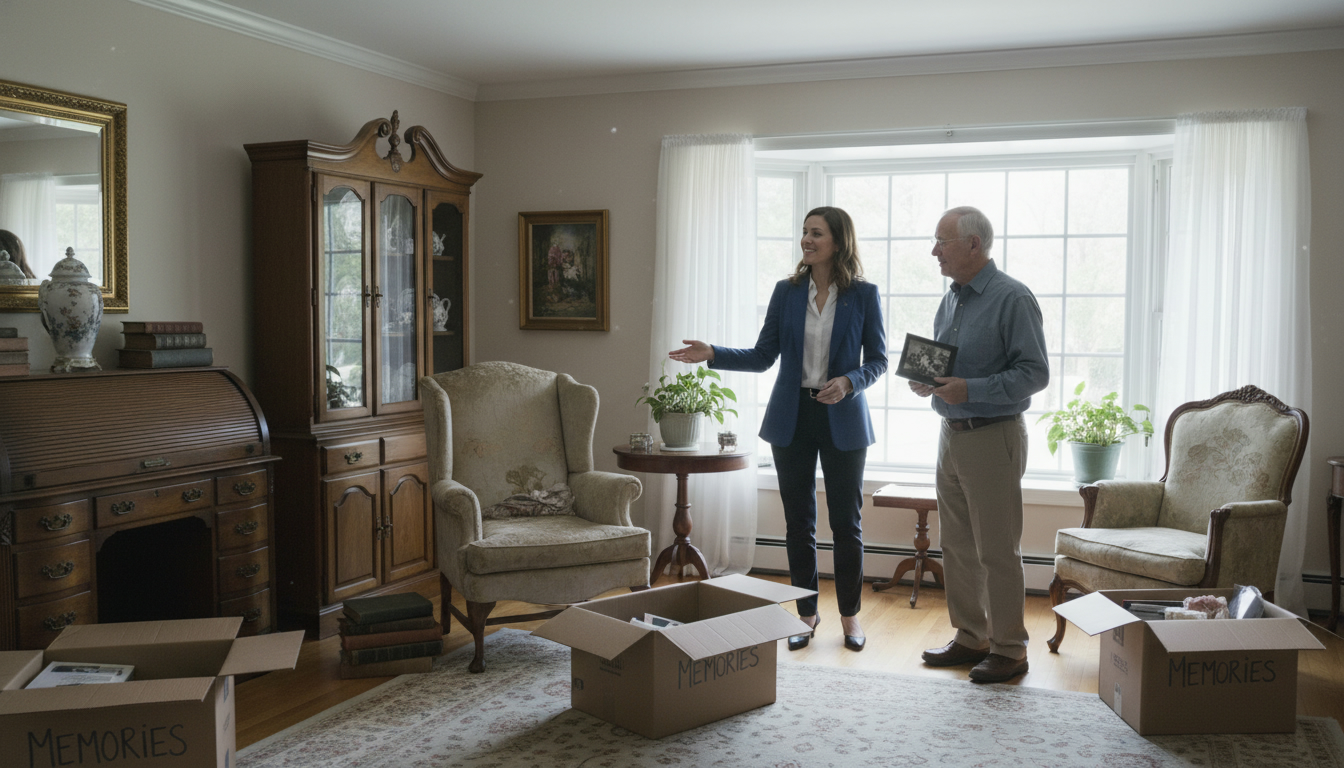
How do I sell a parent’s home with sentimental furniture still inside?
“Must I leave Grandma’s dining set behind?” — Here’s the no-fluff plan to sell a parent’s home in Milton when sentimental furniture is still inside.
Quick answer — Sell the house, keep the memories
You can sell a parent’s home with sentimental furniture still inside and get top dollar. The trick is a clear plan that respects memories, avoids family fights, and prepares the house to sell in Milton’s market. Do the right steps in the right order: document, decide, protect value, and sell. This post lays out a step-by-step, emotion-aware system you can use today.
Why sentimental furniture stops sales (and how to fix it fast)
Sentimental furniture creates three big problems:
- Visual clutter: Buyers need to imagine themselves in the space. Old family pieces can block that vision.
- Logistics headaches: Who decides what stays? Who moves or disposes of items?
- Hidden value or liability: Some pieces are worth money; some cost money to remove or repair.
Fix it with a two-track approach: protect what matters, and stage for buyers. You don’t need to throw out memories to sell the house.
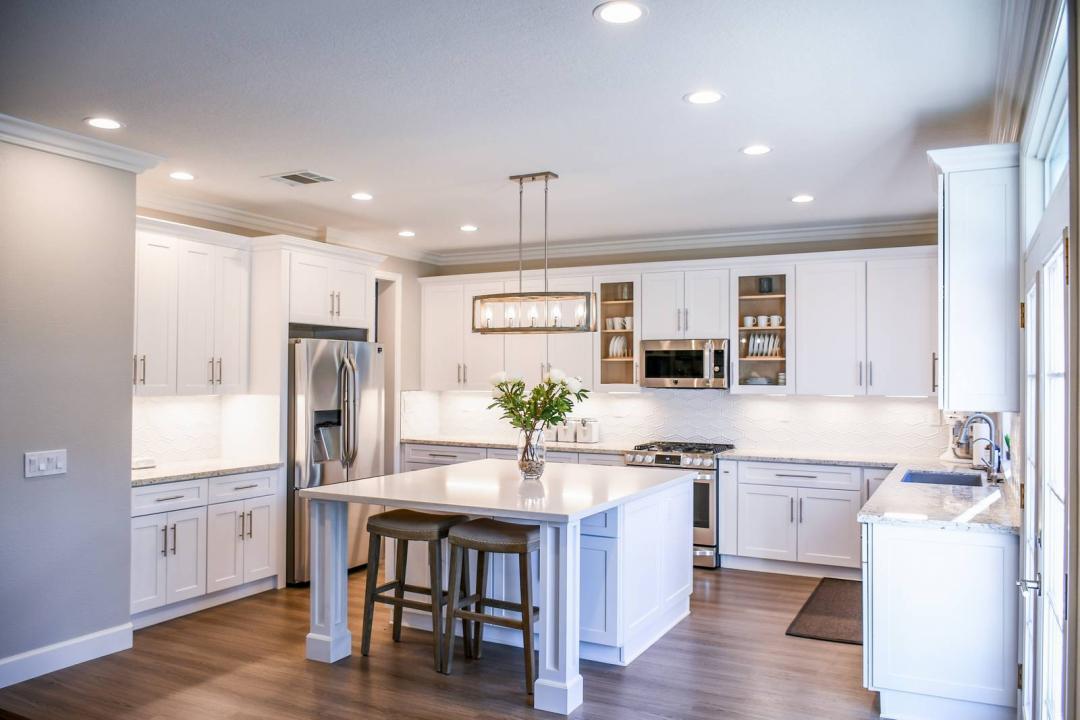
The Milton-focused, step-by-step plan that gets homes sold
1) Take charge immediately (Day 1–3)
- Lock in a local Realtor who understands Milton. They’ll price the house using local comps, know buyer demographics, and offer staging advice.
- Create a digital inventory. Photograph every room and every important piece of furniture. Label each photo and note sentimental value and estimated worth.
2) Hold the family meeting (Day 3–7)
- Set a short agenda: inventory review, keep/sell/donate decisions, timeline. Keep it decisive. Don’t get stuck in nostalgia.
- Assign an executor for household items. This can be a family member, professional estate manager, or the listing agent.
3) Identify valuables and get appraisals (Week 1–2)
- Hire an appraiser for antiques or potentially valuable furniture. In Milton and Halton Region there are specialists and auction houses that can help.
- Valuable items can be sold privately, at auction, or consigned — don’t mix decisions with the house sale timeline.
4) Create a memory plan (Week 1)
- Memory boxes: let immediate family keep personal items like photo albums and letters.
- Photograph large sentimental pieces if they must be sold. Make a small keepsake if furniture is headed to charity.
5) Decide the selling strategy (Week 1–2)
- Full staging: remove most personal and sentimental items, keep a few meaningful pieces that enhance charm. Staging in Milton can raise perceived value.
- Partial listing “as-is”: if you want a quick sale, disclose major items and offer incentives for buyers to handle removal. This lowers price but speeds up sale.
- Estate sale or auction first: If the house contains many items of value that need liquidating, consider an estate sale before listing. Use a local estate sale company that knows Milton buyers.
6) Hire local pros (Week 1–3)
- Movers familiar with antiques. They’ll protect finishes and reduce damage claims.
- Cleaners and minor repair crews. Small fixes often unlock higher offers in Milton’s market.
- Professional stager (or agent-led staging). Milton buyers respond well to bright, decluttered spaces.
7) Pricing and timing (Week 2–4)
- Price to the market. If you remove large items, use comparables for similar staged homes in Milton. If you sell with furniture in place, price slightly lower and disclose details.
- Consider time of year. Milton’s spring and early fall markets often draw more buyers.
8) Marketing the listing (Weeks 3+)
- Use high-quality photos and a floor-plan. Highlight features buyers love in Milton: yard size, commuter routes to Toronto, school districts, and community amenities.
- Be transparent in the listing about included or excluded items. Avoid surprises at showing.
Practical tactics for sentimental furniture
- Keep one focal piece per room. A single heirloom piece can add charm and anchor buyers’ imaginations.
- Create a documented offer: buyers sometimes want to keep big pieces. Create a contract addendum listing items that will remain and their value.
- Offer a furniture credit. If buyers want the home without the heavy pieces, offer a small move-out credit deducted at closing to remove them.
Options for moving or disposing of furniture in Milton
- Consignment shops: good for mid-range antiques and quality furniture. They sell for you and split proceeds.
- Local auction houses: best for rare or valuable antiques.
- Charity pick-up: many local charities will collect furniture and issue receipts for donations. Check Halton Region charity pickup schedules.
- Junk removal services: use only for items with no value. They’ll clear the house fast.
Legal and estate matters in Ontario you must consider
- Who has authority? Only the power of attorney (while alive) or the estate trustee/executor can legally sign away or sell estate property. Confirm who can act.
- Probate and estate fees: selling the home may trigger estate administration steps. Consult an estate lawyer in Milton or Halton Region.
- Full disclosure: Ontario law requires disclosing material facts about the property. Don’t try to hide damage under sentimental items.
Pricing examples and math (simple, real-world)
Scenario A — Remove sentimental furniture and stage: list price = market comp + 3–5% premium because the home looks larger and neutral.
Scenario B — Keep furniture, sell as-is: list price = market comp − 5–12% depending on clutter and repair needs.
Scenario C — Quick sale to investor: list price = market comp − 15–30% but fast closing and minimal cleanup.
Choose the scenario that fits your timeline, family stress tolerance, and financial needs.
Communication and conflict resolution tips
- Use the inventory as evidence. Keep notes, photos, timestamps. This reduces “he said / she said” fights.
- Set deadlines. Nostalgia expands, deadlines compress decisions.
- Offer fair split plans. If family members want different items, assign buyout values and make them pay if they want an item held.
One-week action checklist for Milton sellers
- Call a local Realtor who sells in Milton and Halton Region.
- Photograph and inventory every room.
- Hold a one-hour family meeting with clear agenda.
- Book appraiser for suspected valuable pieces.
- Schedule movers/estate sale pros if needed.
- Decide: staged sale, as-is sale, or auction-first.
Why working with a Milton specialist matters
Local market knowledge matters. Milton buyers want commute-friendly homes, good schools, and usable yards. A local Realtor understands what features to highlight and which sentimental pieces help or hurt a sale. They also have local vendor lists — movers, appraisers, estate sale companies — who know how to handle sentimental furniture with care.
Call to action — Get help, avoid regret
If you’re selling a parent’s home in Milton and facing the sentimental furniture problem, get a local expert who will guide you through valuation, staging, and emotional landmines. I work with families in Milton and Halton Region to get homes sold fast and fairly — protecting memories and maximizing sale price.
Contact: tony@sousasells.ca | 416-477-2620 | https://www.sousasells.ca
FAQ — Selling a parent’s home in Milton, ON (answers you need now)
Q: Can I sell the house if family members disagree about furniture?
A: Yes, but clear legal authority is needed. The estate trustee or person with power of attorney makes final decisions. Use an inventory and set deadlines to force decisions. If disagreements persist, consider an estate sale or auction to monetize items quickly.
Q: Will leaving furniture hurt the sale price in Milton?
A: It can. Clutter prevents buyers from picturing themselves in the home. Staging typically increases buyer appeal. But select pieces that enhance character can actually help. Your agent can model price scenarios.
Q: What if furniture contains antiques or valuables?
A: Get an appraiser. Valuable pieces sold separately often add more money than keeping them in the house. Local Milton appraisers and auction houses can help.
Q: How do I dispose of items respectfully in Milton?
A: Use local charities, consignment shops, or estate sale services. Halton Region has donation programs and community groups that accept furniture. For non-sellable items, hire a junk removal service.
Q: Do I need to disclose that furniture will remain?
A: Yes. Be transparent in the listing and the purchase agreement. List included/excluded items to avoid last-minute deal collapses.
Q: How long does the process take in Milton?
A: Typical timeline: 2–6 weeks to prep and list; 4–8 weeks to sell depending on market conditions. Quick sales can happen in days if priced below market or sold to investors.
Q: Can I get tax benefits from donating furniture?
A: Possibly. Keep donation receipts and consult an accountant. Ontario and federal tax rules apply.
Q: What about probate and legal steps in Ontario?
A: Selling estate property often requires the estate trustee to follow probate steps. Consult an estate lawyer familiar with Halton Region. A local Realtor can help coordinate timing with legal counsel.
Q: Who pays for moving and removal?
A: Whoever the family decides. Often the estate pays move-out costs before distributing assets. If a family member wants a specific item held, they may be asked to pay storage or removal costs.
Q: Why hire a local Realtor instead of a national company?
A: Local Realtors know Milton’s buyers and vendors. They price listings for the Milton market, stage with local tastes in mind, and coordinate with local services for quick, respectful clear-outs.
If you want an immediate plan for your situation, email tony@sousasells.ca or call 416-477-2620. I’ll walk you through a tailored checklist and local vendor options so you can sell the home without losing the memories.