
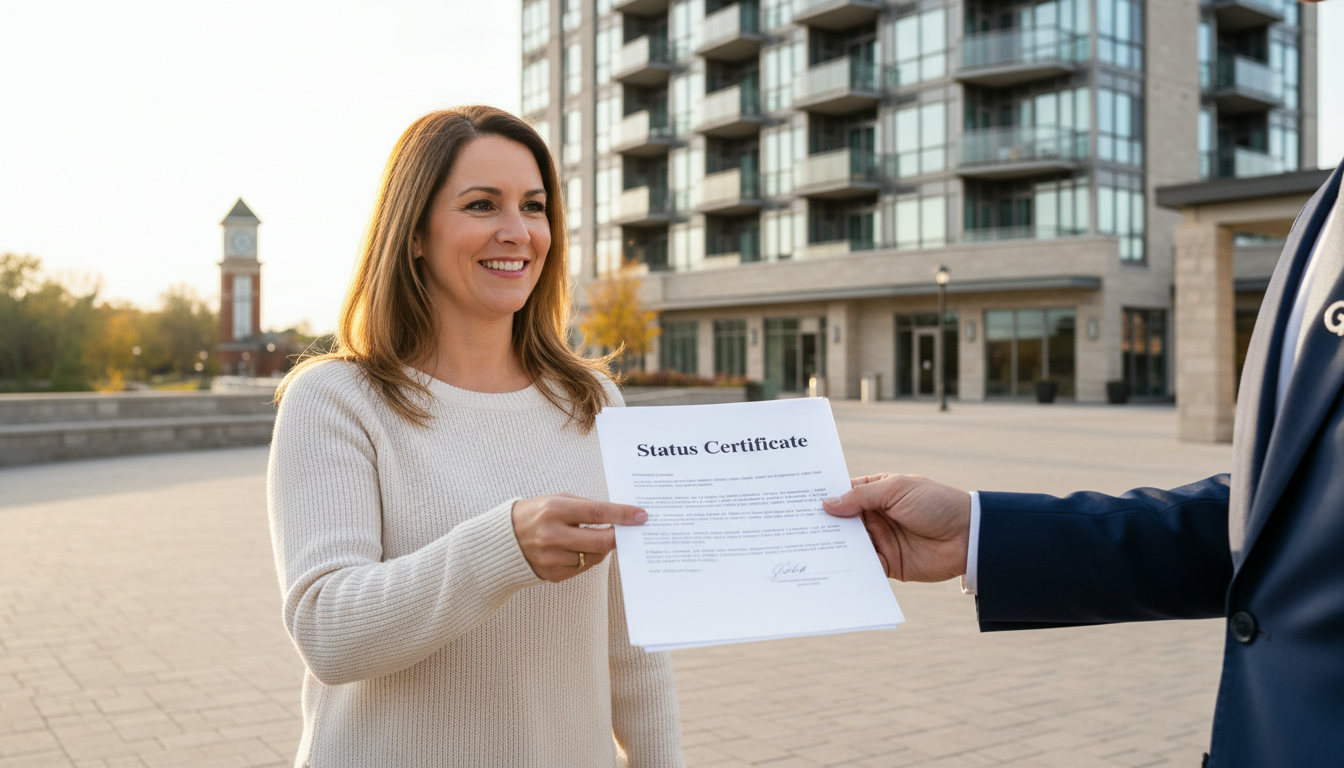
How long does it take to get a Status Certificate?
Want a Status Certificate Fast? Here’s Exactly How Long It Takes in Georgetown
If you’re selling a condo in Georgetown, you need the status certificate in hand — and fast. Buyers demand it. Lawyers need it. Deals stall without it. Here’s the no-fluff timeline, how to speed it up, and what it really means for your sale.
Quick answer: Typical timelines and what to expect
- Statutory deadline under Ontario rules: typically the condominium corporation must provide a status certificate within 10 days of a written request (and payment of the fee).
- Practical reality in Georgetown: most requests are fulfilled in 3–10 business days. Smaller condo boards and local property managers often deliver in 48–72 hours when asked. Larger corporations using third‑party management can take the full 7–10 business days.
- Expedited options: many management companies offer a rush service (24–72 hours) for an extra fee.
If you want the sale to move fast, assume 7–10 business days unless you take steps to shorten that window.

Why the status certificate matters — and why time is money
The status certificate is the most critical document in a condo sale. It tells buyers and their lawyers:
- Whether the seller is up to date on common expenses and any arrears.
- If there are any special assessments or pending increases to fees.
- Ongoing or pending litigation against the condo corporation.
- Rules that affect the buyer (rental rules, pet rules, parking/storage entitlements).
Buyers can add a condition to an offer to review the status certificate. If it’s delayed, that condition delays closing or gives the buyer an exit. That costs you time and negotiating leverage. Fast status certificates reduce fall-through risk and help you close at the asking terms.
The legal baseline: Ontario Condominium Act (practical takeaways)
Under Ontario legislation the corporation must provide a status certificate on written request and payment. In practice this creates a 10‑day statutory period. Use that as your baseline, then beat it with process.
Key practical points:
- The condo corporation can require a fee for the certificate. Fees vary but are commonly around $100.
- The clock starts when the corporation receives the written request and the fee.
- If the corporation doesn’t deliver within the statutory period, there are remedies — but the practical cost is delay and transaction risk.
Georgetown realities — what sellers see locally
Georgetown is part of Halton Hills. Many local condo boards are smaller, and multiple buildings are managed by mid‑sized property managers. That works in your favor.
Local patterns:
- Independent boards or locally managed buildings — often respond quickly (24–72 hours) if you enlist the right agent who knows the manager.
- Buildings run by national management companies — they follow strict queues and tend to use the full statutory window (5–10 business days).
- New developments and complex corporations — may take longer due to document volume or pending legal/financial reviews.
If your building is small or the property manager knows Tony Sousa, you’ll usually see faster results. Experienced local agents get priority responses.
Step-by-step: How to get a status certificate as fast as possible
- Order it before you list. Get the status certificate when you decide to sell. That removes a major delay later.
- Know the exact legal condo name and unit identifier. Mistakes create needless delays.
- Pay the fee promptly and use the method the management company prefers (online, e‑transfer, certified cheque).
- Use your listing agent to request and follow up. Local agents have direct contacts and can push for faster delivery.
- If you already have an offer, ask the buyer to waive or shorten the status certificate review period if you can prove you have an up‑to‑date certificate.
- If urgent, order an expedited certificate for a rush fee.
Do this and you can cut the timeline from 10 days to 1–3 days in many Georgetown cases.
What to include in your request (avoid common slowdowns)
- Full legal name of the condominium corporation.
- Unit number and address.
- Seller’s name and contact info.
- Payment for the fee and confirmation of receipt.
- Email and phone number for delivery of the certificate.
Missing details or wrong payment are the most common reasons for delays.
Cost: what sellers and buyers should expect to pay
Fees vary across Ontario and by corporation. Typical ranges in Georgetown:
- Standard status certificate: $50–$200 (commonly around $100).
- Expedited or rush service: additional $50–$150 depending on speed.
Who pays? Usually the buyer requests and pays for the status certificate as part of their due diligence. But sellers who pre‑order to speed a sale can pay and recover the cost later or factor it into the listing strategy.
Red flags the status certificate can reveal — handle these before the buyer sees them
- Outstanding common expense arrears on the unit.
- Extra assessments approved or under discussion.
- Pending lawsuits or liens against the corporation.
- Special rules or restrictions that reduce buyer demand (short‑term rental bans, stringent pet restrictions).
If any of these appear, address them before marketing aggressively. Disclose appropriately and price for transparency. That keeps deals clean and quick.
How the status certificate affects negotiating power
A clean, recent certificate removes friction. It lets you:
- Keep tighter timelines in the Agreement of Purchase and Sale.
- Avoid last‑minute price reductions when hidden issues appear.
- Close more offers quickly when multiple buyers compete.
A delayed or problematic certificate gives buyers leverage to renegotiate or walk. That’s a negotiation you don’t want.

Templates and checklists (use these to shave days off the process)
- Pre‑listing checklist: request status certificate, condo documents, current budget and reserve fund statement, bylaws, and any recent board minutes.
- Buyer offer clause sample: require a 3–5 business day review period for the status certificate (shorter if you already have it pre‑ordered).
- Follow-up script for agent to property manager: call + email within 24 hours of request, confirm payment method, request digital copy.
These simple moves cut friction. They make deals predictable.
Why a local realtor matters in Georgetown
A local realtor who sells condos in Georgetown repeatedly will:
- Know which property managers move fast.
- Know common local red flags in condo documents.
- Anticipate what buyers’ lawyers will look for and prepare answers.
That is the difference between a 3‑day turnaround and a stalled sale.
Call to action: Get ahead of delays now
Don’t wait for your buyer to request the status certificate. Order it before you list. If you need help ordering, interpreting the certificate, or using it to negotiate, reach out. An experienced local realtor will save you days and protect your price.
Contact: Tony Sousa — tony@sousasells.ca | 416‑477‑2620 | https://www.sousasells.ca
FAQ — Selling Condos and Status Certificates in Georgetown (Clear answers for sellers)
Q: How long does it legally take to get a status certificate in Ontario?
A: The condominium corporation must provide it after a written request and payment. In practice use a 10‑day statutory window as your baseline.
Q: How long does it usually take in Georgetown?
A: Most requests are completed in 3–10 business days. Smaller boards and local managers often deliver in 24–72 hours if pushed.
Q: Who orders and who pays for the status certificate?
A: Typically the buyer or buyer’s lawyer requests and pays. Sellers can pre‑order to speed the sale.
Q: Can a buyer back out after reviewing the status certificate?
A: If the purchase agreement includes a condition allowing review and the buyer exercises that right within the agreed timeframe, they may cancel. The exact rights depend on the agreement terms.
Q: What does a status certificate include?
A: It contains the declaration, bylaws, rules, financial statements, reserve fund status, common expense arrears for the unit, pending litigation, and other important notes.
Q: How much does it cost in Georgetown?
A: Expect roughly $50–$200 for a standard certificate. Rush services add $50–$150.
Q: How can I speed up the process?
A: Pre‑order before listing, use an experienced local realtor, ensure correct details and payment, and pay for expedited service if needed.
Q: What if the certificate shows arrears or special assessments?
A: Address the issue before marketing if possible. Negotiate disclosure and pricing, or resolve the arrears. Discuss options with your realtor and lawyer.
Q: Can I provide a copy of an old status certificate?
A: Buyers and lawyers prefer a recent certificate. Older certificates may not reflect current arrears or special assessments and could be rejected.
Q: Who enforces the statutory timelines?
A: The Condominium Act and related rules set the timeline. Remedies exist if a corporation fails to comply, but the practical result is transaction delay and negotiation complications.
If you want the fastest, cleanest sale in Georgetown, get the status certificate in hand before buyers demand it. Want help ordering one, reviewing it, or turning it into a sale advantage? Contact Tony Sousa at tony@sousasells.ca or 416‑477‑2620.