Are there tax incentives for energy-efficient
upgrades?
Are there tax incentives for energy-efficient upgrades? — Yes. Here’s how Milton homeowners turn upgrades into real rebates, grants and tax wins.
Quick answer
Yes — but it’s not one simple tax credit you slap on your return. For homeowners in Milton, Ontario, the money comes from a mix of federal grants, utility rebates, provincial programs and tax rules that help rental or income properties. Homeowners who plan smartly, document properly and use a certified EnerGuide evaluation can stack money from several sources and cut both upfront costs and ongoing energy bills.
This post walks you through exactly what exists today, what applies to owner-occupied homes versus rental/property investors, and the step-by-step playbook Milton homeowners should use to maximize return on renovation dollars.
The reality in one line
Grants and rebates are the low-hanging fruit. Direct federal tax credits for owner-occupied retrofits are limited. Rental and income properties get better tax treatment via capital cost allowances. For most Milton residents, the fastest win is combining the Canada Greener Homes Grant, local utility rebates, and strategic financing.
What homeowners in Milton can expect right now
-
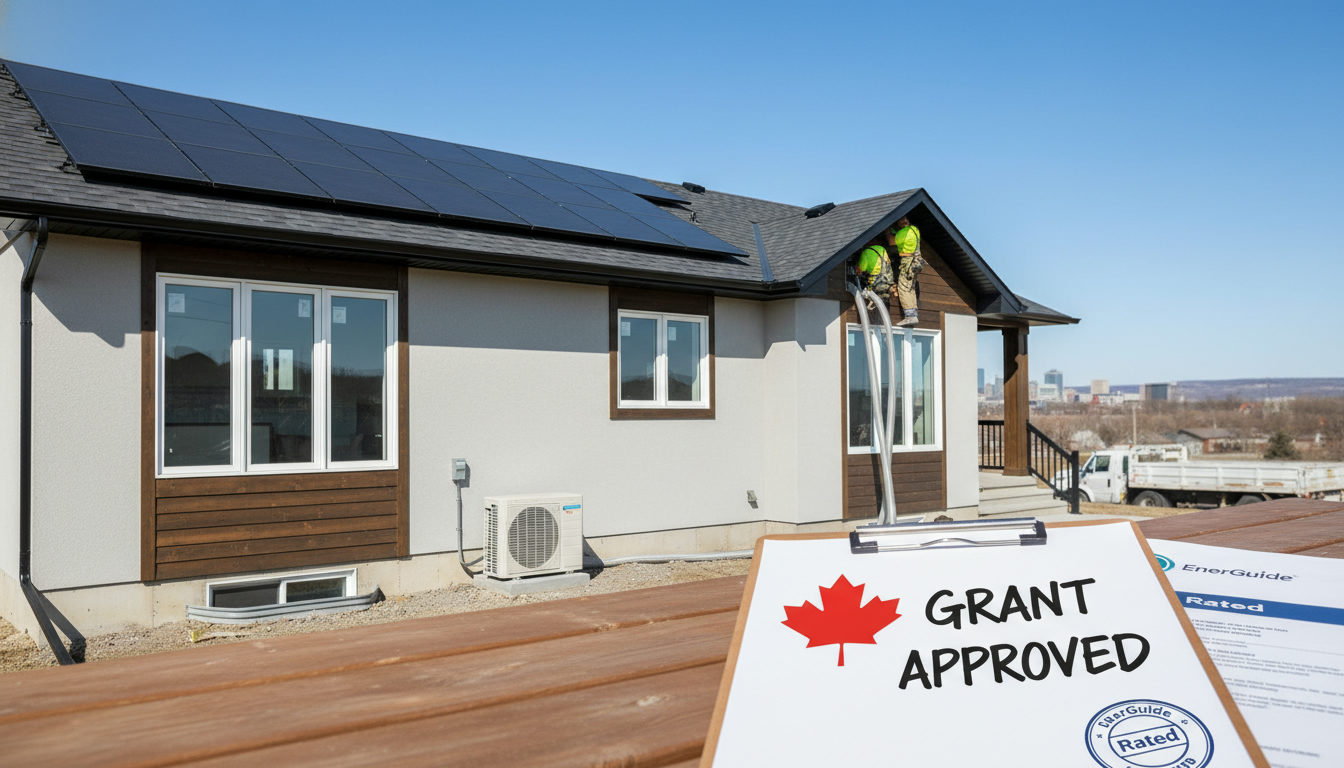
Federal grant: Canada Greener Homes Grant (administered by Natural Resources Canada). Typical structure: up to $600 for EnerGuide pre- and post-retrofit home evaluations and up to $5,000 total in retrofit grant money for eligible upgrades. Eligible measures generally include insulation, windows and doors, air sealing, heat pumps, high-efficiency water heaters, and some ventilation improvements. (Check the official Natural Resources Canada site for the current eligible list.)
-
Utility and distributor rebates: Enbridge Gas and your local electricity distributor often run rebates for high-efficiency furnaces, heat pumps, and insulation. These change frequently. Milton homeowners should check Enbridge Gas, their electricity provider, and Halton Region energy programs.
-
Provincial incentives: Ontario occasionally runs programs or partners with utilities for specific measures. These vary by year and budget.
-
Municipal/Local programs: Some municipalities and regional authorities run targeted programs or pilot projects. Milton homeowners should check the Town of Milton and Halton Region energy pages.
-
Tax treatment for rental or income property owners: If you own rental properties in Milton, many energy-efficient upgrades qualify as capital expenditures. These can be claimed under the Capital Cost Allowance (CCA) rules, allowing depreciation and potential accelerated write-offs for eligible equipment. Consult a tax professional to apply CCA properly.

What you won’t find: a big homeowner tax credit on your T1
Canada doesn’t currently offer a sweeping, permanent tax credit that homeowners simply enter on their personal tax return for home insulation or new windows (unless new programs are announced). The federal approach has favored targeted grants (like the Greener Homes Grant), utility rebates and tax rules that help businesses and rental properties.
If someone promises a guaranteed, large personal income-tax credit for a standard home renovation in Milton, ask for the official program link. Don’t take sales pitches at face value.
How Milton homeowners make the programs work — step-by-step playbook
-
Book an EnerGuide evaluation. This is the baseline for federal grant eligibility and tells you the biggest opportunities for savings. The pre-retrofit and post-retrofit reports are often required for grants.
-
Prioritize measures that are both high-impact and eligible. Insulation, air sealing, heat pumps and window upgrades usually deliver the best balance of grant eligibility and energy savings.
-
Check utility and provincial rebates FIRST. Some utility rebates require pre-approval or specific equipment models.
-
Bundle contractors and documentation. Use certified installers when required. Keep all invoices, EnerGuide reports, and proof of payment.
-
Apply for grants and rebates promptly. Deadlines and documentation windows matter.
-
If the property is a rental or used for business, consult a local tax pro about CCA. That can turn upgrades into real tax deductions over time.
-
Recalculate payback. After grants and rebates, your simple payback on major upgrades can drop from 8–12 years to 3–6 years depending on the measure.
Example: Real numbers that translate to decisions
Imagine a Milton bungalow owner planning a full attic insulation upgrade and a ducted air-source heat pump.
- Insulation cost: $6,000. Greener Homes grant: $1,000. Utility rebate: $300. Net cost: $4,700.
- Heat pump cost: $12,000. Greener Homes grant: $2,000. Utility rebate: $1,000. Net cost: $9,000.
Combined net cost: $13,700. If energy bills fall by $2,500/year, your payback is 5.5 years. Add improved comfort and higher resale value in Milton’s competitive market — this becomes a clear investment.
(These numbers are examples. Exact grants and rebates vary. Use EnerGuide numbers for accuracy.)
What investors and rental property owners in Milton must know
If you own rental units, the tax rules are different. Upgrades to rental properties can often be treated as capital assets and claimed under CCA. That means you can deduct an annual portion of the cost from rental income. In some cases, energy-efficient equipment qualifies for accelerated depreciation or special classes. Talk to a Chartered Professional Accountant familiar with Ontario real estate taxes to structure the expense correctly.

Common mistakes Milton homeowners make (and how to avoid them)
- Buying before checking eligibility: Some rebates require pre-approval. Don’t pay a contractor deposit until you confirm.
- Skipping an EnerGuide evaluation: You’ll miss grant eligibility and a diagnostic roadmap.
- Using uncertified installers: Grants often require certified professionals.
- Assuming all measures are eligible: Solar PV, for example, may or may not be covered by a given program — always verify.
How local knowledge matters — why Tony Sousa should be your guide
Programs change. Contractors vary. A local expert knows which contractors in Milton deliver quality work that meets program specs and which utilities are offering rebates at any given moment. Tony Sousa works in Milton and Halton Region daily. He connects homeowners with certified auditors, vetted contractors, and the right checklist to secure grants and rebates. He also understands how upgrades affect resale value in Milton‘s market — so your renovation both saves on bills and boosts property value.
Contact Tony for a free strategy call and local contractor recommendations: tony@sousasells.ca | 416-477-2620 | https://www.sousasells.ca
Next steps — practical checklist for Milton homeowners
- Step 1: Book an EnerGuide pre-retrofit evaluation.
- Step 2: Get a list of eligible measures and prioritized payback estimates.
- Step 3: Confirm utility and provincial rebates available now.
- Step 4: Hire certified installers and collect all receipts.
- Step 5: Submit grant and rebate applications and keep records.
- Step 6: Schedule post-retrofit EnerGuide evaluation for final grant approval.
Want help? Tony will walk you through the whole process, recommend local contractors and make sure your paperwork is in order.
FAQ — Fast answers for Milton homeowners
Q: Is the Canada Greener Homes Grant available to Milton homeowners?
A: Yes. Milton homeowners have been eligible for the Canada Greener Homes Grant. It typically covers EnerGuide evaluations (partial) and eligible retrofit measures. Confirm current details on Natural Resources Canada’s site.
Q: Can I claim energy-efficient upgrades on my personal income tax in Ontario?
A: Generally no. There isn’t a broad permanent personal income tax credit for standard home retrofits. Most support for homeowners is delivered as grants or rebates. Always check for new federal or provincial announcements.
Q: Are there Milton-specific property tax breaks for energy upgrades?
A: Milton does not have a widely known blanket property tax deduction for home retrofits. Keep an eye on Town of Milton and Halton Region announcements for pilot programs or incentives.
Q: Do rental property owners get better tax treatment?
A: Often yes. Rental owners can capitalize upgrades and claim Capital Cost Allowance (CCA). This can provide tax deferral benefits. Work with a tax pro to apply CCA correctly.
Q: Will upgrading increase my home’s resale value in Milton?
A: High-quality energy upgrades (heat pumps, insulation, new windows) improve comfort and reduce operating costs — buyers notice that. In Milton’s competitive market, proven efficiency upgrades can justify higher offers and faster sales.
Q: How do I find certified contractors and EnerGuide auditors in Milton?
A: Start with Natural Resources Canada’s list, your utility vendor, and ask local realtors for vetted referrals. Tony Sousa maintains a local list of certified auditors and installers and can introduce you.
Final word: act like a pro
Don’t guess. Energy-efficient upgrades are a financial move. Use an EnerGuide audit, stack grants and rebates, and document everything. If you’re in Milton and want to avoid wasted time and missed money, get local help. That’s what wins homes more value and lower bills.
Ready to make your house cheaper to run and more valuable in Milton? Email tony@sousasells.ca or call 416-477-2620 for a practical plan and trusted local contractors.
Tony Sousa — Milton real estate strategist and local resource for energy-efficient renovations. Visit https://www.sousasells.ca for more.